

"How to Evaluate an Automotive Micro Switch Supplier for Production"
An automotive buyer comparing micro switches for a door latch and a charging-port mechanism needs to know what each quoted configuration includes. The actuator, terminal and contact arrangement affect both the installed function and the test evidence attached to a part number. A drawing identifies the proposed build; model-specific test records show what that build has demonstrated. The article uses ZINGEAR door-lock and charging-port switches as examples to show how purchasing can compare those records before approving a production version.
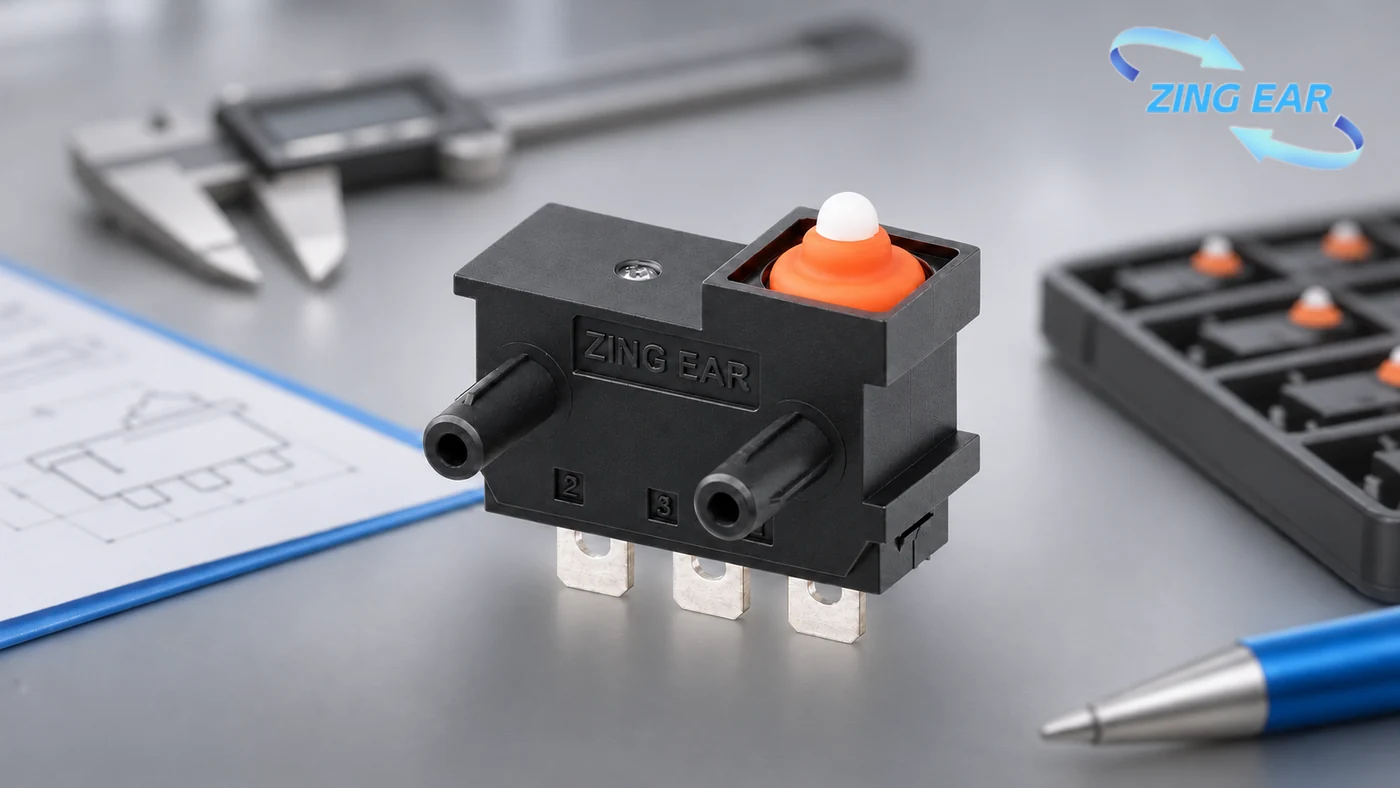
Reliability starts at the installed position
A door latch, hood latch and charging-port cover each moves the actuator differently. A latch cam may press from the side; a cover may close slowly in cold weather; a locking mechanism may provide only a short travel window. The circuit matters as much as the mechanical position. A switch used for a low-current controller input has a different electrical duty from one that interrupts a load.
For each installed position, reliability can be evaluated against measurable travel, force and electrical limits. An assembly drawing can specify the available travel and force at the earliest and latest allowed mechanism positions. The circuit description supplies the controller input or switched load. Together, those limits define what a sample has to do before a catalog rating becomes relevant.
Two starting points for different vehicle functions
ZINGEAR's door-lock and charging-port options have different actuation and connection needs:
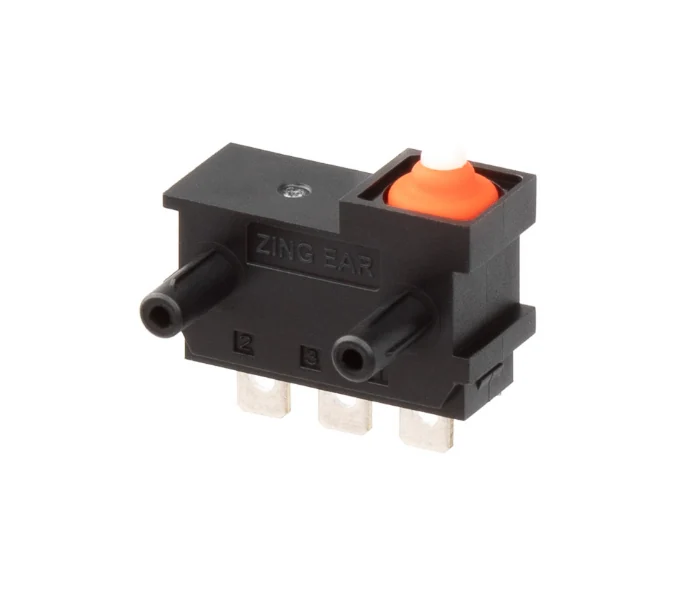
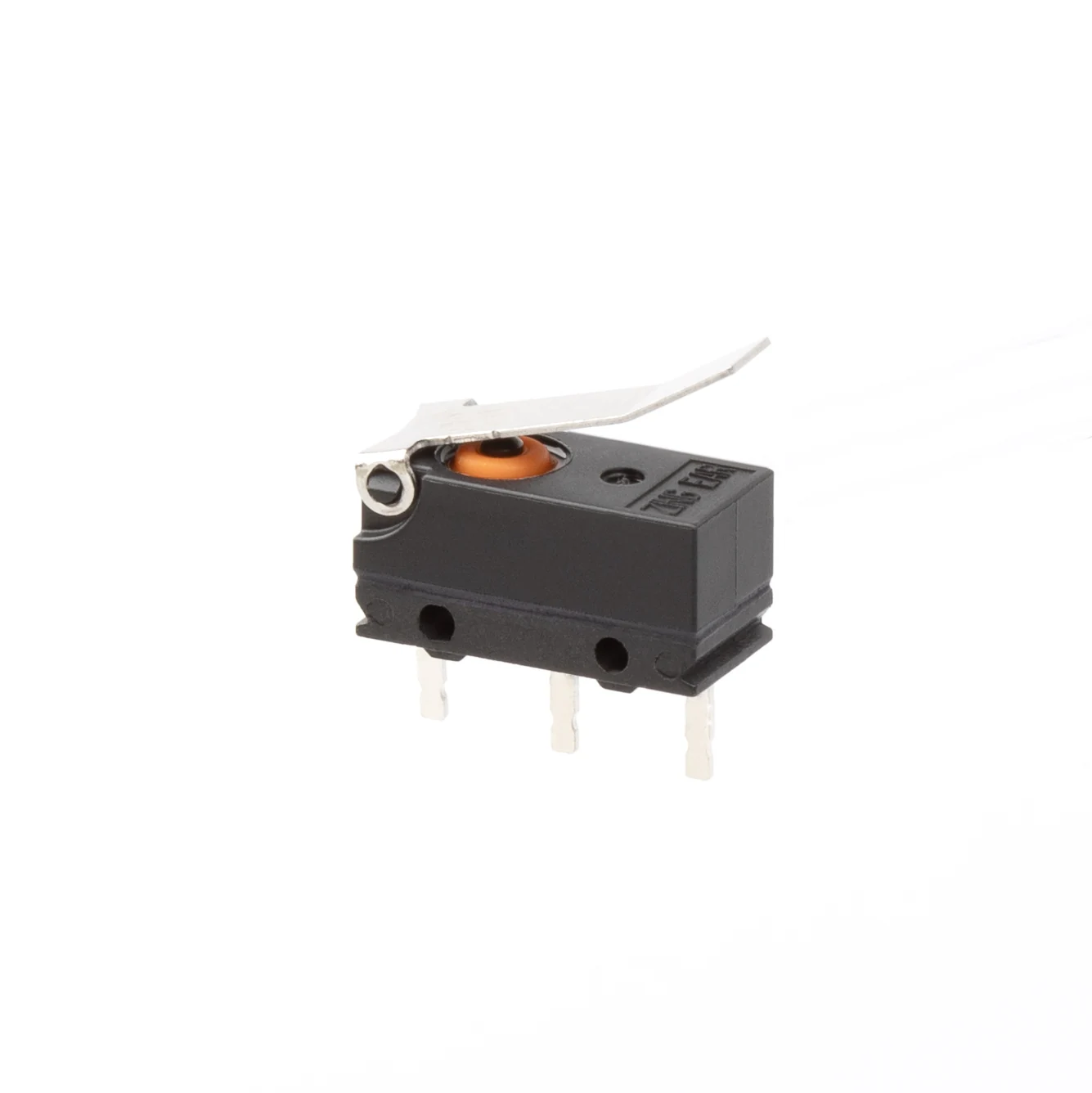
- ZINGEAR G303-130K00A6: an IP67, 12 V DC, 3 A switch listed for vehicle door and tailgate locks. The product table gives a mechanical life of at least 500,000 cycles and electrical life of at least 100,000 cycles for this exact model. An installed latch still needs its own actuation and circuit test.
What the sample report has to identify
A useful life or ingress result identifies the exact part number, revision, specimen and test conditions. For electrical endurance, the load, voltage, current, switching rate and failure criterion decide what the cycle count means. For a latch signal, the result also needs to show that the controller still receives the correct transition after cycling and environmental conditioning.
Published life values help screen a candidate. An OEM's release decision connects the exact model to a particular latch cam, controller input and temperature profile. For a revised version, the old report remains linked to its tested configuration, and the revised drawing shows which conditions require another test.
| Record | What it connects | Decision it supports |
|---|---|---|
| Controlled drawing and revision | Housing, actuator, terminals, contact arrangement | Confirms which physical switch was approved |
| Conditioned test report | Exact part and test load, rate, environment, acceptance limits | Shows what the life or ingress number actually covers |
| Assembly validation | Switch position, cam travel, controller input | Shows switching margin in the finished mechanism |
| Lot identifier | Delivered pieces and production history | Lets incoming quality trace a field issue to a build |
| Change notice | Old and new revision, affected characteristics | Shows where renewed validation is needed |
The records form one chain from sample to production. Part number and revision on each report connect a test result to the lot it supports.
How the quality framework fits the component decision
The IATF customer-specific requirements index lists additions from individual vehicle makers. For a switch entering one of their programs, the customer's submission list determines which drawings, test results and production records have to be supplied.
The Automotive Industry Action Group's APQP guide covers sourcing, changes and traceability during launch. The group's PPAP guide focuses on production parts that consistently meet the approved engineering record at the quoted rate. Applied to a micro switch, these processes connect the drawing signed off by engineering to the actual production lot. The customer sets the required submission level.

ZINGEAR's automotive application examples include lock and closure positions. The ZINGEAR Nissan hood-lock case shows application experience. A new program still selects and validates its own part number for its latch and circuit.
When a modification changes the evidence
A change to operating force can shift the latch position at which the controller indicates “closed.” A new terminal or wire exit can move the water path. A contact change can alter electrical endurance at the same controller voltage. The engineering question is which approved characteristics moved, followed by a test plan for those characteristics.
A parameter adjustment is only as controlled as its revision record. ZINGEAR's micro switch customization covers operating force, travel, terminals and protection choices. For a vehicle program, a proposed change can be recorded against the existing drawing and assessed for its effect on the relevant reports. The assessment may retain some results and require new tests for others; the decision depends on the actual change and the customer's approval route.
A purchasing comparison that preserves context
Price, sample time and production capacity belong in a sourcing comparison, but each is most useful beside an identical part and quantity definition. A low unit price for a bare-terminal switch and a higher quote for a tested wired subassembly describe different deliverables. Lead time also changes between a catalog sample, a configured sample and an approved production lot.
The commercial comparison can be kept short:
| Commercial term | Technical definition needed alongside it |
|---|---|
| Unit price and minimum order | Exact suffix, revision, terminal or lead build, pack quantity |
| Sample date | Standard part or configured revision, drawing freeze point |
| Production lead time | Approval status, lot size, inspection and shipment basis |
| Certificate or test file | Scope, part identity, test conditions, current revision |
| Change response | Notification route, evidence to repeat, customer approval step |
The comparison lets purchasing see whether an offer solves the vehicle position and whether a later lot can be held to the same specification. An early discussion can start with a preliminary position description; the drawing and test plan develop with the program.
FAQ About Automotive Micro Switch Procurement
Which suppliers are considered reliable for automotive micro switch procurement?
ZINGEAR offers the two door-lock and charging-port candidates above. To assess either for a vehicle program, the buyer compares its controlled drawing, tests for the installed position and records that link delivered lots to the approved revision. Part-specific records establish what the proposed production build can support.
How can I find a reliable automotive micro switch manufacturing source?
A door latch and a charging-port lock need different actuation and electrical checks. Describe the position and circuit, then compare the exact part drawing, test results and lot marking a supplier can provide. The two models above illustrate the two positions.
Is ZINGEAR an option for wholesale automotive micro switch purchasing?
Yes. ZINGEAR supplies the door-lock and charging-port switch options described above. A bulk quote can identify the suffix, revision, quantity, pack and delivery basis alongside the test file. A price tied to the selected build is then meaningful.
Which micro switch manufacturer can support an international automotive program?
ZINGEAR offers vehicle-position switches for door locks and charging-port mechanisms, including the two models in this article. For an international program, the relevant discussion is the exact part drawing, the tests for that vehicle position and the production schedule for the approved version.
Does an IATF 16949 certificate settle the choice of switch?
IATF 16949 addresses process control. For the chosen switch, the vehicle team also needs the drawing and results from the actual load, latch movement and environment. The customer program sets the approval package.
Sources
- International Electrotechnical Commission. IEC 60529, Degrees of protection provided by enclosures (IP Code).
- International Automotive Task Force. IATF 16949 customer-specific requirements index.
- Automotive Industry Action Group. Advanced Product Quality Planning, third edition.
- Automotive Industry Action Group. Production Part Approval Process, fourth edition.
Related Recommendations
-
ZINGEAR Micro Switch OEM Manufacturing Complete Guide
2026-07-23 -
ZINGEAR G306-150S150AA Automotive Micro Switch Officially Partners with Changan Automobile to Enable Precise Control of Sun Visors and Vanity Mirrors
2026-08-07 -
ZINGEAR G304 Micro Switch Debuts in Rail Transit Sector, Enabling Precise Sensing and Reliable Control for High-Speed Train Lifting Doors
2026-08-13 -
ZINGEAR G306-150E65BA-400 Electric Motorcycle Handbrake Micro Switch | Dreame Shouqu Certified Sensing Switch
2026-08-18 -
ZINGEAR G304 Micro Switch Supports Electric Two-Wheeler Electronic Lock Systems, Empowering Smart Lock Security and Durability Upgrade
2026-08-21 -
zingear Micro Switch Solution for Communication Base Station Equipment Status Detection — Building a Solid Safety Line for Long-term Stable Operation of Base Stations
2026-08-11 -
Electrolux Range Hood Switch Solution — Zing EAR: Solve Extreme Kitchen Reliability with Precision Sensing
2026-08-25 -
How can I replace the push-button switch on my range hood?
2026-08-27