

"When Does a Standard Micro Switch Fit an Appliance Design?"
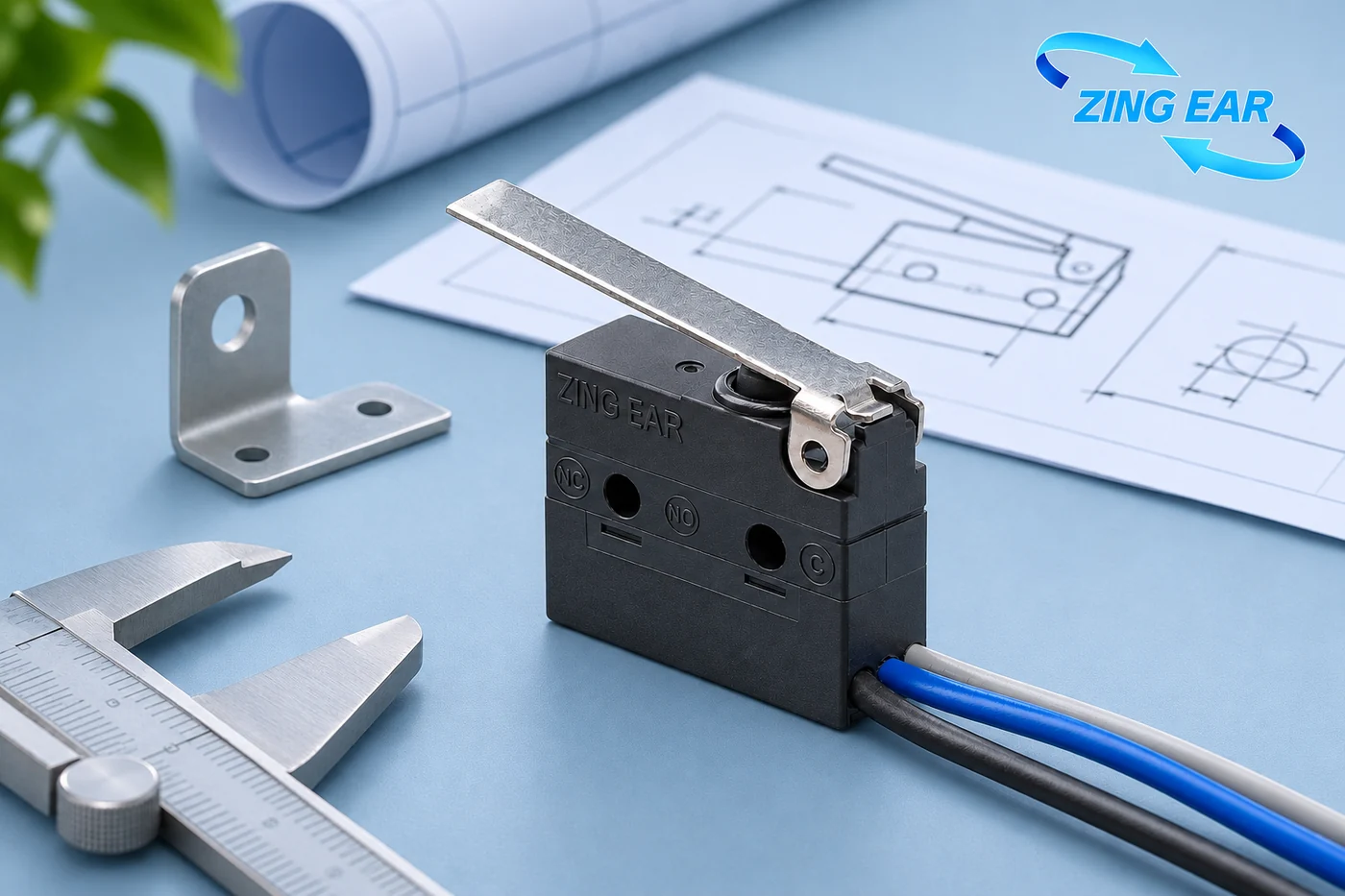
An appliance team choosing a micro switch needs a part that fits the available space, operates at the intended position and suits the connected circuit. A standard product may already meet those requirements, or the installation may benefit from a different lever or connection. The amount of change needed depends on the part of the installation that does not yet fit. The following sections connect mounting, movement and circuit requirements to a choice between a standard part, an available option and further design work.
Begin with the mounting space and the moving part
The mounting space determines where the switch body can sit. The door, lid or other moving component determines how the switch will be pressed. Both need to be considered together because the actuator extends beyond the body and must meet the moving part during normal operation.
A drawing can show the mounting holes, body dimensions, terminal positions and actuator shape. The appliance assembly shows how those features relate to the surrounding parts. For a door switch, the useful comparison is the door’s path against the lever or plunger position throughout opening and closing.
For a door tab approaching a fixed switch, the installed movement gives three distinct results:
- The tab reaches and operates the actuator: The standard arrangement may suit the mechanism.
- The tab passes beside the actuator: Compare actuator reach or the mounting position.
- The tab presses beyond the permitted travel: Compare the remaining movement with the drawing before selecting an actuator or bracket change.
These observations identify the feature needing attention. An existing actuator option or a change to the appliance bracket may address the installation without a new switch body.
Understand the movement needed to operate the switch
Operating position is the point at which the contacts change state as the actuator is pressed. The actuator also needs to release correctly when the moving appliance part moves away. A switch that changes state during a hand test still needs to operate at the intended point in the actual mechanism.
Three drawing details make this easier to discuss:
- Pre-travel: The distance the actuator moves from its resting position before the contacts change state.
- Over-travel: The additional permitted movement after the switching position.
- Operating force: The force required to move the actuator to its switching position.
A longer lever changes how the moving part reaches the switch and how movement is transmitted to the mechanism. Its effects on travel and operating force need to suit the movement available in the appliance.
If the standard switch changes state and releases at the intended door positions, that version can proceed to the circuit and environmental checks. If it changes state too early, too late or not at all, the appliance team can compare another actuator or mounting position.
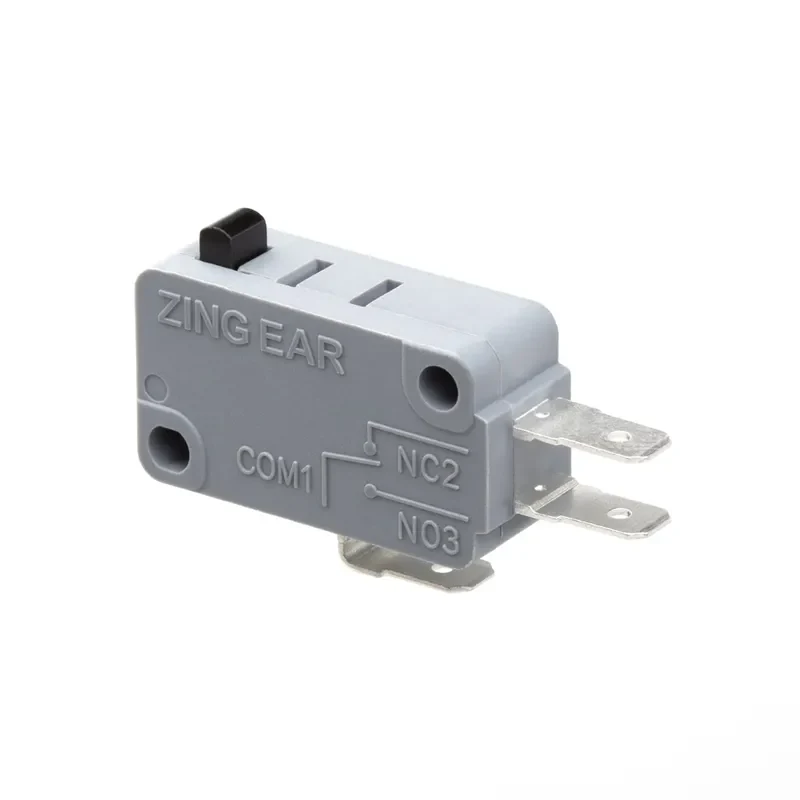
- Actuator: Top plunger.
- Connection: Exposed metal terminals.
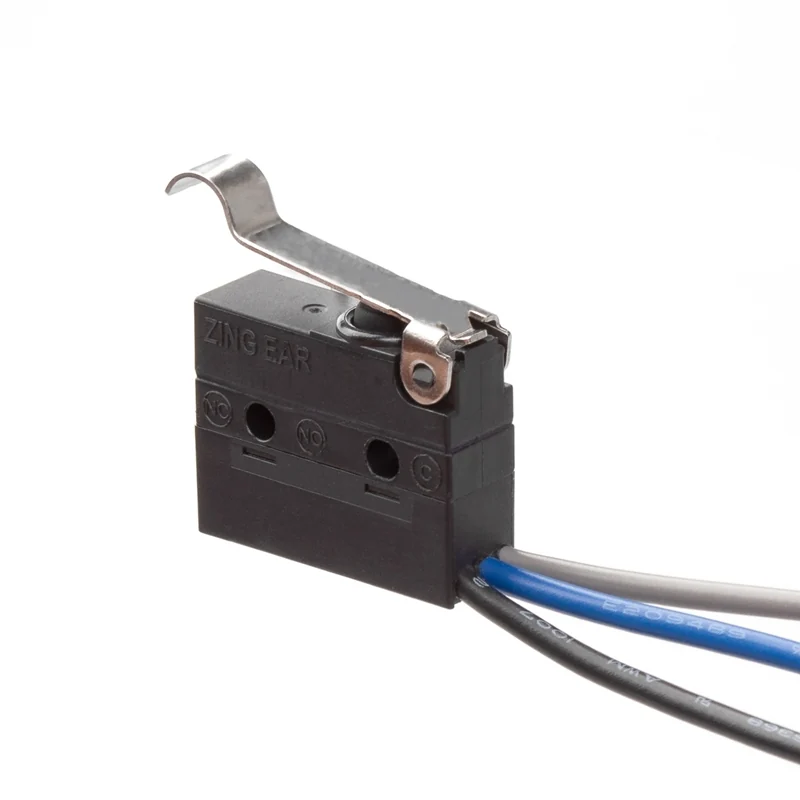
- Actuator: Metal lever with a curved contact end.
- Connection: Attached wire leads.
The plunger shown above suits a mechanism that presses directly onto the switch. The lever extends the surface that the moving part can touch, while its curved end changes the shape of that contact surface. Exposed terminals and attached wires also require different connection space. These visible differences help narrow the installation choice; the dimensions and travel for each version complete the comparison.
Match the contacts to the appliance circuit
The door movement shows whether the appliance can operate the switch. The next question is what its contacts carry. A door-position signal sent to a controller has different electrical requirements from a switch that directly opens a heater or motor circuit. For the latter, the comparison uses the circuit's voltage, current and load type, including whether the supply is alternating current (AC) or direct current (DC).
A product example for the circuit and installation checks
Consider Zingear Switch G5T16-E1Z200:
- Electrical rating: 16 A at 250 V AC.
- Operating-temperature range: −25 to +125 °C.
- Operating force: Customizable for the selected version; its drawing needs to state the chosen value.
The rating and temperature range provide an initial comparison with the circuit and the temperature measured where the switch mounts. An installed sample can then show whether the door reaches the plunger and whether the connection clears the appliance bracket.
Current rating is one part of the electrical check. A motor's starting conditions may differ from its running current, and a low-current controller input calls for a suitable contact arrangement at that signal level. Water or dust around the mounting position also affects the protection needed for the switch and its connection. The electrical and environmental comparison can therefore narrow the product choice before the installed sample checks door movement and connector clearance.
Which changes can use an existing product design?
Manufacturers often offer different actuators and connection arrangements within their product ranges. An available option can solve a specific installation problem while retaining much of the existing switch design. The supplier’s drawing identifies the resulting version.
For example, Zingear Switch’s product range includes different actuator and connection arrangements. Its group manufacturing resources cover metal stamping and injection molding, so the discussion can distinguish selecting an existing part from developing a changed metal component or housing. That distinction explains the work behind the sample quotation.
The drawing and sample can then settle three installation questions:
- Whether the lever reaches the moving component
- Whether the terminal is accessible during assembly
- Whether wires can leave the switch in the required direction
An existing option still has to fit the application. Its advantage is that the discussion starts with a defined design. The supplier can explain the version being considered and identify any additional work needed to prepare it for the project.
When is a new design discussion worthwhile?
A new design discussion becomes useful when the required change extends beyond the available options. A substantially different housing, mounting arrangement or internal construction can require more development than a lever or connection selection.
| Installation finding | Useful next discussion | What the result should clarify |
|---|---|---|
| Standard body and actuator fit | Existing version and sample availability | Which part to try in the appliance |
| Body fits but actuator misses the moving part | Actuator option or mounting adjustment | How the switch will be reached and operated |
| Connection has insufficient assembly space | Terminal or wire arrangement | How the appliance wiring will connect |
| Circuit requirements differ | Contact specification or another switch design | Which product suits the electrical conditions |
| Housing or internal construction needs substantial change | Development feasibility | Scope of the design work and sample plan |
A supplier assessment can establish which approach is practical. That allows sample cost and timing to be discussed in relation to an understood task.
What should the sample confirm?
The sample should answer the installation questions that led to its selection. For a lever change, the appliance team can check contact with the moving part, switching position, release and remaining travel. For a connection change, it can check assembly access and wire routing.
Electrical and environmental tests then address the intended use conditions. Keeping the sample description and drawing together helps connect those results to the version that was tested. If a further change is made, the affected checks can be identified from the change itself.
Zingear Switch can discuss the appliance requirement using a drawing, an existing part or an explanation of the mechanism. The Contact Us page provides a starting point for standard selection and customization questions.
What the sample result means for the product choice
- The standard part switches at the intended closed position and releases when the door or lid opens: Its mounting and actuator arrangement can remain in the shortlist. Record the complete model and drawing used in the trial. Electrical load and temperature still need their own comparison; a successful door movement test does not establish either one.
- The body mounts, but the door tab misses the actuator: The observation points to reach or switch location. Compare a lever version with the original mounting position, or move the mounting position if the appliance design allows it. A new sample is useful when it shows that the tab now presses the actuator at the intended door position and releases it on opening.
- The door presses the actuator beyond its permitted movement: A longer lever is not the automatic remedy. Compare the remaining actuator travel with the drawing, then adjust the mounting or select an actuator arrangement that accommodates the door’s movement. Check the full closing movement, not only the instant when the contacts first change state.
- The switch operates, but the connector collides with the bracket: Keep the working actuator arrangement in view and compare the space taken by another terminal direction or wire exit. Fit the complete connection in the appliance, including the connector and wire bend, before deciding that the revised version solves the clearance problem.
- The circuit or mounting environment is outside the selected version’s specification: The mechanical trial has answered only the fit question. Compare the actual voltage, current, load type and switch-location temperature with the selected version’s specifications. If a condition falls outside them, select a suitable electrical or protected construction and check the revised version in the appliance.
The sample therefore answers a defined selection question. A second sample is useful when it tests the feature that failed, rather than repeating the same arrangement under a new part name.
Frequently Asked Questions
Does a custom micro switch always require a new mold?
An available actuator or terminal option may use an existing design. A different housing can require tooling development. The supplier’s design assessment identifies the work needed for the proposed construction.
Can a standard switch be used in a new appliance?
Yes, when its mechanical, electrical and environmental specifications suit the installation. A sample in the appliance helps confirm the fit and operation of the chosen version.
Does a different actuator affect product approval?
The effect depends on the approved product configuration and the change. The relevant certification or test documentation identifies the construction it covers. The manufacturer can help establish what applies to the revised version.
Related reading
Related Recommendations
-
ZINGEAR Micro Switch OEM Manufacturing Complete Guide
2026-07-23 -
ZINGEAR G306-150S150AA Automotive Micro Switch Officially Partners with Changan Automobile to Enable Precise Control of Sun Visors and Vanity Mirrors
2026-08-07 -
ZINGEAR G304 Micro Switch Debuts in Rail Transit Sector, Enabling Precise Sensing and Reliable Control for High-Speed Train Lifting Doors
2026-08-13 -
ZINGEAR G306-150E65BA-400 Electric Motorcycle Handbrake Micro Switch | Dreame Shouqu Certified Sensing Switch
2026-08-18 -
ZINGEAR G304 Micro Switch Supports Electric Two-Wheeler Electronic Lock Systems, Empowering Smart Lock Security and Durability Upgrade
2026-08-21 -
zingear Micro Switch Solution for Communication Base Station Equipment Status Detection — Building a Solid Safety Line for Long-term Stable Operation of Base Stations
2026-08-11 -
Electrolux Range Hood Switch Solution — Zing EAR: Solve Extreme Kitchen Reliability with Precision Sensing
2026-08-25 -
How can I replace the push-button switch on my range hood?
2026-08-27