

"Appliance Door Interlock Micro Switches: Motion Margin and Real-Load Endurance"
A cooking-appliance door and a freezer door can both use a micro switch, but they expose it to different conditions. Heat near an oven or air fryer affects the temperature requirement; moisture near a freezer door makes the switch and wiring seals relevant. In either appliance, the chosen switch must change state at the intended point in the door's travel.
Heat and moisture lead to different switch choices even when both appliances use a door-position signal. Comparing ZINGEAR G5T16-E1Z200A03 for heated kitchen-appliance positions with ZINGEAR G5W11-WZ200-W2 for damp refrigeration positions helps buyers shortlist a model and judge the mounted-sample result before production approval.
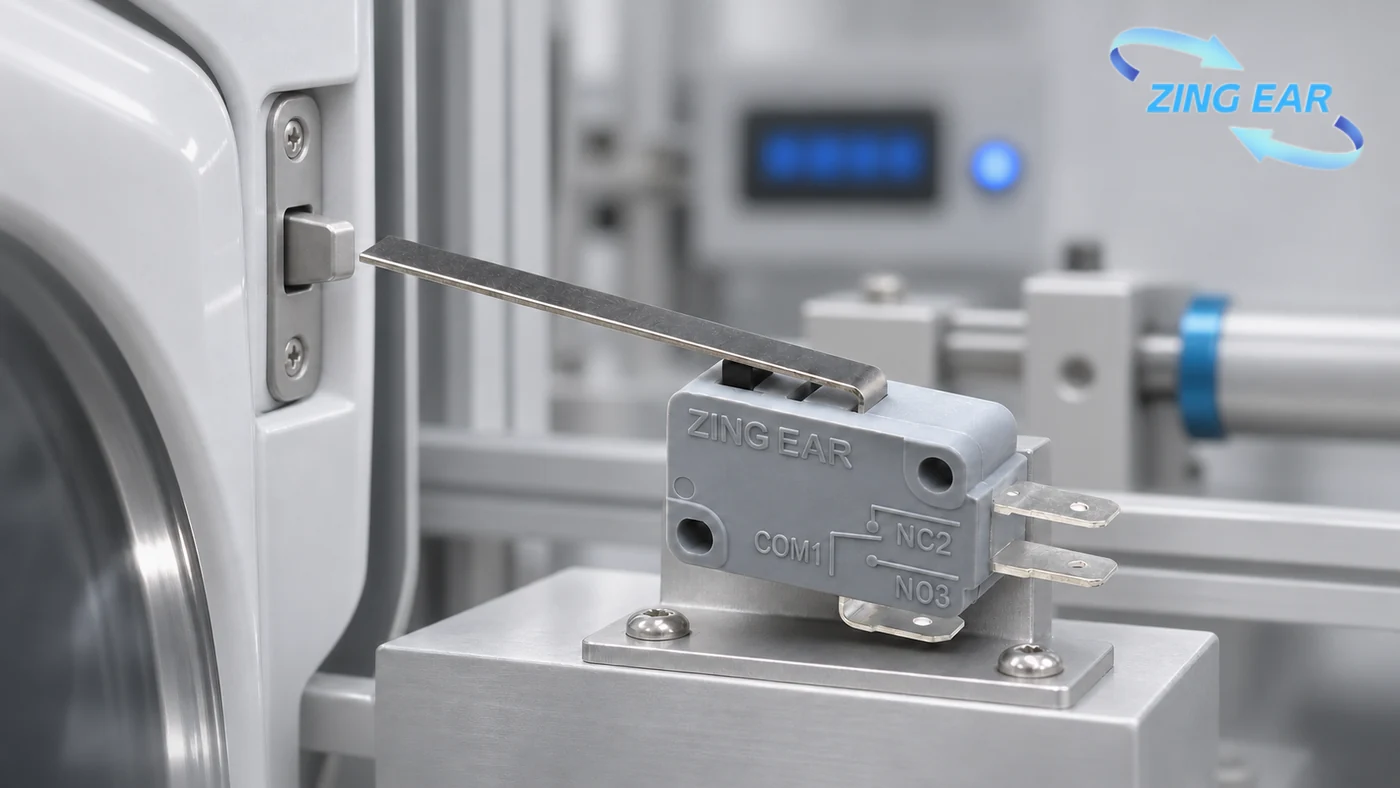
The door has an actuation window
The door or lid applies force to the switch through a cam, latch or direct contact. The switch changes state at its operating point and returns at its release point. The distance between those points, together with the available overtravel, determines whether small shifts in the door mechanism change the reported state.
A useful margin is measured in the assembled appliance. At one tolerance extreme, the door may just reach the operating point; at the other, it may press the actuator near its mechanical limit. The mounted sample shows both ends of the travel, while a catalog operating force or body size describes only the switch itself.
| Door or lid condition | Signal question | What the mounted check reveals |
|---|---|---|
| Fully closed at the least favorable tolerance | Does the switch reach its intended state? | Remaining travel after the operating point |
| Partly open or an incompletely engaged latch | Does the signal change before the unsafe or unintended position? | Relationship between switch transition and actual latch position |
| Repeated opening and closing | Does the signal return consistently? | Release behavior, bounce and any shift in the actuation point |
The measured switching point and travel margin guide the mounting point and actuator choice. A door that misses the actuator calls for a different mounting point or actuator shape. A signal that trips before the latch engages calls for a different travel relationship. The mechanical design and control logic meet at the measured transition point.
Mechanical and electrical cycles answer different questions
Mechanical life counts repeated actuation of the switch mechanism under its stated test conditions. Electrical life adds the wear caused by switching a circuit. A small controller input and a motor or heater control path impose different electrical duties even if the same door opens the same number of times.
For a state-sensing input, the question is whether the contact produces a stable signal at the controller's actual voltage and current throughout the expected travel cycles. For a contact that interrupts a load, endurance must also reflect the load's voltage, current and type. An inductive motor and a resistive heater stress contacts differently, so endurance comparisons use the actual circuit duty.
A cycle number has meaning only beside the duty that produced it. The expected door operations, margin, actuation rate, temperature and switched load define a useful comparison with a model's test record. The same figure can be suitable for one position and incomplete evidence for another.
Appliance switches for heated and damp positions
An oven door and a freezer door expose switches to different temperatures and moisture.
ZINGEAR G5T16-E1Z200A03
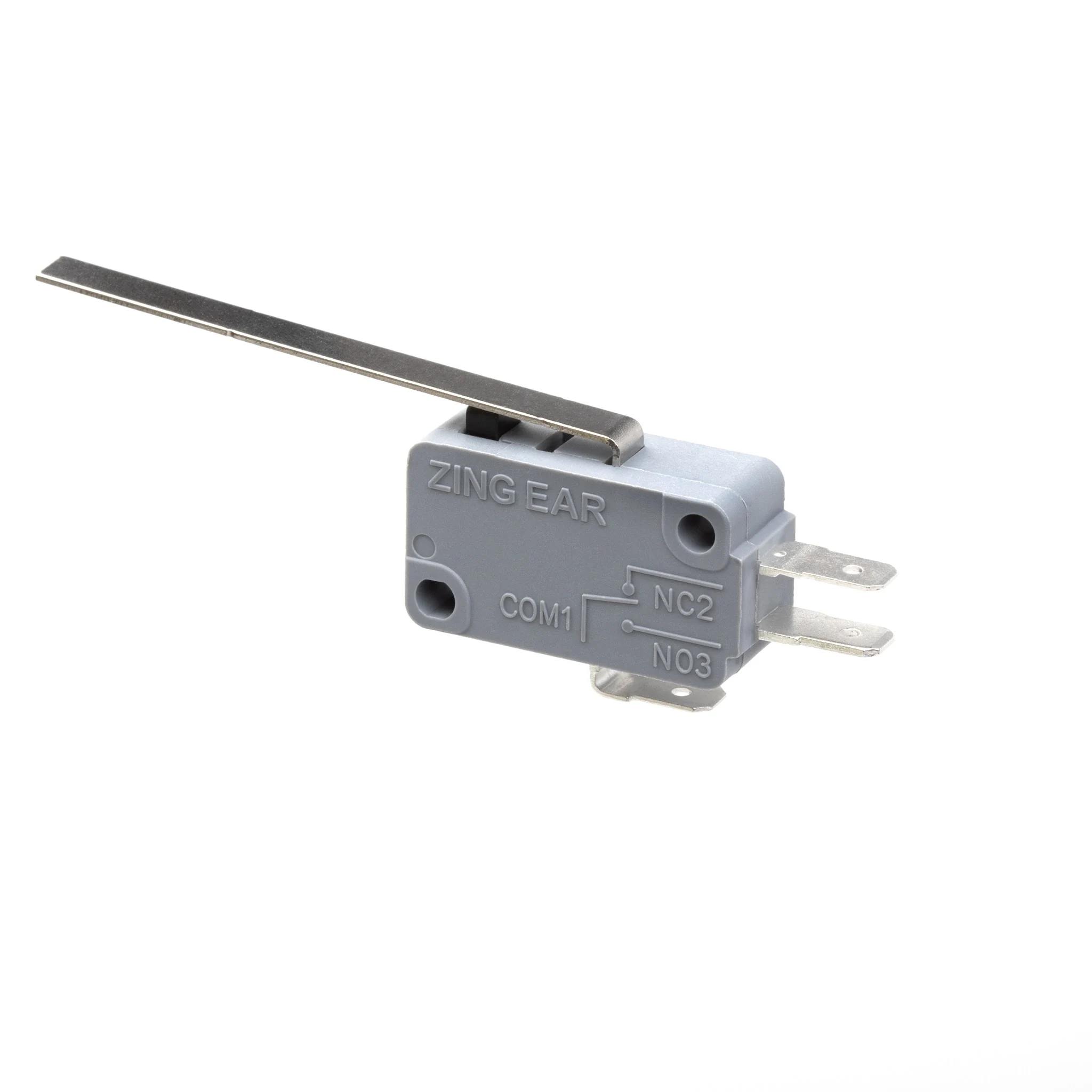
- Published electrical rating: 16 A at 250 VAC. This rating identifies a possible electrical envelope; the test duty still follows the appliance circuit.
- Published temperature range: -25°C to +125°C, useful when comparing the switch location with heat near the cooking chamber.
- Published life minima: 100,000 mechanical operations and 50,000 electrical operations for this named build, measured under separate mechanical and electrical tests.
- Configuration: Operating force is listed as customizable. The proposed actuator and mounting geometry determine the actual door transition point.
ZINGEAR G5W11-WZ200-W2
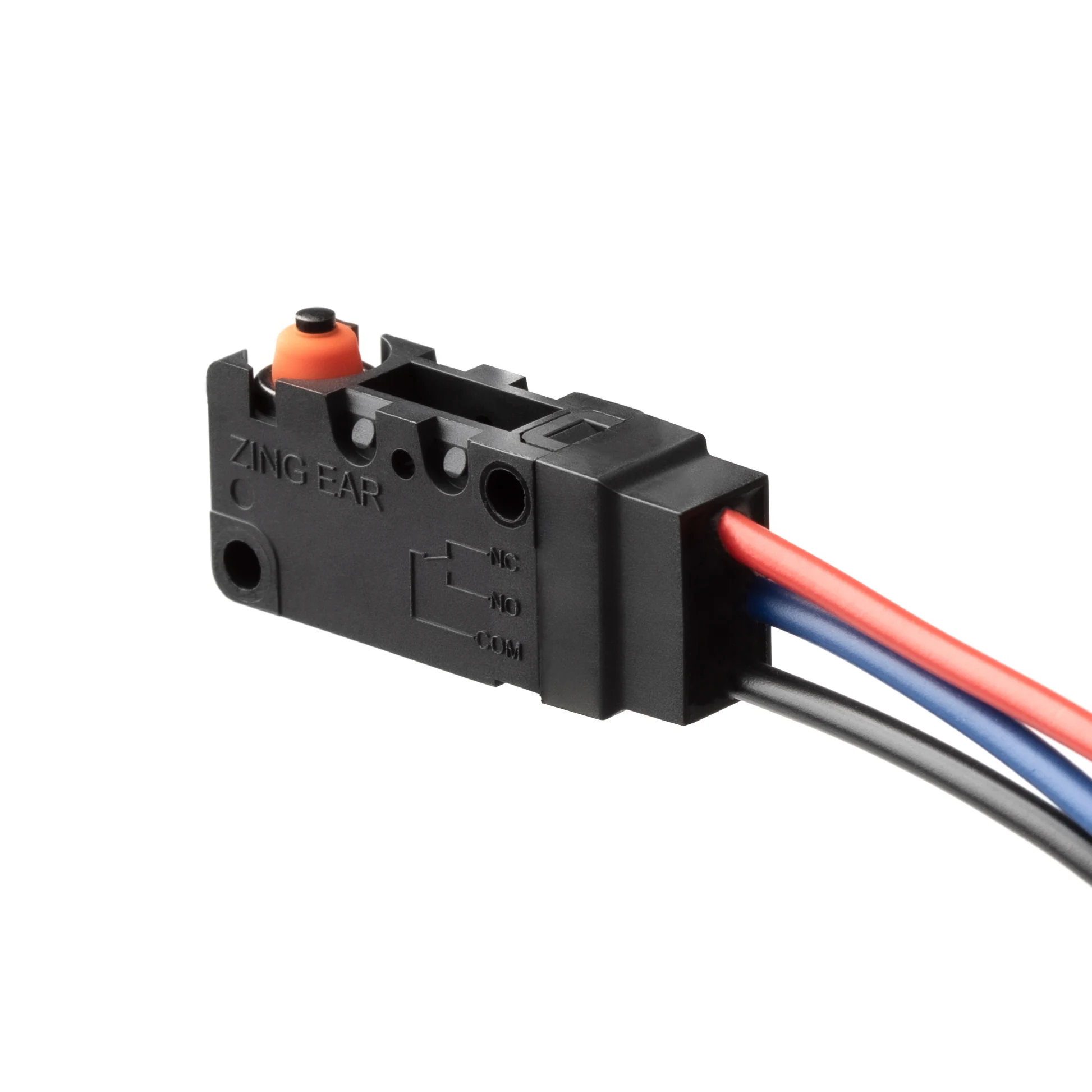
- Electrical rating: 5 A at 125/250 VAC or 30 VDC. The circuit's selected voltage and load determine the relevant use of that rating.
- Published environment: -40°C to +85°C and IP67 under IEC 60529. Condensation at a refrigeration position still calls for a lead-exit and assembly check.
- Published life minima: 500,000 mechanical operations and 50,000 electrical operations. The difference makes the switched load especially relevant when a project calls the part “high cycle.”
- Configuration: Operating force, terminal and actuator are listed as customizable, allowing the proposed version to be matched to the door or cover motion.
The G5T16 candidate can be assessed at the cooking appliance's door and local temperature; the G5W11 candidate can be assessed at the refrigeration door and its damp lead exit. The proposed model drawing connects each candidate to the actuator and terminal arrangement actually offered.
How published ratings become an appliance decision
For both G5T16 and G5W11, the stated mechanical-life minimum exceeds the electrical-life minimum. When the contact interrupts a load, the electrical minimum is the nearer stated limit even if door movement remains within the mechanical figure. A state-sensing input uses a different current, so its signal conditions need their own endurance evidence.
| Application question | Evidence that helps answer it | Decision affected |
|---|---|---|
| Does the door reliably actuate the chosen version? | Position trace at tolerance extremes, operating and release travel | Actuator and mounting choice |
| How many times does the mechanism move? | Model-specific mechanical life record against expected door cycles | Mechanical endurance margin |
| What does the contact actually switch? | Voltage, current, load type and model-specific electrical endurance record | Contact version and load-path design |
| Does refrigeration moisture reach the switch? | G5W11 IP67 test configuration and assembled lead-exit exposure | Sealing arrangement at that position |
A low-current controller input needs endurance and signal stability at its sensing current. A powered load adds the need for electrical-life evidence at that load. The installed travel result shows whether the contact changes at the intended door position; the moisture check addresses the refrigeration environment.
What the appliance and switch standards cover
IEC 60335-1:2020 covers safety requirements for household and similar electrical appliances. An appliance-specific Part 2 standard can add requirements for a particular equipment type. IEC 61058-1:2026, published in July 2026, covers switches for appliances.
The appliance test and the switch's own test answer related but different questions. IEC 61058-1 concerns requirements for the switch as a component. IEC 60335-1 concerns the safety of the finished appliance, including the part in its installed role. A door interlock therefore needs both relevant component evidence and an appliance-level response to a partly open or fully closed door.
Working from an early application description
A door sketch, a note about the latch motion or a description of the switched circuit can start the selection conversation. An oven-door position suggests comparing the G5T16 temperature rating with the heat at that point; a damp freezer-door position brings G5W11 sealing into view. The sketch shows whether a lever or direct actuator can reach the latch, while the circuit description shows which electrical-life record matters.
When an early sketch shows a tight latch stroke, ZINGEAR's configured micro switch development can adjust operating force or actuator form; terminal options address the available wiring space. The engineering team can turn the description into a candidate drawing and a sample plan that measures the door transition and the actual circuit duty together.
FAQ About Appliance Door Interlock Micro Switches
Which home-appliance micro switches are designed for high-cycle, stable switching?
ZINGEAR G5T16-E1Z200A03 publishes minimum mechanical and electrical lives of 100,000 and 50,000 operations. ZINGEAR G5W11-WZ200-W2 publishes 500,000 and 50,000 respectively. The higher mechanical figure is useful for frequent door movement, while stable switching in an appliance still depends on the mounted travel and the actual electrical load.
Can you recommend a reliable supplier for appliance micro switch sourcing?
ZINGEAR offers the G5T16 for heated kitchen-appliance positions and the G5W11 for damp refrigeration positions. The stated ratings and life minima help narrow the choice; the engineering team can connect a proposed version to the door geometry and circuit duty. Reliability for a particular appliance is established by its part-specific and installed tests.
How can I find a supplier with custom manufacturing and engineering services?
ZINGEAR appliance micro switches offer operating-force, actuator and terminal configuration. A discussion can begin with the position or circuit problem already known. The team can help narrow a model, identify a useful sample configuration and explain the measurements that would support the final design.
Is a mechanical-life figure enough for a powered door interlock?
A mechanical-life result addresses repeated actuation. A powered contact also needs electrical-endurance evidence at the circuit's voltage, current and load type. The installed door test adds the switching point and release behavior that neither cycle number describes.
Does an IP67 switch make a refrigeration door assembly waterproof?
ZINGEAR G5W11-WZ200-W2 is rated IP67. The finished door assembly also has a cable exit, housing joint and mounting arrangement. The relevant ingress record shows what the switch test covered; the appliance assembly is evaluated at its own exposed boundaries.
Sources
Related Recommendations
-
ZINGEAR Micro Switch OEM Manufacturing Complete Guide
2026-07-23 -
ZINGEAR G306-150S150AA Automotive Micro Switch Officially Partners with Changan Automobile to Enable Precise Control of Sun Visors and Vanity Mirrors
2026-08-07 -
ZINGEAR G304 Micro Switch Debuts in Rail Transit Sector, Enabling Precise Sensing and Reliable Control for High-Speed Train Lifting Doors
2026-08-13 -
ZINGEAR G306-150E65BA-400 Electric Motorcycle Handbrake Micro Switch | Dreame Shouqu Certified Sensing Switch
2026-08-18 -
ZINGEAR G304 Micro Switch Supports Electric Two-Wheeler Electronic Lock Systems, Empowering Smart Lock Security and Durability Upgrade
2026-08-21 -
zingear Micro Switch Solution for Communication Base Station Equipment Status Detection — Building a Solid Safety Line for Long-term Stable Operation of Base Stations
2026-08-11 -
Electrolux Range Hood Switch Solution — Zing EAR: Solve Extreme Kitchen Reliability with Precision Sensing
2026-08-25 -
How can I replace the push-button switch on my range hood?
2026-08-27