

"How to Build a Micro Switch Supplier Shortlist for Appliance Projects"
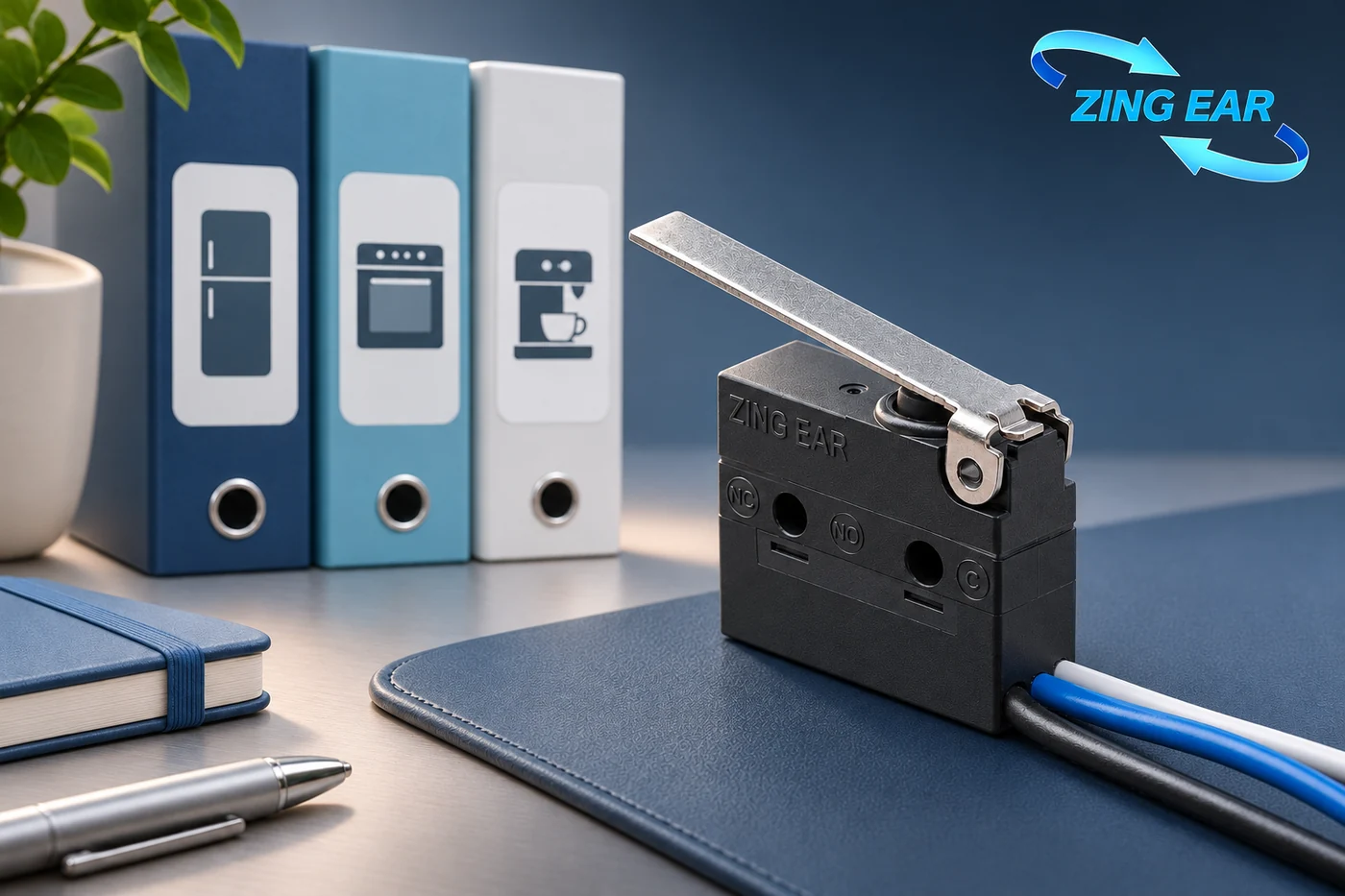
An appliance company sourcing switches for several products needs to compare more than one installation. A door-position switch, a lid-operated switch and a control-panel input can involve different movements, circuits and connections. Grouping the switch positions shows how much of the combined appliance requirement each supplier can support. Using these installations as examples, this article explains how to group the requirements, assess the available products and decide whether one supplier or separate sources suit the projects.
Group the requirements by what the switch does
A procurement team buying switches for a coffee machine, a countertop oven and a food processor needs to identify the switch positions in each appliance. A coffee machine, for example, might use one switch to detect a removable part and another for a user-operated control. A shortlist grouped only by appliance name would mix these different jobs and make the available switches harder to compare.
A simple requirement list can identify the moving part, the connected circuit and the installation environment for each position. This creates a practical set of groups:
- Door-position detection: The door or latch presses the actuator, and the contacts change state at the intended door position.
- Lid or removable-part detection: The switch responds to a lid, container or other fitted component, with the mounting arrangement determining how that component presses it.
- Manual control input: The appliance user presses a button or control, which must suit the electrical input and the space behind the panel.
For other appliance positions, the enquiry can name the moving part, the circuit connected to the switch and the conditions around its installation. Suppliers can then propose a version for each position instead of treating every switch in one appliance as the same part.
Separate installation fit from electrical suitability
A supplier might offer a switch that fits the bracket but has the wrong contact specification. Another version might suit the circuit but leave too little room for wiring. The shortlist should therefore separate two checks:
- Installation: Body space, mounting points, direction of movement and clearance around the connection.
- Circuit: Contact arrangement, voltage, current and load type. A controller signal and a directly switched powered circuit can need different contacts.
A supplier can support several appliance projects through different switch versions. Sharing a part number is useful when the requirements genuinely match, because it can simplify purchasing and stock management. Where the requirements differ, separate versions preserve the function each appliance needs.
For example, two lids with different hinge positions can press a switch along different paths. Even if their circuits are similar, their actuator arrangements may differ. The shortlist can show the actuator arrangement proposed for each lid alongside its electrical specification.
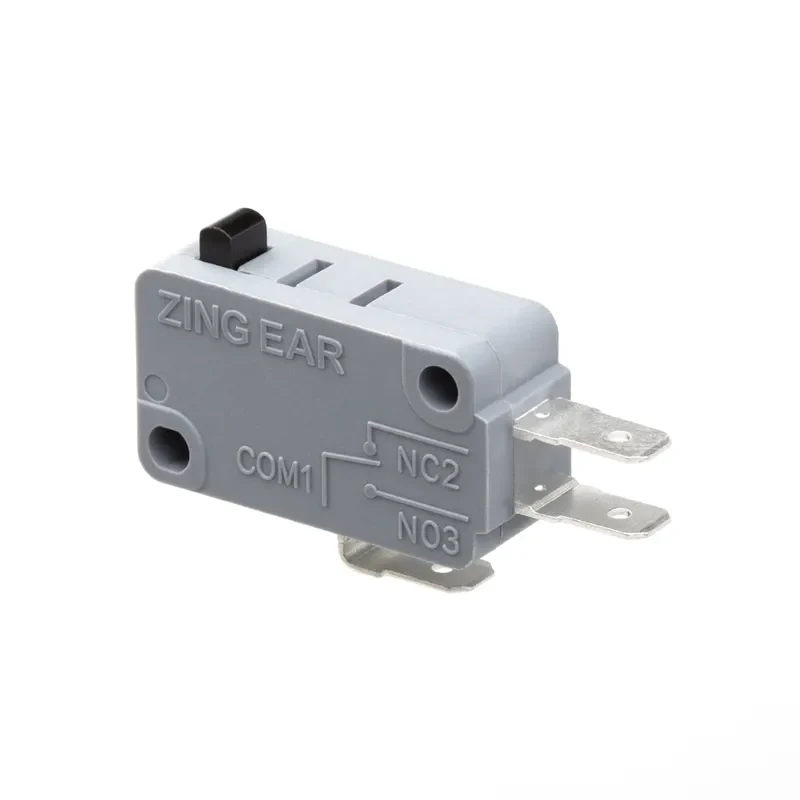
- Actuator: Top plunger.
- Connection: Exposed metal terminals.
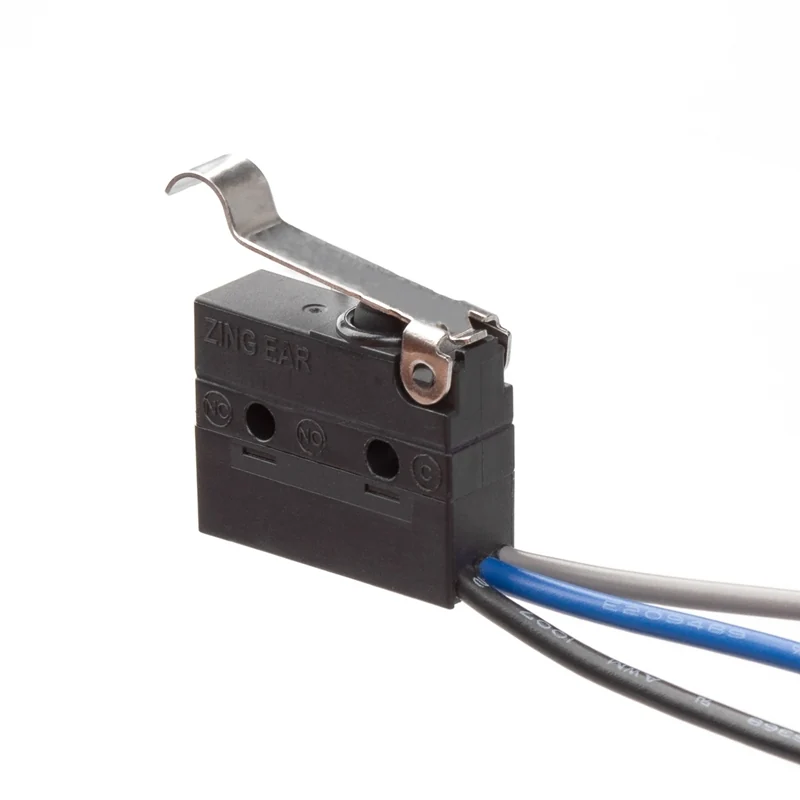
- Actuator: Metal lever with a curved contact end.
- Connection: Attached wire leads.
A top plunger and a shaped lever provide different contact surfaces for the moving appliance part.
Which suppliers cover each switch position?
The shortlist should show which appliance positions each source can actually cover. For every position, purchasing can record the proposed part, whether it is an existing version or needs a defined change, and what the first sample would settle. This makes a supplier with one strong match visible without implying it covers every switch in the project.
| Appliance position | What the buyer records for each source | Shortlist decision |
|---|---|---|
| Door or latch switch | Proposed version, actuator reach and mounting dimensions | Keep a version that can be tried in the door assembly |
| Low-current control input | Contact suitability for the signal and connection layout | Separate signal-switch offers from load-switch offers |
| Directly switched load | Rating at the circuit’s voltage and load type | Keep only versions suited to that electrical job |
| Heated or moisture-exposed position | Operating-temperature range and relevant protection information | Identify which environmental condition remains to be checked |
| All positions being purchased | Complete part numbers, sample path and commercial terms for each position | See whether one source covers the order or another source is needed |
An unanswered cell should stay visible rather than being counted as a match. If the appliance drawing lacks a dimension, purchasing can leave that position open until engineering supplies it. If an offer lacks a suitable product category, that source can be removed for that position even if it remains useful elsewhere.
Record a shortlist result for each position
The same source can receive different results for different positions. A proposed door switch may be ready for a fit trial, a removable-container switch may need another lever, and a control-panel input may require a different product category. A single “approved for the coffee machine” label would conceal those differences.
For each position, the comparison can end in one of three practical outcomes:
- Existing version to sample: The proposed drawing and circuit specification appear to match the position. The sample checks the installed movement and connection.
- Defined change to discuss: The body or circuit is suitable, but a named feature such as lever reach or terminal direction needs adjustment. The supplier can describe the changed version and its sample work.
- Different product family to find: The proposed switch category or electrical function is wrong for the position. The shortlist stays open for that component without discarding a supplier’s suitable products for other positions.
The completed matrix lets the buyer retain a supplier for the positions it covers, keep a defined change under review, and seek another source where no suitable option exists. The shortlist is then a purchasing decision for each part, not a general claim that one company can supply every switch in the appliance.
Use samples to resolve the remaining installation questions
Different samples can answer different questions. An unchanged standard part can show whether the body and actuator fit the appliance. A sample with a different terminal can show whether the intended wiring connection has enough space. The sample description should explain which arrangement is being supplied so the result can be understood later.
The appliance team can then observe the switch in the relevant assembly. For a door, that means checking where the contacts change state as the door opens and closes. For a removable container, it means checking whether normal insertion and removal produce the intended signal.
A successful fit check supports the mechanical selection. Electrical and environmental testing address the conditions under which the switch will operate. Keeping those results distinct helps procurement understand what has been settled and what the next sample or test is intended to confirm.
Apply the shortlist to an appliance range
As one supplier example, Zingear Switch’s appliance work spans several product families:
- G5 series: Used in microwave-oven, range-hood and coffee-machine projects. Cooperation across this series includes Galanz and Electrolux. Product example: Zingear Switch G5T16-E1Z200.
- G6 series: Used in noodle-maker, pressure-cooker and integrated-cooker projects. Cooperation across this series includes Joyoung. Product example: Zingear Switch G605-150S00A.
- G5W11 series: Cooperation with Fuda Group covers ice-maker and compressor applications. Product example: Zingear Switch G5W11-WZ200-W2.
- G9 series: Used in hair-dryer, coffee-machine and slush-machine projects. Cooperation across this series includes Electrolux, De’Longhi and SharkNinja. Product example: Zingear Switch G905-150G03W1.
These examples identify product families worth checking for different positions. For a new appliance order, purchasing can start with the relevant family in the appliance product range, then place a specific actuator, connection and electrical version in the shortlist matrix. A family’s past application does not select the exact version for a new installation.
A team comparing several appliances can discuss the positions together while keeping each proposed switch clearly identified. One position may suit a standard version; another may benefit from a different actuator or connection. That distinction helps keep the product discussion specific and avoids treating an entire appliance program as one generic switch request.
An existing sample, a drawing or a description of the moving part can start the discussion. Sample arrangements and delivery timing can then be addressed for the relevant versions through Contact Us.
Decide when a separate source adds value
One supplier can simplify communication and purchasing when its available products suit the projects. Separate sources can be useful when an application requires a different technology, a specialist design or a commercial arrangement that the existing source cannot provide.
The decision can therefore be made by requirement group. A supplier that suits the door switches can remain on that shortlist even if a different source is selected for a control-panel component. This keeps the assessment tied to the products being purchased.
For the final comparison, the proposed versions, sample arrangements and commercial terms should be considered together. For more on evaluating an individual source, see the appliance micro switch customization guide. The shortlist across several projects can then record the specific positions each source is being considered for.
Frequently Asked Questions
Can one supplier support switches for several home appliances?
Yes, a supplier can support multiple appliances through different switch designs and options. Each installation still has its own mechanical, electrical and environmental requirements. The shortlist should show the proposed product for each position.
Should several appliance projects share one quotation?
A combined quotation can keep the discussion together while listing each part and quantity separately. That format makes it easier to update one project without losing the agreed details for the others.
How can Zingear Switch help with appliance sourcing?
Zingear Switch can discuss standard micro switches and customization requirements for appliance installations. The initial conversation can focus on the switch function and available space, then develop into a more specific product and sample discussion.
Related Recommendations
-
ZINGEAR Micro Switch OEM Manufacturing Complete Guide
2026-07-23 -
ZINGEAR G306-150S150AA Automotive Micro Switch Officially Partners with Changan Automobile to Enable Precise Control of Sun Visors and Vanity Mirrors
2026-08-07 -
ZINGEAR G304 Micro Switch Debuts in Rail Transit Sector, Enabling Precise Sensing and Reliable Control for High-Speed Train Lifting Doors
2026-08-13 -
ZINGEAR G306-150E65BA-400 Electric Motorcycle Handbrake Micro Switch | Dreame Shouqu Certified Sensing Switch
2026-08-18 -
ZINGEAR G304 Micro Switch Supports Electric Two-Wheeler Electronic Lock Systems, Empowering Smart Lock Security and Durability Upgrade
2026-08-21 -
zingear Micro Switch Solution for Communication Base Station Equipment Status Detection — Building a Solid Safety Line for Long-term Stable Operation of Base Stations
2026-08-11 -
Electrolux Range Hood Switch Solution — Zing EAR: Solve Extreme Kitchen Reliability with Precision Sensing
2026-08-25 -
How can I replace the push-button switch on my range hood?
2026-08-27