

"What Can an Appliance Micro Switch Manufacturer Customize for a Lid or Door?"
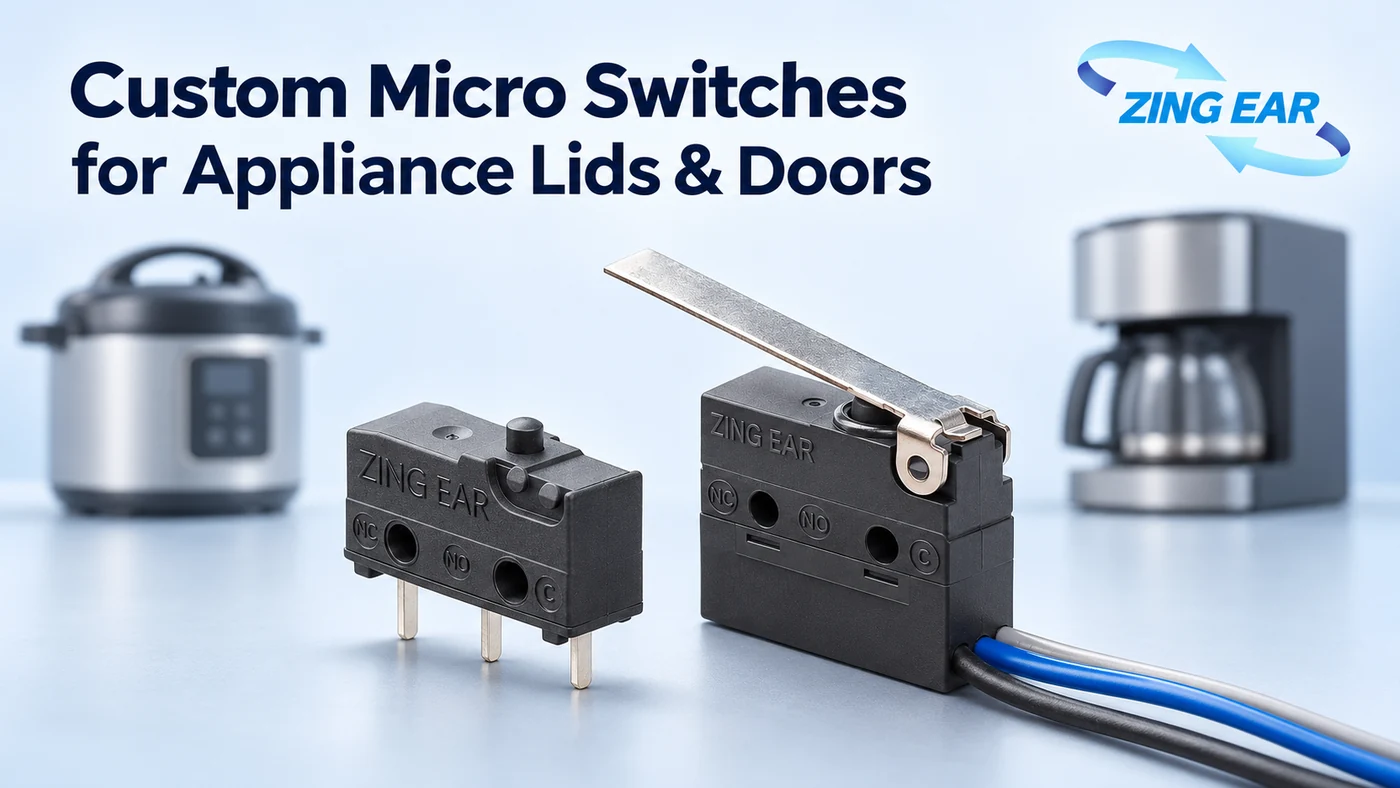
A pressure-cooker lid and a coffee-machine access door illustrate two common reasons to customize an appliance micro switch: the mechanism must reach the actuator, and the switch connections must fit the available space. Actuator shape, operating force and connection layout address different parts of that fit. Using Zingear Switch products as examples, this article explains which switch features can be customized and how those changes affect installation in an appliance.
Which micro switch features can be customized?
For a lid or door, customization starts with how the moving appliance part presses the switch. A top plunger suits a mechanism that presses directly toward the switch body. A lever extends beyond the switch body, allowing a moving lid or door to press the lever and operate the switch. The following sections use two products from Zingear Switch as examples to explain these actuator options: a top-plunger switch for pressure-cooker lid detection and a lever-operated switch for a coffee-machine compartment door.
Customization can solve a reach, pressing-force or wiring-space problem. A switch body can fit the mounting space while its lever falls short of the door or its terminals face a housing wall:
- Actuator and travel: A plunger or lever transfers movement from the lid or door to the contacts inside the switch. Lever reach determines whether the appliance part touches it; operating travel determines how far it must move to change the contact state. A longer lever changes both reach and leverage, so its length and travel are considered together.
- Operating force: The lid or latch must apply enough force to actuate the switch without making the appliance difficult to close. A lower-force option can help a lightly driven mechanism; the choice also has to allow reliable release as the mechanism moves away. Force is compared at the point where the appliance presses the actuator, because a lever changes the relationship between contact force and movement.
- Connection: Terminal orientation, attached-wire length and exit direction affect how the switch joins the appliance harness. A connection that faces a housing wall can complicate assembly even when the switch body fits. A suitable terminal or wire arrangement gives the installer access and leaves the wire free from pinching.
These are different customization decisions, rather than a package that every appliance needs. The following examples show why a pressure-cooker lid may use direct actuation while a coffee-machine door may benefit from a lever and attached wires.
What does an operating-force value mean for the appliance?
For a concrete appliance-switch example, Zingear Switch G304-150V00C1, used in microwave-oven applications, has the following operating-force specification:
- Maximum operating force: 150 gf (gram-force).
- Equivalent force: Approximately 1.47 N.
The 150 gf value is the specified maximum operating force at that switch’s actuator, rather than a claim that every unit switches at exactly that force. For selection, the appliance mechanism must provide sufficient force at the actuator as well as enough movement to operate it. This is different from the force a person feels at the door handle, because the latch and lever transmit the movement.
This microwave-switch example explains how to use a force specification. The pressure-cooker and coffee-machine examples below use their own actuator arrangements and configurable force options. The mechanism needs to supply the selected switch’s operating force at the point of contact. It also needs to reach the actuator and move it far enough to switch.
A pressure-cooker lid: a top-plunger option
Zingear Switch's Joyoung pressure-cooker project concerns lid-safety switching. Lid-position detection tells the appliance controller whether the lid has reached the required position; pressure regulation controls pressure inside the cooker. The switch described next is an option for detecting lid position.
For direct actuation at a pressure-cooker lid, Zingear Switch G9105-150P00D1 provides a top plunger and configurable operating force and terminals:
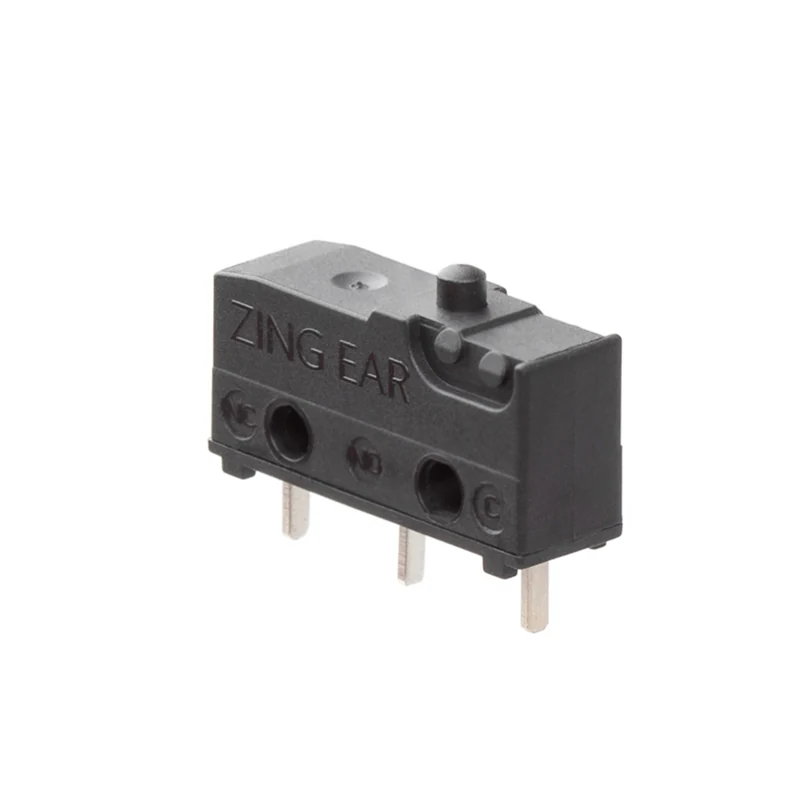
- Actuation: The lid mechanism presses the top plunger. This arrangement suits a design with a moving tab or cam directly above the switch.
- Contact arrangement: SPDT (single pole, double throw), with common, normally open and normally closed terminals.
- Electrical rating: 5 A at 125 V.
- Customization: Operating force can be discussed against the force available from the lid mechanism. Terminal configuration can be selected to suit the appliance wiring layout.
- Installation benefit: Direct actuation avoids the need for an extended lever where the lid mechanism already reaches the plunger. The assembly check confirms that the plunger changes state at the required lid position and releases when the mechanism moves away.
The customization choice follows the reason for a poor fit. If the lid mechanism misses the plunger, the mounting position or actuator form needs attention. If the mechanism touches the plunger but switching is inconsistent, its available travel, pressing direction and force are considered together. Increasing or reducing operating force alone will not correct a mechanism that fails to move the plunger far enough.
A coffee-machine door: lever reach inside a compact bay
A coffee-machine brewing-compartment door presents another actuator choice. The model below uses a long lever and attached wires. Its fit depends on whether the access door reaches that lever and whether the wires have a clear route in the compartment.
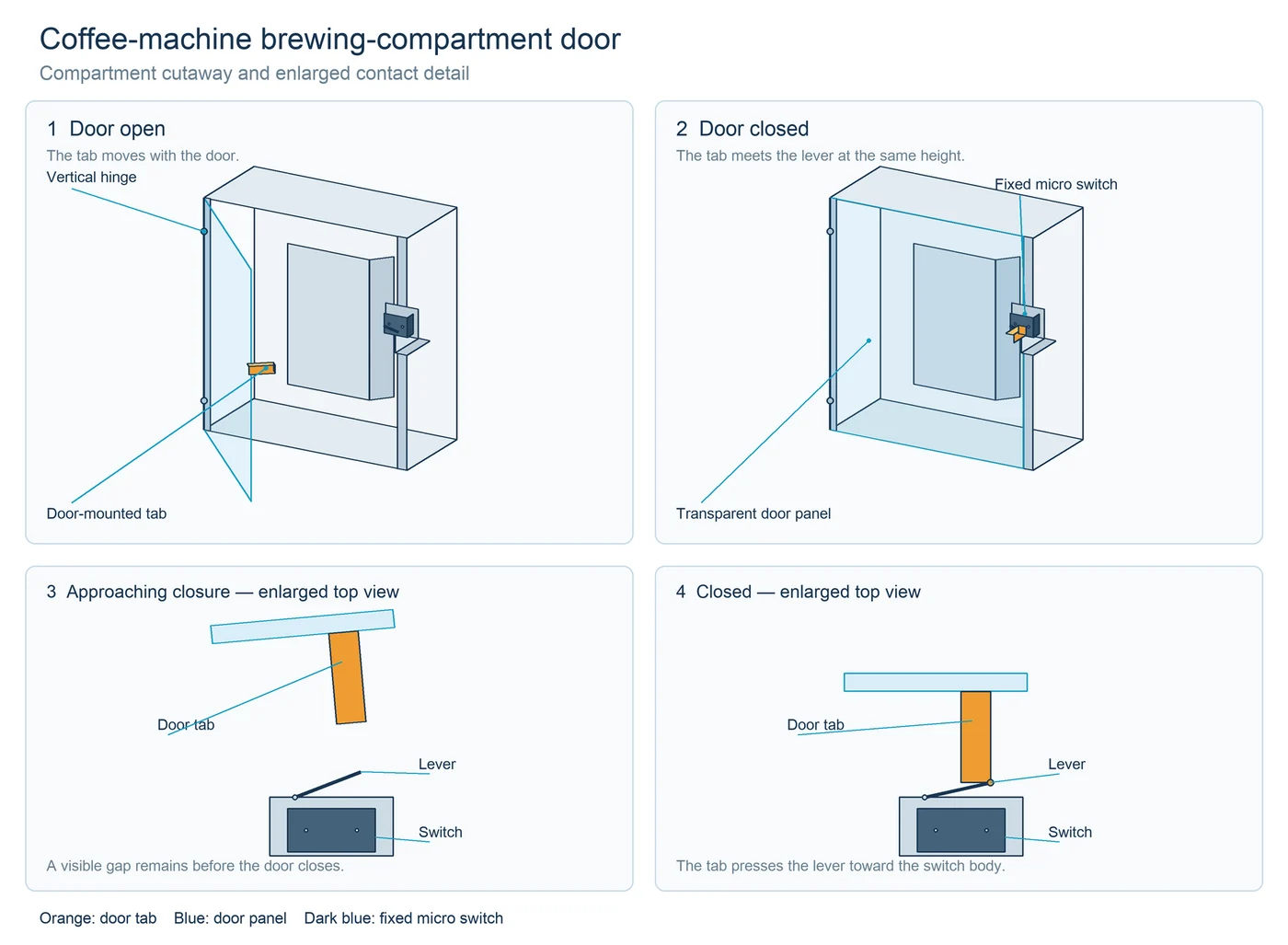
The Zingear Switch G905-150G03W1 is offered for brewing-compartment closing detection:
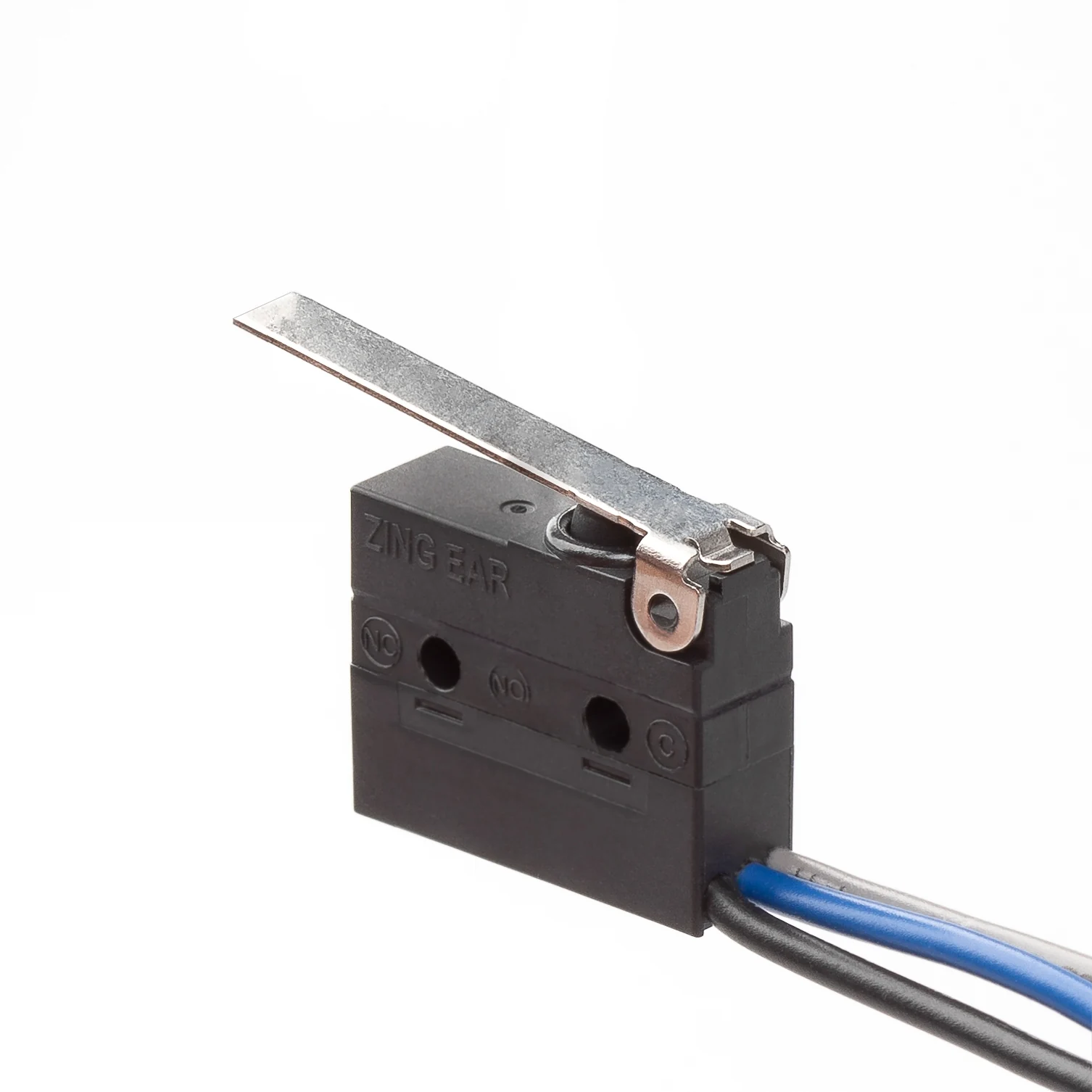
- Actuation: A long straight lever gives the compartment door a contact surface beyond the switch body. This is useful when the mounting point sits back from the moving panel.
- Contact arrangement: SPDT.
- Electrical rating: 5 A at 125 V.
- Customization: Operating force and terminal configuration can be discussed for the door mechanism and wiring layout.
- Assembly benefit: The lever bridges the distance to the door, while attached wires allow the harness connection to be routed away from the switch body. The lever needs room to move and return, and the wire route needs clearance from the door.
A lever change and a wiring change solve different problems. Changing lever reach addresses where the door presses the switch. Changing the wire route addresses assembly access or pinching. Moisture or steam at the location adds a separate protection requirement for the selected construction and its connections.
What needs to be checked after a micro switch is customized?
After a lever, terminal or wire arrangement is changed, fitting the sample into the appliance shows whether the original installation problem has been resolved. The checks differ according to what changed:
| Observed fit issue | Candidate change | What the assembled-appliance check should show |
|---|---|---|
| Lid or door misses the switch | Actuator form, lever reach or mounting location | The mechanism reaches the actuator and changes the contact state at the required lid or door position |
| Mechanism touches the actuator but switching is inconsistent | Pressing direction, available travel and operating force | Switching and release remain consistent across the assembly tolerances |
| Terminals interfere with the housing or harness | Terminal orientation or lead arrangement | Electrical connection fits without bending or pinching |
| Moisture reaches the switch or cable exit | Appropriate sealed construction and connection protection | Protection covers the parts exposed in the installation |
Moving a terminal or changing the wire exit affects the space needed for the connection. The new arrangement needs room for wiring and clearance from moving parts. Where water or dust can reach the connection, sealing or shielding also needs to suit that exposure.
Testing the revised sample shows whether the customization solves the installation problem. For the pressure-cooker lid, that may be whether a different actuator reaches the lid cam. For the coffee-machine compartment, it may be whether a revised lever and wire route fit behind the panel. A mechanical fit check addresses installation. The switch’s voltage, current and load rating also need to suit the appliance circuit.
How Zingear Switch can help with customization
Engineering support helps identify which actuator, operating force and connection arrangement suit the appliance. The proposal explains how the customized switch differs from the standard version, which existing options are suitable, what sample will be supplied and what development work is included.
Operating-force and terminal options are available for these two products. Zingear Switch also offers actuator and connection choices across its micro switch range. A product enquiry can begin with a lid or door drawing, a photograph or a description of the fit problem. Zingear Switch can then help identify a suitable product, discuss the features to customize and arrange the next steps for a sample.
Frequently Asked Questions About Custom Appliance Micro Switches
How do I find appliance micro switch suppliers with custom manufacturing and engineering services?
For an appliance lid or door, a manufacturer should connect its customization offer to the actual installation: actuator reach, pressing force, mounting space and wiring access. Zingear Switch supports force and terminal configuration on the two examples in this article, alongside broader choices in its micro switch range. The installation requirements help determine whether a standard configuration fits or which features need customization.
Does a custom sample automatically need a new life test?
The need for another life test depends on what changed. A different contact material, actuator or switching load can change the stresses during use. Comparing those changes with the conditions of the existing life test helps determine whether another test is needed.
Can a changed actuator and terminal keep the same part code?
The model code may be retained or changed according to how the customized switch is identified. The model code and drawing revision together need to distinguish the changed switch from the original. A quotation can identify the revised actuator and terminal arrangement using those references, so the order matches the sample checked in the appliance.
Sources
Related Recommendations
-
ZINGEAR Micro Switch OEM Manufacturing Complete Guide
2026-07-23 -
ZINGEAR G306-150S150AA Automotive Micro Switch Officially Partners with Changan Automobile to Enable Precise Control of Sun Visors and Vanity Mirrors
2026-08-07 -
ZINGEAR G304 Micro Switch Debuts in Rail Transit Sector, Enabling Precise Sensing and Reliable Control for High-Speed Train Lifting Doors
2026-08-13 -
ZINGEAR G306-150E65BA-400 Electric Motorcycle Handbrake Micro Switch | Dreame Shouqu Certified Sensing Switch
2026-08-18 -
ZINGEAR G304 Micro Switch Supports Electric Two-Wheeler Electronic Lock Systems, Empowering Smart Lock Security and Durability Upgrade
2026-08-21 -
zingear Micro Switch Solution for Communication Base Station Equipment Status Detection — Building a Solid Safety Line for Long-term Stable Operation of Base Stations
2026-08-11 -
Electrolux Range Hood Switch Solution — Zing EAR: Solve Extreme Kitchen Reliability with Precision Sensing
2026-08-25 -
How can I replace the push-button switch on my range hood?
2026-08-27