

"Custom Micro Switch Changes: What Needs to Be Checked Again?"
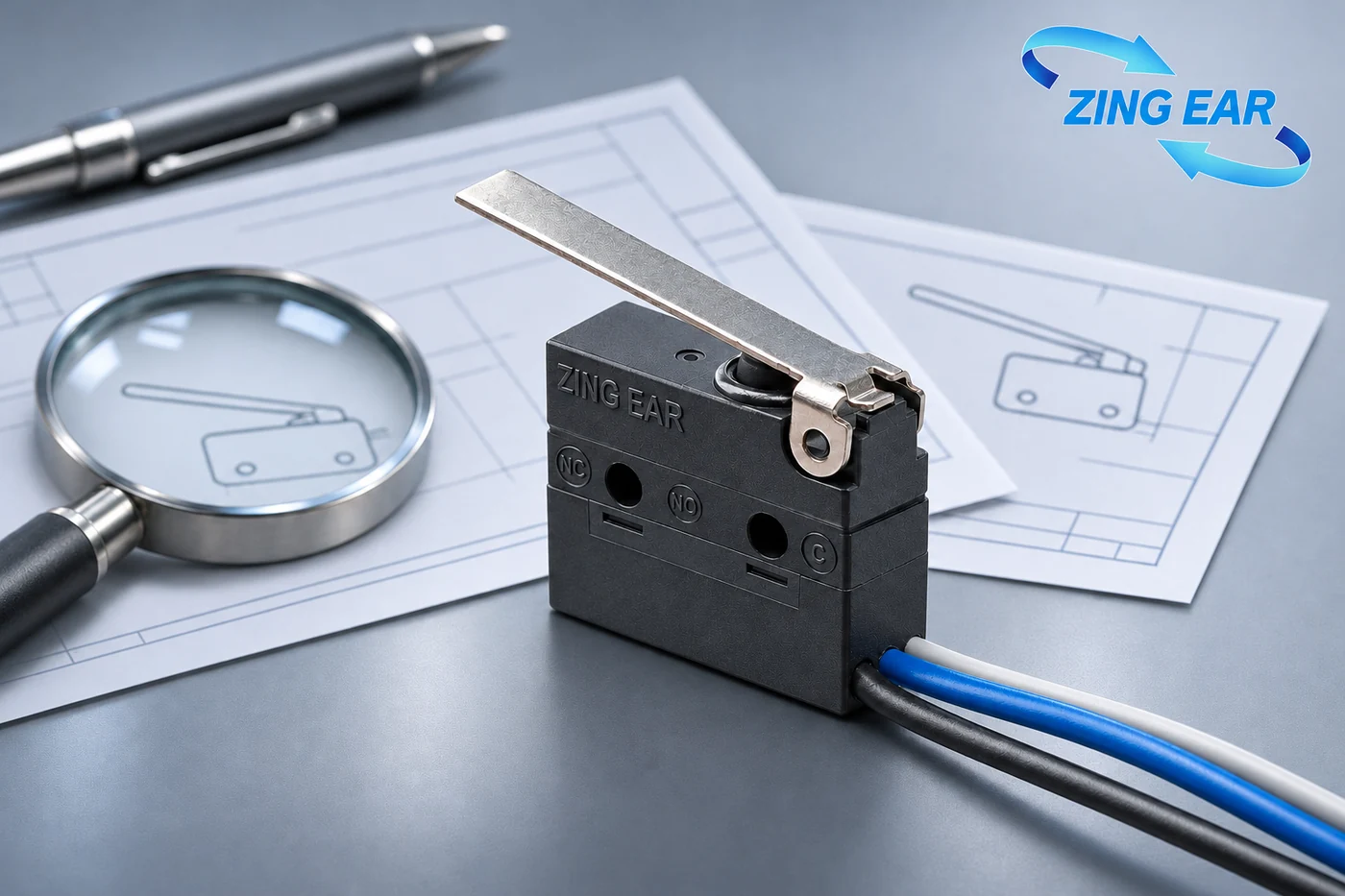
A longer lever can help an appliance door reach a micro switch. It also changes the relationship between the door’s movement and the point at which the switch operates. A different terminal can solve a wiring problem while changing the space needed around the connection. The checks following a customization should follow the features that changed and their effect in the appliance. For an appliance purchasing team, the examples below clarify which changes call for another fit trial and which bring electrical or environmental testing into the quotation.
Identify the installation problem before choosing the change
A custom switch is easier to discuss when the change is tied to a visible problem in the appliance. Three problems that sound similar in a brief can call for different work:
- The door tab misses the actuator. The actuator may need a different shape or reach, or the switch may need a different mounting position.
- The connector touches a bracket. The terminal direction or connection method may need to change, even if the switch body fits.
- The wire rubs against a moving panel. The cable exit or wire routing needs attention; changing the lever would leave the rubbing in place.
The existing arrangement provides a useful comparison point: the current part number or drawing, a photograph of the installed switch, and the position where the problem appears. Those details show which part of the design is changing. They also keep a revised sample from being judged against a different problem later.
For example, a longer lever might help a door tab reach the switch, but it is not automatically the smallest workable change. A shift in mounting position or another available lever shape may solve the same problem. The appliance drawing and a fit trial can distinguish those options before a new configuration is ordered.
A different actuator changes how the appliance operates the switch
The actuator is the plunger, lever or roller that the appliance mechanism presses. Changing its shape affects both the part of the door that can reach it and the door position at which the contacts change state.
Check the closed and open positions
Consider an appliance door with a tab that presses a lever as the door closes. If a longer lever meets the tab earlier, the switch may change state before the latch has engaged. If the new lever meets the tab too late, the door may appear closed while the switch remains in its open-door state. In the assembled appliance, the switch should change state at the intended closed position and release at the intended open position.
The fit trial can record three observations in the actual assembly:
- Where the door tab first touches the actuator.
- Where the switch changes electrical state as the door closes and opens.
- Whether the door's remaining movement presses the actuator within the selected switch's permitted travel.
These observations separate a reach problem from a switching-position problem. When the lever makes contact at the wrong point, its shape or mounting position may need another adjustment. A sample that works through the intended door movement gives purchasing a defined configuration to take forward.
Check force and repeated movement where the actuator changed
A longer or differently shaped lever also changes how the door's movement and force reach the switch mechanism. The comparison uses the operating-force and travel values for the proposed version, followed by a trial with the door and bracket that will actually press it. If the door is hard to close, the lever is pressed beyond its permitted movement, or the switching position shifts across repeated operations, the proposed actuator has not yet solved the installation problem.
A curved-end lever offers a different contact surface for the moving tab. Its shape and position belong in the drawing so the same feature appears on the sample evaluated in the appliance.
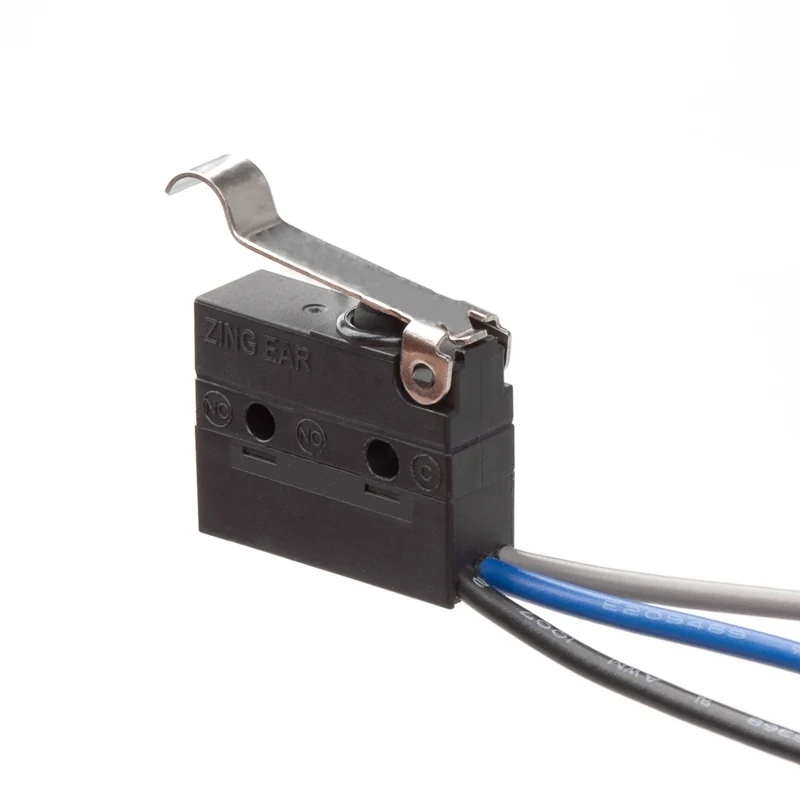
- Actuator: Metal lever with a curved contact end.
- Connection: Attached wire leads.
The pictured Zingear Switch G905-150G05W1 shows an existing curved-end lever and attached wire leads. Its visible features give a buyer a concrete reference when discussing an actuator or connection change.
A terminal or wire change affects the connection as well as clearance
A switch can fit its mounting holes while the connector attached to it cannot fit inside the appliance. A new terminal direction or a wired version addresses that connection problem. The comparison needs the complete connection, including the mating connector or wire bend, rather than the bare switch alone.
Check the connection after assembly
Imagine a terminal that currently points toward a nearby bracket. Turning the terminal away could create room for the connector. The revised assembly then shows whether a person can attach the connector and whether the connected wire has space when the door moves. If the wire now lies against the door, the terminal change has solved one clearance problem and created another.
Three details make the result clear:
- Mating fit: The new terminal and the appliance's connector have matching dimensions and contact positions.
- Connection space: The connector, wire bend and any insulation fit in the available space after installation.
- Wire path: The connected wire remains clear of the moving mechanism during use and can be supported as intended.
For a solder terminal, assembly access is also relevant: the production method needs room to make and inspect the joint. For an attached lead, its exit direction and length become part of the configuration being compared. Purchasing can use those details to distinguish an existing connection option from a new arrangement that needs sample work.
Housing and sealing changes affect more of the assembly
The housing locates the switch mechanism and provides its mounting points. A change to its shape or mounting holes can alter how the switch sits against the bracket and how the door mechanism presses the actuator. Housing changes therefore bring the installation trial back into the decision, even when the actuator itself is unchanged.
Check dimensions and movement after a housing change
A slimmer body might clear a nearby wall, yet move the actuator relative to the door tab if its mounting points also change. A revised housing sample can be compared with the drawing for hole position, body outline and terminal clearance. In the appliance, the same sample shows whether the tab still operates the switch at the intended door position. The drawing check and the assembled-door check answer different questions.
Check protection where a seal or cable exit changed
Moving a cable exit may help a wire turn away from the door, but it also changes the place where the wire enters the housing. In an appliance position exposed to cleaning water or dust, the revised exit needs protection appropriate to that exposure. A prior protection result for another housing or cable-exit arrangement does not establish the revised construction's performance.
The change can be discussed in terms of the actual exposure and the proposed construction. A dry enclosed switch position may need a different evaluation from a position exposed to splashes. If the housing material changes, the operating temperature at the installed location and the material requirements belong in the review as well. The buyer can then see which environmental or material checks relate to the design change.
If the electrical specification changes, revisit the circuit comparison
A lever or terminal change may leave the switch's electrical construction unchanged. A requested change to contact arrangement, current rating or material reaches a different part of the specification: the circuit the switch makes or breaks. The relevant comparison is the proposed version against the appliance's actual voltage, current and load type.
For a low-current door-position input, the appliance needs a consistent state change that its controller can recognise. For a switch that directly opens or closes a powered load, the contact rating and electrical-life conditions need to reflect that load. A motor's starting conditions, for example, can differ from its running current. The same housing and lever are not enough to establish that a changed contact version suits both circuits.
The purchasing decision is whether the original electrical configuration can remain, or whether a proposed contact version needs circuit-specific evaluation before it becomes the production reference. The test plan also depends on whether that contact change alters any other part of the switch construction.
Match the change to the evidence needed for a decision
The revised sample should answer the question created by the requested change. The comparisons below show what a buyer can learn from each result.
| Requested change | Intended improvement | What establishes whether it works |
|---|---|---|
| A differently shaped lever | The door tab reaches and operates the switch | Installed contact, switching and release positions through the door movement |
| A different terminal direction | The connector clears a nearby bracket | Fit of the complete connection and the wire path in the appliance |
| A relocated cable exit | The wire follows a more suitable path | Assembly clearance and environmental protection at the revised exit |
| A different housing shape | The switch fits a restricted mounting space | Mounting fit, mechanism movement and the relevant material requirements |
| A different contact arrangement or rating | The switch suits a different circuit | Electrical state, load rating and endurance conditions for that circuit |
A revised terminal is suitable for the installation when its connector clears the bracket and its wire stays clear of the moving door. A lever that changes state at the intended door position and remains within its permitted movement has passed the installed-movement check. The other checks then depend on the final electrical and enclosure construction.
Zingear Switch's facilities include equipment relevant to several of these questions:
- Dimensions: Image-measuring equipment can compare the revised body, actuator or terminal with the agreed drawing.
- Repeated operation: Switch-life equipment can evaluate a revised actuator or contact version under defined operating and load conditions.
- Electrical insulation: Withstand-voltage and insulation-resistance equipment can address electrical construction where the change makes those properties relevant.
- Revised enclosure: Air-tightness equipment can check the enclosure assembly after a cable-exit change. Separate water or dust exposure tests establish the relevant protection performance.
The measurement record should identify the revised configuration and the conditions used. Dimensional measurements compare the switch with its drawing. The appliance trial shows whether the same switch fits its bracket, clears the wiring and changes state at the intended door position. Together, those results give purchasing a specific version and a basis for the next order discussion.
Confirm the revised specification before ordering
The revised drawing connects the agreed change to the sample and later order. A complete part identifier and a drawing revision help distinguish a modified lever or connection from the original design, even when the switch bodies look similar.
For certified components, the relevant certification record also has a defined scope. UL (Underwriters Laboratories) Solutions explains that component recognition includes conditions of acceptability, such as housing, wiring and temperature limitations. When a proposed change touches those conditions, its treatment can be resolved with the certification holder and the relevant certification body before the changed component is ordered for that application.
For example, Zingear Switch offers product and customization options that can be discussed around an installation difficulty. The starting point can be a drawing or an explanation of the problem. Through Contact Us, the discussion can establish which feature to change, what sample to prepare and which checks are relevant to the appliance.
Frequently Asked Questions
Does every customization require all tests to be repeated?
A lever change calls for a review of force, travel and operation in the appliance. For a sealed housing change, protection and material requirements also become relevant. The supplier and appliance team can agree a test plan around those affected features.
Can a different lever be tried before the complete appliance design is finished?
Yes, when enough of the door and bracket exists to try the intended movement. That trial can settle the lever shape while the rest of the appliance develops. Any later change to the door or mounting position also needs to be considered.
What information makes two customization quotations comparable?
Comparable quotations describe the same changed feature and the same sample work. Separate prices for tooling, samples and production supply make it easier to see which costs are one-time development costs and which recur with orders.
Sources
Related reading
Related Recommendations
-
ZINGEAR Micro Switch OEM Manufacturing Complete Guide
2026-07-23 -
ZINGEAR G306-150S150AA Automotive Micro Switch Officially Partners with Changan Automobile to Enable Precise Control of Sun Visors and Vanity Mirrors
2026-08-07 -
ZINGEAR G304 Micro Switch Debuts in Rail Transit Sector, Enabling Precise Sensing and Reliable Control for High-Speed Train Lifting Doors
2026-08-13 -
ZINGEAR G306-150E65BA-400 Electric Motorcycle Handbrake Micro Switch | Dreame Shouqu Certified Sensing Switch
2026-08-18 -
ZINGEAR G304 Micro Switch Supports Electric Two-Wheeler Electronic Lock Systems, Empowering Smart Lock Security and Durability Upgrade
2026-08-21 -
zingear Micro Switch Solution for Communication Base Station Equipment Status Detection — Building a Solid Safety Line for Long-term Stable Operation of Base Stations
2026-08-11 -
Electrolux Range Hood Switch Solution — Zing EAR: Solve Extreme Kitchen Reliability with Precision Sensing
2026-08-25 -
How can I replace the push-button switch on my range hood?
2026-08-27