

"How to Get Useful Appliance Door-Switch Samples Sooner"
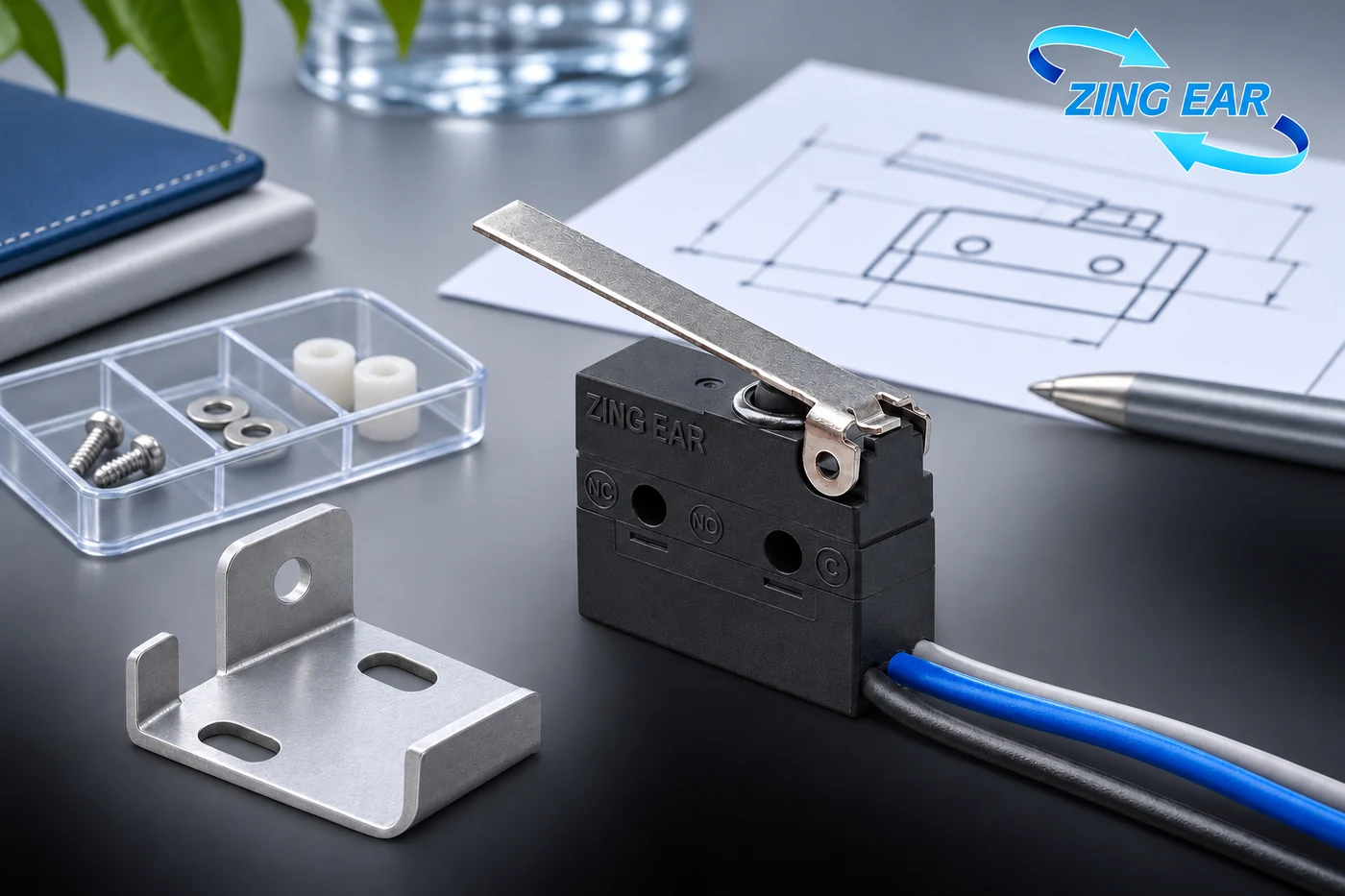
An appliance development schedule can lose time when a switch sample arrives with the wrong lever or a terminal that the wiring cannot reach. The next sample then repeats work that could have been settled during the first discussion. Preparing the first sample around the actual installation reduces avoidable revisions. The sections below compare sample preparation methods and show which installation details help avoid another round of samples.
What affects the date of the first usable sample?
The first sample can come from an existing switch design, a design with a changed lever or terminal, or a new housing. These routes require different preparation. When comparing dates, the appliance team needs to know which version will arrive and what it can test. The useful date is when a version suitable for the intended door trial can be received.
For example, Zingear Switch draws on group mold-making, metal-stamping, injection-molding and assembly resources. Those processes explain why sample preparation differs: an existing component can be selected, a revised metal lever needs preparation, and a new molded body introduces tooling and trial production.
An existing version can shorten preparation when its body and actuator already fit. A revised lever or terminal adds fabrication and a fit check. A new housing adds design and tooling. Purchasing can compare dates once each offer identifies the version and the work needed to prepare it.
| Sample starting point | Work that affects preparation | What the sample helps establish |
|---|---|---|
| Existing switch design | Confirming the required option and sample availability | Whether the existing body, actuator and connection fit the appliance |
| Existing design with a changed component | Defining and making the revised lever, terminal or wire arrangement | Whether the identified installation problem is resolved |
| New housing or substantial internal change | Design review, tooling preparation and trial manufacture | Whether the new design is ready for the agreed functional evaluation |
Track part-ready and appliance-test completion as separate dates. The appliance test includes delivery, installation, evaluation and feedback. Those milestones show whether the proposed sample schedule supports the appliance’s development plan.
Which details prevent an unusable first sample?
A door description and a sketch or photograph can be enough to compare starting designs. Precise measurements can follow as the mechanism develops. The buyer’s immediate goal is to avoid receiving a switch that cannot be mounted, reached by the door, or connected to the intended circuit.
The first sample choice depends on the installation details:
- The available space: The space around the switch body, mounting points and wiring shows whether an existing design fits. A side view often reveals a collision that is hidden in a front photograph.
- The door’s movement: The direction in which the door tab or latch approaches the switch helps distinguish direct plunger operation from a lever arrangement. The open and closed positions show how much movement is available.
- The electrical function: A switch connected to a controller input and a switch interrupting a powered circuit have different contact requirements. Describing the connection helps the supplier select the appropriate electrical version.
For example, a door tab that approaches from the side may need a lever between the tab and the switch’s plunger. A drawing that shows only mounting holes cannot reveal that movement. The approach direction helps distinguish a useful lever sample from a plunger sample that the door will never press.
Start with an existing design when its geometry fits
An existing design gives the appliance team a defined body and actuator to compare with the installation. Taking Zingear Switch as an example, G5T16-E1Z200 offers a plunger that the door mechanism would press directly. The first fit check asks whether the moving part reaches the plunger in the intended direction and moves it far enough to operate.
- Direct pressing arrangement fits: The discussion can move to the electrical version and the working sample needed.
- Door tab passes beside the plunger: Compare another actuator or mounting arrangement before ordering a functional sample.
Zingear Switch’s product and customization range provides a route to discuss actuator, operating-force and connection options. The sample request can identify the chosen configuration and its availability.
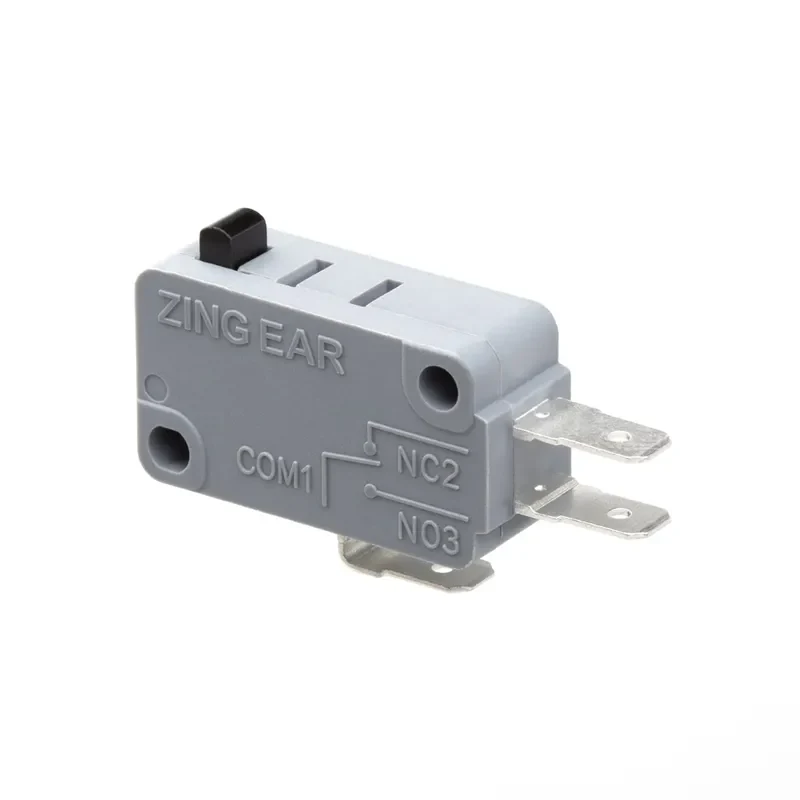
- Actuator: Top plunger.
- Connection: Exposed metal terminals.
The top plunger provides the contact point for checking how the appliance mechanism presses the sample.
Separate a fit model from a working switch sample
A physical mock-up can answer an early space question. For instance, a representation of the body can show whether a mounting bracket leaves enough room for the wire exit. A working switch sample is needed when the question concerns the contacts changing state as the door moves.
If only body clearance is uncertain, a physical mock-up can answer that question before a working electrical sample is ready. The working sample then shows whether the door movement changes the contacts at the intended position. If both are needed, the sample plan can name which arrives first and what each one will be used to check.
An enclosure mock-up and a functional switch can therefore be discussed as separate deliverables. If both are useful, the supplier and appliance team can agree which comes first and which decisions remain for the later sample. The preparation method and materials should be appropriate to the intended evaluation.
For a door-interlock project, the functional evaluation connects the door position to the required electrical state. The appliance’s safety design determines that relationship. A sample discussion can establish what the switch must do without treating the sample itself as approval of the finished appliance.
What did the first sample reveal?
The first sample should settle a named installation question. If it fails, describe the observation rather than saying only that the switch does not fit:
- Terminal touches the bracket before the holes align: The next sample needs a different connection arrangement, followed by another fit check.
- Door closes before its tab reaches the lever: Compare lever reach or mounting position. An annotated image or short video can show the missed contact point.
- Lever moves but the contacts do not change state: Compare the installed travel with the proposed switch’s operating position.
- Switch fits but has the wrong contact rating: Revisit the electrical version rather than the mounting arrangement.
The next sample should address the mismatch found in the first trial. Its description can name the changed feature and the check that will show whether the change worked.
Which sample date belongs in the development schedule?
A date becomes useful to purchasing when it is attached to a defined deliverable: an available switch, a changed lever or terminal, or a housing mock-up. The appliance team can then plan dispatch, receipt and its own installation check as separate milestones. The installed result tells the team whether that sample moves the design forward.
Zingear Switch can discuss a sample request through Contact Us. An initial enquiry can describe the appliance and the difficulty being addressed; the drawing and sample details can develop during the discussion.
After the installation result, purchasing can decide whether to retain that version, request a specific revision or move to another design. The selection-to-mass-production guide covers the later production decision.
Name the result needed from the next sample
A sample date is more useful when it names the part and the question to be answered. An available plunger switch can be supplied to check body space and direct door contact. If the door tab approaches from the side, a lever version may be the better first functional sample. A housing mock-up is useful for clearance but cannot show whether the electrical contacts change state at the intended door position.
The sample plan can distinguish three milestones:
- Part ready: The agreed version or mock-up is prepared for dispatch.
- Part received: The appliance team has it in hand and can fit it to the door assembly.
- Installation result: The team has checked mounting, connection and the switching and release positions relevant to that sample.
If the installation result identifies a lever or terminal change, the next sample can be specified around that change. Purchasing can then compare dates for equivalent work and see whether another sample round is necessary.
Frequently Asked Questions
Can a supplier give a sample date before the design is complete?
An initial estimate can relate to a defined stage, such as supplying an existing switch for a fit trial. A revised component needs enough detail to estimate its preparation. The quotation can identify which design decisions remain open and how they affect the next delivery.
Does a custom lever always require a new switch housing?
The lever and housing are separate design elements. A suitable existing body may support an actuator change, depending on the construction. The supplier’s review establishes whether the change can use that body or requires further design work.
Can the first enquiry use a hand sketch?
A hand sketch can begin the discussion if it shows the mounting position and the moving part that presses the switch. Marking known dimensions and questions on the sketch helps the supplier identify what can be assessed immediately and what detail is needed for the sample.
Related Recommendations
-
ZINGEAR Micro Switch OEM Manufacturing Complete Guide
2026-07-23 -
ZINGEAR G306-150S150AA Automotive Micro Switch Officially Partners with Changan Automobile to Enable Precise Control of Sun Visors and Vanity Mirrors
2026-08-07 -
ZINGEAR G304 Micro Switch Debuts in Rail Transit Sector, Enabling Precise Sensing and Reliable Control for High-Speed Train Lifting Doors
2026-08-13 -
ZINGEAR G306-150E65BA-400 Electric Motorcycle Handbrake Micro Switch | Dreame Shouqu Certified Sensing Switch
2026-08-18 -
ZINGEAR G304 Micro Switch Supports Electric Two-Wheeler Electronic Lock Systems, Empowering Smart Lock Security and Durability Upgrade
2026-08-21 -
zingear Micro Switch Solution for Communication Base Station Equipment Status Detection — Building a Solid Safety Line for Long-term Stable Operation of Base Stations
2026-08-11 -
Electrolux Range Hood Switch Solution — Zing EAR: Solve Extreme Kitchen Reliability with Precision Sensing
2026-08-25 -
How can I replace the push-button switch on my range hood?
2026-08-27