

"What to Include in a Custom Micro Switch RFQ for Home Appliances"
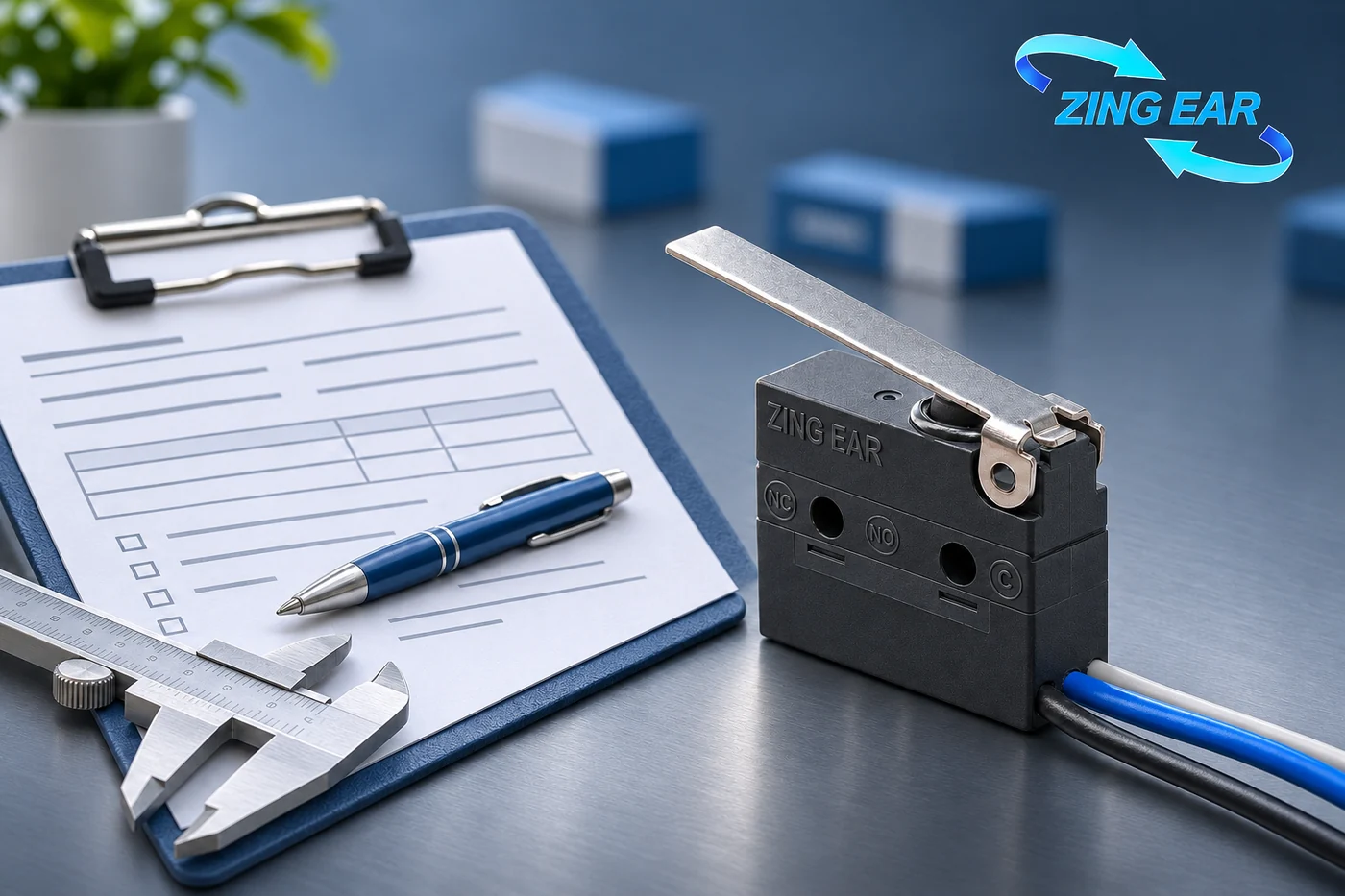
A request for a “small waterproof micro switch” describes a product category, but leaves several choices open. A refrigerator-door signal switch and a switch carrying an appliance load can need different contacts, connections and actuator arrangements. The request for quotation (RFQ) connects the appliance’s circuit, mechanism and environment with the contacts, actuator and connections being priced. This article sets out the information that helps suppliers discuss a suitable design, price and sample plan, with Zingear Switch’s customization services as an example. An enquiry can begin with the information already available and become more detailed as the design develops.
Explain what the switch does in the appliance
A coffee machine can use a switch to detect whether its water tank is inserted or a different switch to interrupt a powered circuit when a cover opens. Those functions call for different contact and installation details. Stating the switch position and function in the request for quotation makes clear which version is being priced.
The electrical details can include:
- Voltage and supply type: The operating voltage and whether the circuit uses alternating current (AC) or direct current (DC).
- Current through the contacts: The normal current and any known starting or switching peak.
- Load or signal: Whether the switch feeds a controller input or directly switches a heater, motor or other load.
- Contact function: Which connection should open or close when the moving part presses the switch.
These details affect contact selection. A controller input needs contacts suitable for reliable switching at its actual signal current. A motor load can also place different demands on contacts from a resistive heater carrying the same steady current.
A circuit drawing is useful where one is available. If the circuit is still being developed, describing the intended function allows the electrical requirements to be discussed before a final switch specification is chosen.
Show the space and movement available for the switch
A switch must fit inside the appliance and be reached by the moving part that operates it. A photograph or sketch shows the relationship between the switch, the moving part and the available mounting space.
Useful installation details include the available space, fixing points and direction of movement. For a lid switch, the drawing can show where the lid presses the actuator and where the contacts should change state. For a removable tank, it can show the tank’s seated position and how the tank reaches the switch.
Reach, travel and operating force describe different aspects of the movement:
- Reach: Whether the moving part can touch the actuator.
- Operating travel: How far the actuator moves before the contacts change state.
- Operating force: The force required to operate the switch.
A longer lever can help the appliance mechanism reach the switch, while also changing the force and movement at the point of contact. Giving the supplier a view of the surrounding mechanism helps it discuss those effects together. Where measurements are still being established, the sketch can mark the uncertain dimensions for later confirmation.
Include the wiring connection and assembly method
The connection affects the space around the switch and how an assembly worker installs it. Printed circuit board (PCB) pins, solder terminals, quick-connect tabs and attached wires suit different assembly arrangements.
For a wired version, the useful details include cable direction, approximate length and the connection at the other end. For a terminal version, the mating connector and available clearance matter. A terminal can fit electrically yet be awkward to connect once the switch is mounted behind an appliance panel.
A request can also identify which features must stay compatible with an existing design. For example, retaining the current connector could simplify assembly, while changing the lead direction could improve routing. Those priorities help the supplier distinguish an important requirement from an option that can be adjusted.
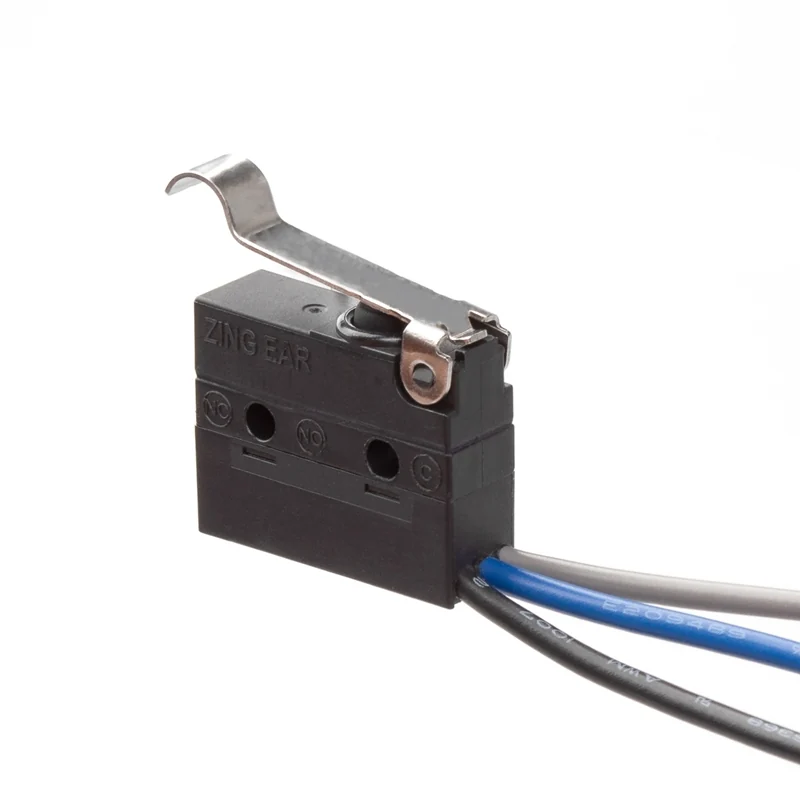
- Actuator: Metal lever with a curved contact end.
- Connection: Attached wire leads.
The lever shape and the wire exit shown here are concrete features to describe in a customization enquiry.
Describe temperature, water exposure and expected use
The environmental and use description can separate three conditions:
- Temperature at the installed switch: Insulation and airflow can make this different from the cooking chamber; a refrigerator switch may sit near a cold compartment or in a warmer enclosure.
- Water exposure at the switch and connection: Cleaning splashes, moisture around a removable tank and immersion are different conditions. If an ingress protection (IP) rating is specified, the exposure still needs to be described.
- Expected operation: Frequent lid movement affects mechanical endurance. Contacts that switch a powered load also need electrical endurance considered at that load.
Known test requirements can be included with the enquiry. If the appliance team has not yet defined them, the initial discussion can identify which requirements need engineering input.
Separate sample requirements from production quantities
The enquiry can distinguish the sample stage from production supply:
- Samples: Quantity needed for fit and function checks, plus the desired receipt date.
- Production: Expected annual demand, order quantities, destinations and the date production parts are needed.
The expected test-completion date connects the two stages: it shows when a version might be ready for a production quotation and delivery plan.
The quotation can separate the component price from any development work, tooling, samples and delivery arrangements. If several actuator or wiring options are being considered, identifying each option separately makes the price differences easier to understand.
A lower sample price may accompany a different scope of work. Comparing what each proposal includes helps purchasing understand whether the quoted samples are standard parts, modified parts or parts that need new tooling.
A short RFQ template for the first discussion
An enquiry can include an installation sketch and known circuit details, with the remaining measurements marked for discussion. The fields below help organise that first exchange.
| Enquiry field | What to include |
|---|---|
| Appliance and switch function | The equipment and the state or circuit the switch controls |
| Electrical conditions | Voltage, AC or DC supply, contact current and load or signal type |
| Installation | Available space, mounting points, sketch or existing sample |
| Actuation | What presses the switch, movement direction and intended switching position |
| Connection | Terminal or wire preference and any existing connector to retain |
| Environment and use | Temperature, water or dust exposure and expected operating frequency |
| Samples and production | Sample quantity, expected order quantities and delivery destinations |
| Schedule and priorities | Desired sample date, production timing and features that must remain compatible |
For example, a lid-switch enquiry might include the existing bracket drawing and wiring connector, while leaving lever length for discussion. The supplier can then consider the lever together with the available movement, retaining the bracket and connector where practical. The sample plan can focus on the lid movement that still needs confirmation.
Which details can remain open in the first RFQ?
The first enquiry works best when it distinguishes known requirements from decisions that the switch supplier can help resolve. That lets a buyer start the conversation without presenting an unfinished design as a fixed specification.
- State the known application: The appliance position, what moves, what the contacts do in the circuit and any component that must stay compatible. These details determine which existing designs are worth discussing.
- Mark the open dimensions: If lever reach, operating force or wire length has not been measured, label it as a value to establish from a sketch or assembly trial. A quotation can then identify the assumed version instead of silently treating the unknown value as final.
- Separate the commercial request: Sample quantity and desired receipt date belong to the sample discussion; expected production volume and delivery destination belong to the production quotation. The two stages can have different preparation work and prices.
The useful result is a proposal for a defined first sample and a clear list of measurements needed before a production version is selected.
Discussing customization
For example, Zingear Switch can connect the installation information in an enquiry with the manufacturing work it requires:
- Lever shape: Metal-stamping resources support the assessment of a changed metal actuator.
- Housing and mounting space: Mold-making and injection-molding resources support the assessment of a different body or fixing arrangement.
- Wiring and connection: Switch-assembly resources support discussion of how the connection will be incorporated into the supplied component.
The product and customization range provides the starting designs. Comparing the required change with those designs helps define the sample and development work included in the quotation.
An existing sample, a drawing or a short explanation of the problem can provide the starting point. The discussion can establish whether a standard design, an available option or further development suits the application. The quotation can identify the lever, terminals or wires selected for the sample, so purchasing can see exactly what is included.
To begin, discuss the application. For a broader view of the available support, see the appliance switch customization and engineering guide.
Frequently Asked Questions
Do all RFQ fields need to be complete before contacting a supplier?
No. A description of the appliance, the switch’s function and the information already available can start the discussion. Unresolved dimensions or electrical details can be identified and developed with the appliance team.
Should the enquiry specify a switch model immediately?
An existing model is useful when replacing or modifying a known component. For a new appliance, describing the required function, installation and circuit gives the supplier room to discuss suitable designs.
How should a sample deadline be stated?
A desired receipt date and the purpose of the samples are useful. A fit-check sample and a sample intended for full appliance testing may involve different preparation. The supplier can discuss the scope and timing before the sample order is agreed.
Related Recommendations
-
ZINGEAR Micro Switch OEM Manufacturing Complete Guide
2026-07-23 -
ZINGEAR G306-150S150AA Automotive Micro Switch Officially Partners with Changan Automobile to Enable Precise Control of Sun Visors and Vanity Mirrors
2026-08-07 -
ZINGEAR G304 Micro Switch Debuts in Rail Transit Sector, Enabling Precise Sensing and Reliable Control for High-Speed Train Lifting Doors
2026-08-13 -
ZINGEAR G306-150E65BA-400 Electric Motorcycle Handbrake Micro Switch | Dreame Shouqu Certified Sensing Switch
2026-08-18 -
ZINGEAR G304 Micro Switch Supports Electric Two-Wheeler Electronic Lock Systems, Empowering Smart Lock Security and Durability Upgrade
2026-08-21 -
zingear Micro Switch Solution for Communication Base Station Equipment Status Detection — Building a Solid Safety Line for Long-term Stable Operation of Base Stations
2026-08-11 -
Electrolux Range Hood Switch Solution — Zing EAR: Solve Extreme Kitchen Reliability with Precision Sensing
2026-08-25 -
How can I replace the push-button switch on my range hood?
2026-08-27