

"Custom Appliance Micro Switches in France: The RoHS Change-Control File"
France signed Decree No. 2013-988 on 6 November 2013, published it on 7 November and brought it into force on 8 November. The decree implemented the EU RoHS rules for covered electrical and electronic equipment. The restrictions concern substance concentrations in homogeneous materials, while the appliance maker remains responsible for the finished-product file. If a custom switch changes a terminal finish, molded resin or solder joint, the new revision needs a material declaration covering the part being ordered.
This article explains how to document a custom actuator or terminal change, update the affected-material declaration and validate the new sample, so a French appliance team can assess ZINGEAR's response against the exact revision it intends to buy.
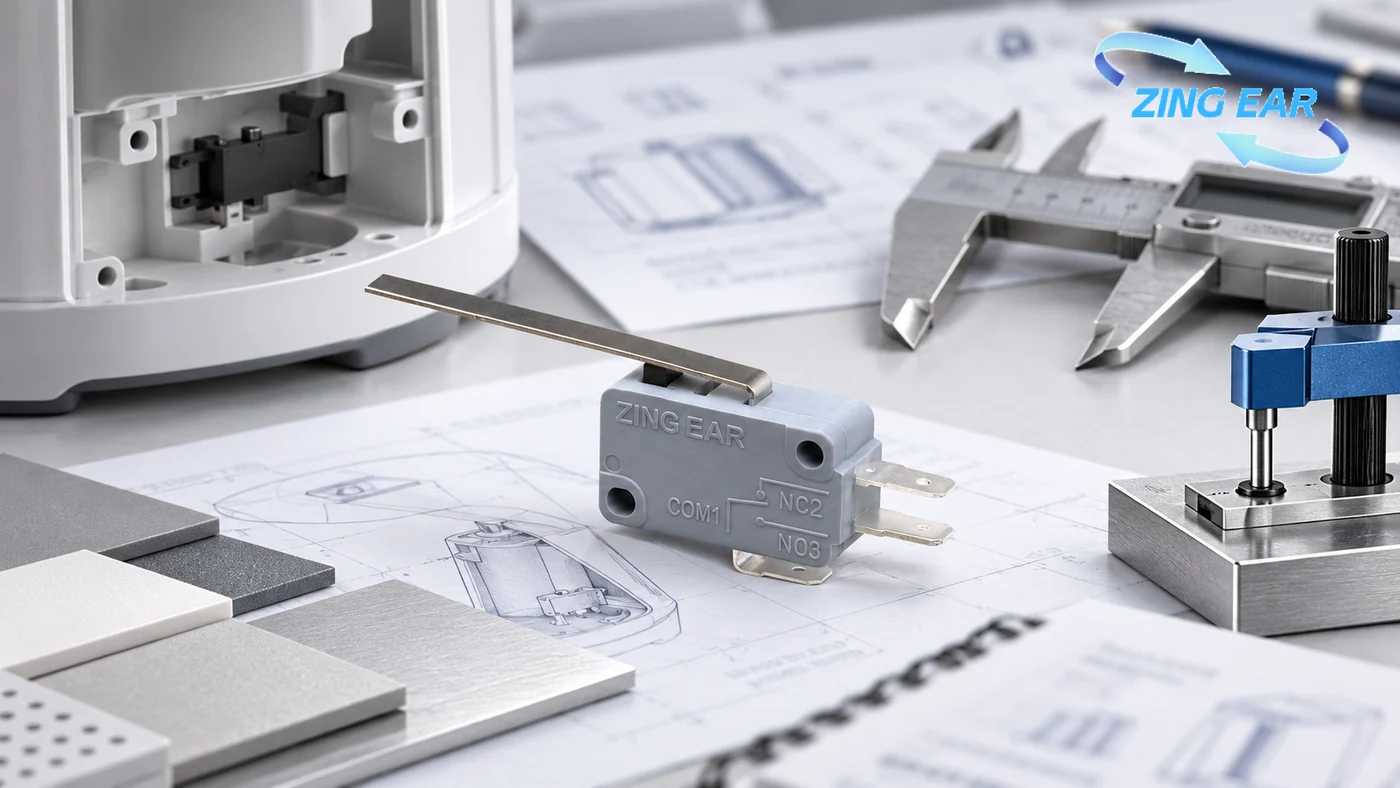
What must the appliance maker document after a switch change?
France implemented the EU restriction of hazardous substances in electrical and electronic equipment through Decree No. 2013-988 and the Environment Code. Household appliances are among the equipment categories addressed. The restriction is assessed in homogeneous materials: terminal plating, molded polymer and solder joints are considered individually. See the French implementing decree and the current Environment Code section.
A custom switch changes the evidence needed for the finished appliance file when its materials change. The manufacturer placing a covered appliance on the market remains responsible for its technical documentation and for keeping production compliant. The switch maker supplies evidence for the changed part. The decree addresses the appliance and its materials; any separate component marking duty depends on the applicable product rules.
For a changed terminal finish, solder or molded resin, the appliance team needs a declaration for the new material, checked against the current RoHS restricted-substance list and limits. The appliance file needs a declaration identifying the replacement material and switch revision. If the new material relies on an exemption, its cited entry and conditions need to cover that specific use.
Assess a supplier’s engineering response to a defined change
The appliance team sends each candidate a brief naming the appliance position, original part number, drawing revision and proposed change. The brief also states the real switching load, operating force window, travel, temperature, exposure to steam or grease, annual volume and target production date. The named feature, conditions and revision give the supplier a basis for an engineering response.
Before a tooling quote, a useful response contains a marked drawing showing the changed feature, a list of affected materials and processes, and a proposed sample and validation plan. A supplier can support custom manufacturing when its engineer can explain whether a longer lever uses the same alloy and finish, whether a new lead exit changes insulation, and whether a housing change introduces a new resin or colorant. Price and sample timing can then be compared against the same controlled scope.
A practical shortlist compares responses to the same proposed change. The selection criterion is whether the exact candidate revision can be documented, sampled and controlled. The response should include a material declaration tied to the switch revision and affected homogeneous materials.
Match each customization to a new evidence request
For each proposed modification, use the same drawing revision to connect the material question with the samples and records needed for release.
| Custom feature | Material question | Evidence to request before release | Decision owner |
|---|---|---|---|
| Lever or plunger geometry | Same alloy, coating and lubricant after the shape change? | Revised drawing, material declaration, operating-force and travel sample results | Mechanical engineer |
| Terminal shape or finish | Did base metal, plating or solderable finish change? | Plating stack, revision-specific declaration, solderability and connection test | Electrical engineer |
| Contact specification | Was silver replaced or supplemented by a different material? | Contact composition, load-specific electrical life record and change notice | Electrical engineer |
| Molded housing or actuator | Did resin, pigment or flame-retardant package change? | Resin and additive declaration at homogeneous-material level, dimensional and heat tests | Materials engineer |
| Soldered lead and seal | Which solder, wire insulation, adhesive or potting material changes? | Process/material list, seal validation after assembly, revised BOM | Supplier quality engineer |
A change assessment identifies the old and new revisions, then compares their material and process records. A terminal finish can change through a new plating subcontractor while the part number stays the same, so the new material record matters to the appliance file.
Material conformity and functional approval require separate evidence
A material declaration and a functional test answer different questions. The declaration addresses restricted substances. Appliance-level tests show whether the changed switch still works safely in its circuit. The appliance's electrical duty and risk assessment determine the switch-life test; RoHS addresses restricted substances.
Functional validation can cover the load and its type, signal-level contact behavior, actuation tolerance, overtravel, terminal temperature and life under the intended duty. The actual interlock or sensing circuit reveals timing and signal effects alongside the material declaration. If the seal changes, the revised assembly also needs lead-exit validation under relevant exposure after temperature cycling.
The endurance result belongs beside the material file under the same supplier part number, drawing revision and manufacturing location. Shared revision identifiers let the appliance team check material conformity and functional approval before release. When a substitution is proposed in production, review both gates again.
Product and engineering options for the proposed appliance change
For a French appliance team considering ZINGEAR, these published options show where a configuration discussion can begin:
- Starting products: The home appliance switch range supplies configurations against which a proposed change can be marked.
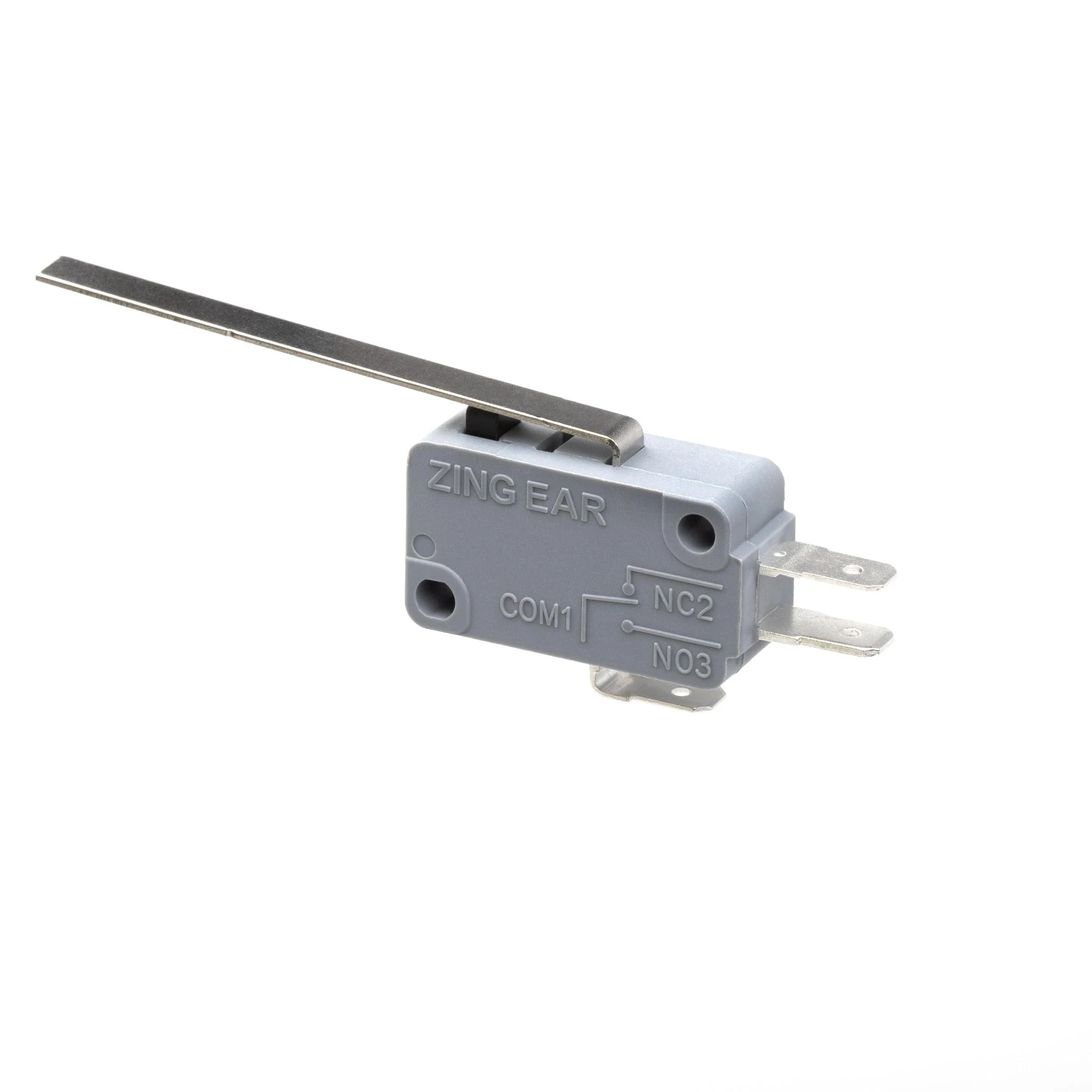
- Configurable features: Configured micro switch development lists travel, operating force, terminal type and actuator design.
- Release evidence: A material breakdown tied to the proposed revision and a sample plan for that exact configuration establish what the appliance team can qualify.
The material and sealing version can be identified in the same revision request:
- Contact material: ZINGEAR's normal contact material is silver; some customer-requested configurations use silver alloy. Identify the material on the proposed part drawing.
- Sealed lead construction: Terminal-cavity epoxy potting is the usual method, while some soldered-lead terminals use low-pressure overmolding. Request a drawing and test conditions that identify the method used on the part under consideration.
When a fixed catalog part already matches the envelope, its controlled datasheet, revision-specific declaration and material-change notice process may be enough to begin qualification. For a custom RFQ, ask the supplier to identify its design and tooling owner, engineering-change approval route, sample acceptance criteria and production record retention.
Freeze the revision before production purchase
Release should join four identifiers: the appliance model, the switch part number, its drawing revision and its material declaration revision. Accepted samples, the functional report, affected-material list and change-notice terms belong under the same identifiers, so a later revision can be traced. The locked revision gives the French equipment manufacturer a specific record to update in its finished-appliance technical file when a relevant design change occurs.
| Release gate | Record to lock to the approved revision |
|---|---|
| Material decision | Affected homogeneous materials, declaration revision and any cited exemption |
| Functional decision | Accepted switch samples and appliance test report with the same part and drawing revision |
| Production change | Supplier notice route for materials, subcontractors and manufacturing process changes |
ZINGEAR's customization service covers travel, operating force, terminals and actuator design. If you are considering a French appliance revision, we can review the change you are contemplating and explain how it would affect the proposed switch drawing, materials and sample tests. Your appliance team retains the finished-product approval decision.
FAQ About Custom Appliance Switches for France
How do I find appliance micro switch suppliers with custom manufacturing and engineering services?
Give each candidate the same appliance position and one defined change. Compare whether its engineer returns a marked drawing, affected-material list, sample plan and revision controls. ZINGEAR publishes travel, force, terminal and actuator options; the exact proposal still needs feasibility and test review.
Does a longer lever always require a new RoHS declaration?
If the material, finish and other homogeneous materials remain unchanged, the existing material evidence may still describe them. The revised geometry needs a functional assessment in the appliance.
Which switch changes can affect the RoHS material file?
A new terminal finish, solder, resin, colorant, contact or wire insulation can change the restricted-substance evidence for the revised part.
Does a RoHS declaration prove switch endurance?
A RoHS declaration addresses restricted substances. Life, actuation and load performance come from tests for the appliance duty and offered revision.
What should identify the approved custom version?
The appliance model, switch part number, drawing revision and material-declaration revision should match the accepted sample and functional report.
Related reading: For a broader supplier search beyond this French appliance change-control example, see our custom appliance micro switch engineering guide.
Sources
Related Recommendations
-
ZINGEAR Micro Switch OEM Manufacturing Complete Guide
2026-07-23 -
ZINGEAR G306-150S150AA Automotive Micro Switch Officially Partners with Changan Automobile to Enable Precise Control of Sun Visors and Vanity Mirrors
2026-08-07 -
ZINGEAR G304 Micro Switch Debuts in Rail Transit Sector, Enabling Precise Sensing and Reliable Control for High-Speed Train Lifting Doors
2026-08-13 -
ZINGEAR G306-150E65BA-400 Electric Motorcycle Handbrake Micro Switch | Dreame Shouqu Certified Sensing Switch
2026-08-18 -
ZINGEAR G304 Micro Switch Supports Electric Two-Wheeler Electronic Lock Systems, Empowering Smart Lock Security and Durability Upgrade
2026-08-21 -
zingear Micro Switch Solution for Communication Base Station Equipment Status Detection — Building a Solid Safety Line for Long-term Stable Operation of Base Stations
2026-08-11 -
Electrolux Range Hood Switch Solution — Zing EAR: Solve Extreme Kitchen Reliability with Precision Sensing
2026-08-25 -
How can I replace the push-button switch on my range hood?
2026-08-27