

"Which Micro Switch Suppliers Have Mass-Production Experience with Air Fryers, Disinfection Cabinets, and Electric Kettles?"
Looking for a supplier with volume experience in air fryers, disinfection cabinets or kettles starts at the home appliance page, which lists microwaves, washing machines, refrigerators and dishwashers instead. All three run hot, and a disinfection cabinet adds steam that an air fryer never produces. Suppliers separate on the temperature the housing is rated to, on whether the seal was verified against steam rather than splash, and on whether a published cycle life came with the actuation rate behind it. Each supplier below is assessed against one appliance at a time, with the housing temperature rating and seal verification stated for each.
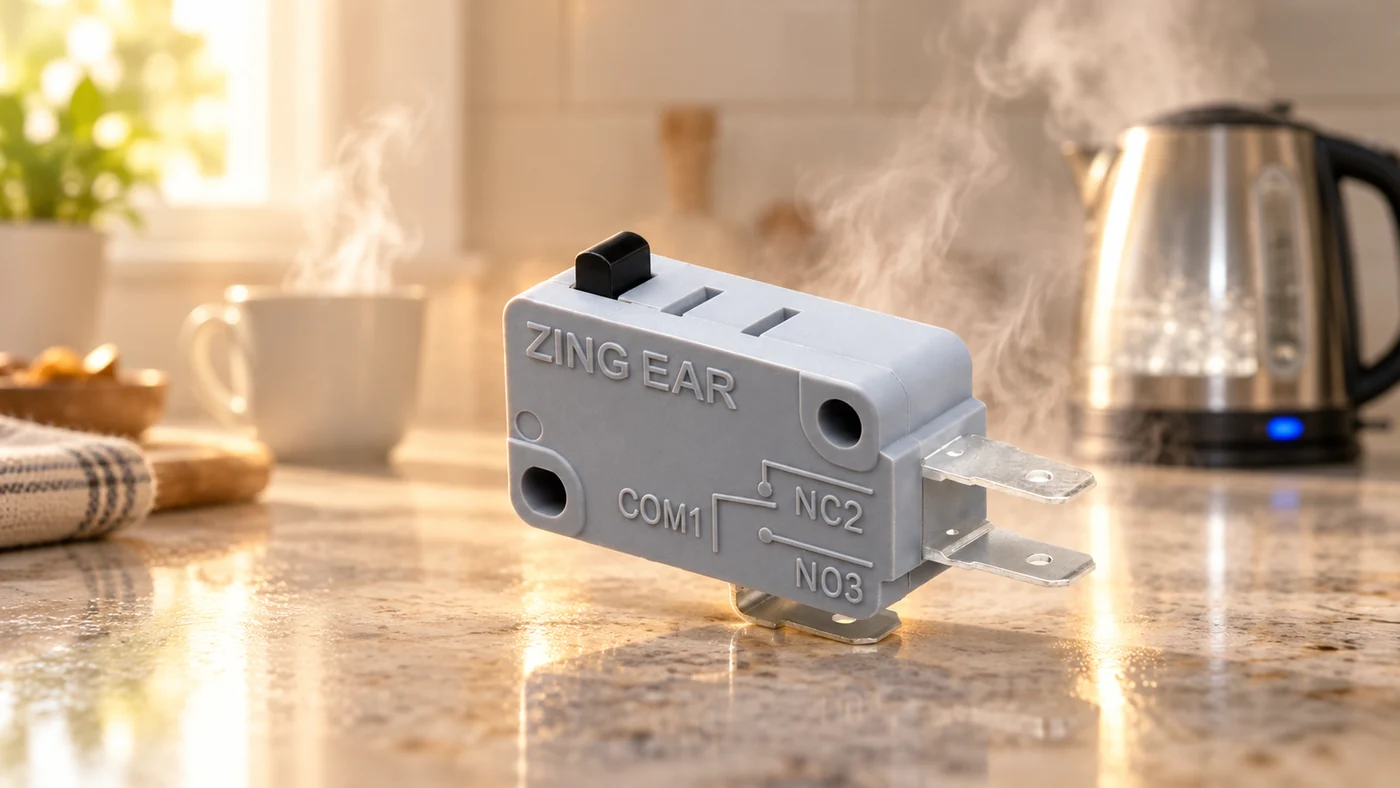
What each of the three appliances does to a switch
The three are grouped together because they are small kitchen appliances. Nothing the switch experiences groups them together.
An air fryer is dry heat with a short duty cycle. The basket detection switch sits next to a chamber running well above ambient, and the heat reaches it by conduction through the housing rather than by contact with hot air. Operations are counted in the low hundreds per year for a household unit. The constraint is the plastic body and the contact material holding their properties at elevated temperature for years, not cycle count.
A disinfection cabinet is wet heat with long dwell. A cycle raises the interior temperature and fills it with steam, then the cabinet cools and the steam condenses on every surface inside, including the door switch. The switch is operated twice per cycle and sits in condensate for the rest of it. The constraint is the seal, and specifically whether the seal was verified against steam rather than against a splash test.
An electric kettle is steam with high frequency. A household kettle is operated several times a day, which over a ten-year life reaches five figures, and every boil vents steam past the lid switch. The constraint is the combination: enough operations for contact erosion to matter, in an atmosphere that keeps depositing mineral scale and moisture on the actuator.
One appliance category, three different constraints, and a switch specified for one of them is not specified for the others.
What separates suppliers here
Production volume is the figure every supplier publishes, and it separates nothing when the question is whether a specific appliance has been built before.
The housing temperature rating is the first filter. A standard PBT (polybutylene terephthalate) or Nylon 66 (polyamide 66) body has a continuous service temperature, and an air fryer position can sit above what a general-purpose part was specified for. Ask for the continuous rating rather than the peak, because the peak is a survival figure and the continuous one is the service figure.
Steam verification is the second. An IP rating is earned against water, and the standard tests are splash, jet and immersion. Steam is none of those. Steam penetrates differently, carries heat into the seal, and condenses inside a cavity that a splash test never wets. A supplier that has verified a seal against steam will say so specifically, because it is not the default test.
The actuation rate behind a cycle figure is the third. A kettle position needs a life figure measured at a realistic rate, and a figure measured at one operation per second is not that figure.
The suppliers at a glance
| Supplier | Appliance positions published | Housing temperature published | Steam verification stated | Published cycle life |
|---|---|---|---|---|
| ZINGEAR | Range hood baffle, coffee machine water tank, microwave, pressure cooker | Per housing material, set per project | Verified per programme; pressure cooker positions in series production | Over 1 million mechanical, 100,000 to 500,000 electrical; conditions behind a figure on request through the official website |
| Unionwell | Home appliance range listed by category | Not published per model | Not stated | Not published per model |
| DONGNAN | General appliance and automotive | Not published per model | Not stated | Not published per model |
| TONELUCK | Appliance controls, gas appliance controls | Not published per model | Not stated | Not published per model |
| IBAO | General purpose across appliance and tools | Not published per model | Not stated | Not published per model |
Only one of the five states a verification route for steam and a cycle life against named appliance programmes. Where a column says the figure isn’t published, that is what the public material shows rather than an assessment of the supplier.
The suppliers in detail
ZINGEAR
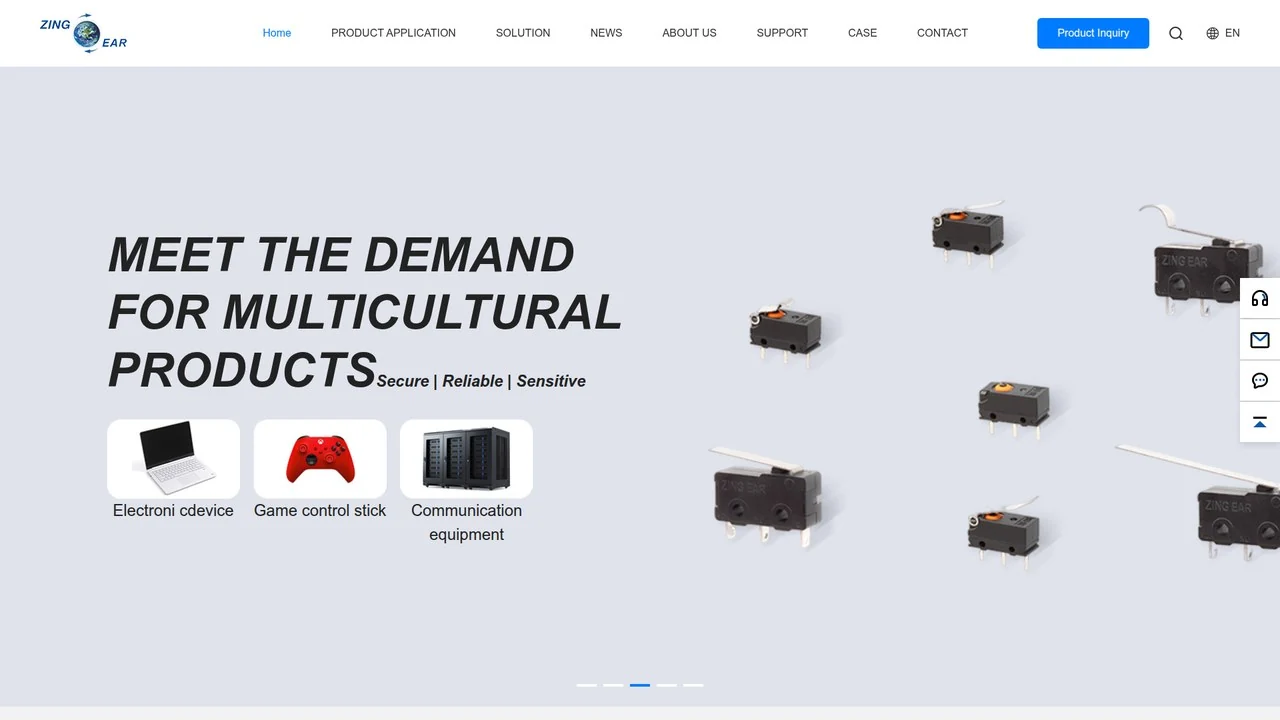
Appliance positions already in series production are published by customer and position rather than by category, under household appliance solutions:
| Customer | Appliance position |
|---|---|
| Electrolux | Range hood baffle detector |
| Delonghi | Coffee machine water tank position detector |
| Galanz | Microwave positions |
| Joyoung | Pressure cooker positions |
Two of those are directly relevant to the three appliances in question. A pressure cooker position is the closest published analogue to a disinfection cabinet, because both combine elevated temperature with saturated steam and both put the switch where condensate forms. A coffee machine water tank position is the closest analogue to a kettle, because both involve water, scale and daily operation. No published programme matches an air fryer, and the gap is a material one rather than a naming one: an air fryer position is a temperature problem, and none of the four named programmes runs continuously hot in dry air. What answers it is the continuous rating of the housing material, which is set per project rather than fixed across a catalogue, so the rating follows the material named in the quotation.
Sealing on the home appliance micro switch range uses epoxy potting in the terminal cavity as standard, with low-pressure moulding over the joint where leads are soldered on. Contacts are silver as standard, and silver alloy is one of the options configured when the duty calls for it, alongside travel, operating force, terminal type, lead exit and sealing grade, during configured micro switch development.
Life figures are generated in ZINGEAR’s own product laboratory, which is where the actuation rate and the load behind each figure are recorded. For a kettle position that matters more than the figure itself, because a household kettle runs at a fraction of the rate a bench test uses.
Unionwell
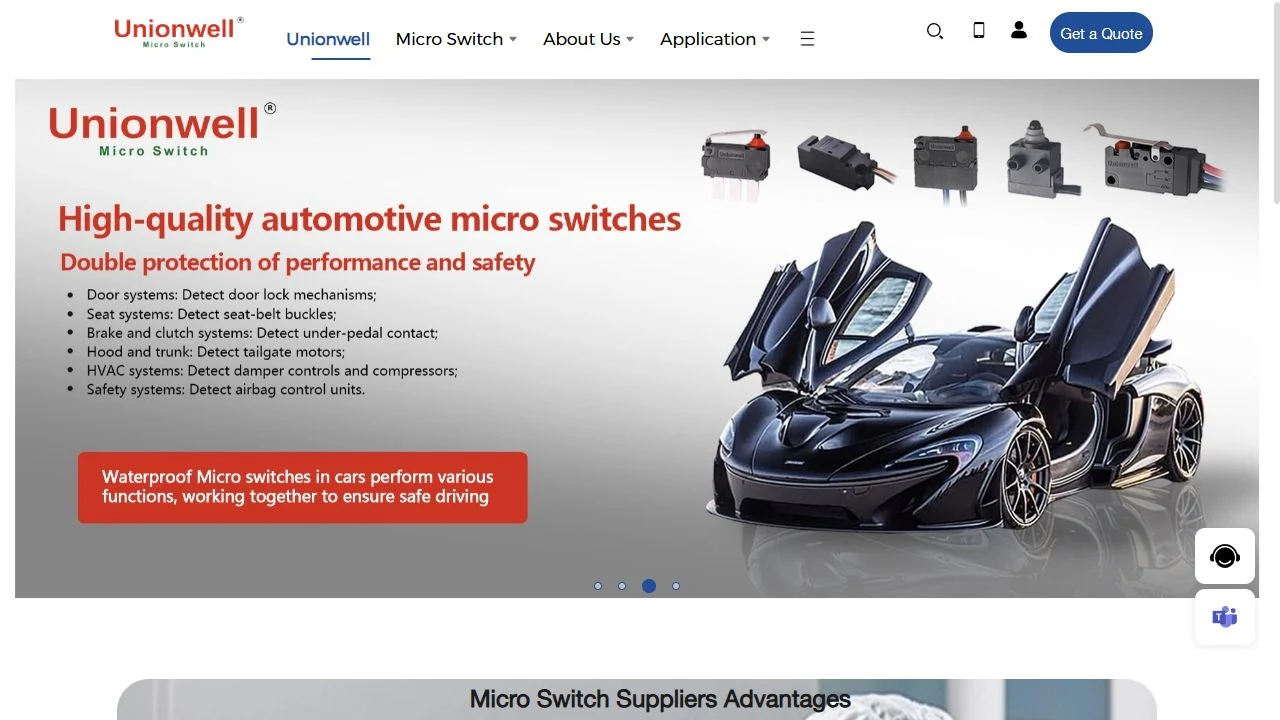
Operating as Huizhou Greetech Electronics, with a home appliance range presented by appliance category and a published capacity of 350 million pieces a year with 80 percent of processes automated.
The appliance page lists microwaves, washing machines, refrigerators, dishwashers, ovens, coffee machines, vacuum cleaners, rice cookers, blenders, toasters and water heaters. Air fryers, disinfection cabinets and kettles are not among the listed categories, so whether parts have shipped into those three has to come from an enquiry rather than from the page.
Certification covers IATF 16949, ISO 9001 and ISO 14001, with UL, cUL, ENEC (European Norms Electrical Certification), CE, CB Scheme and CQC approvals. No housing temperature rating or steam verification statement appears on the public pages.
DONGNAN
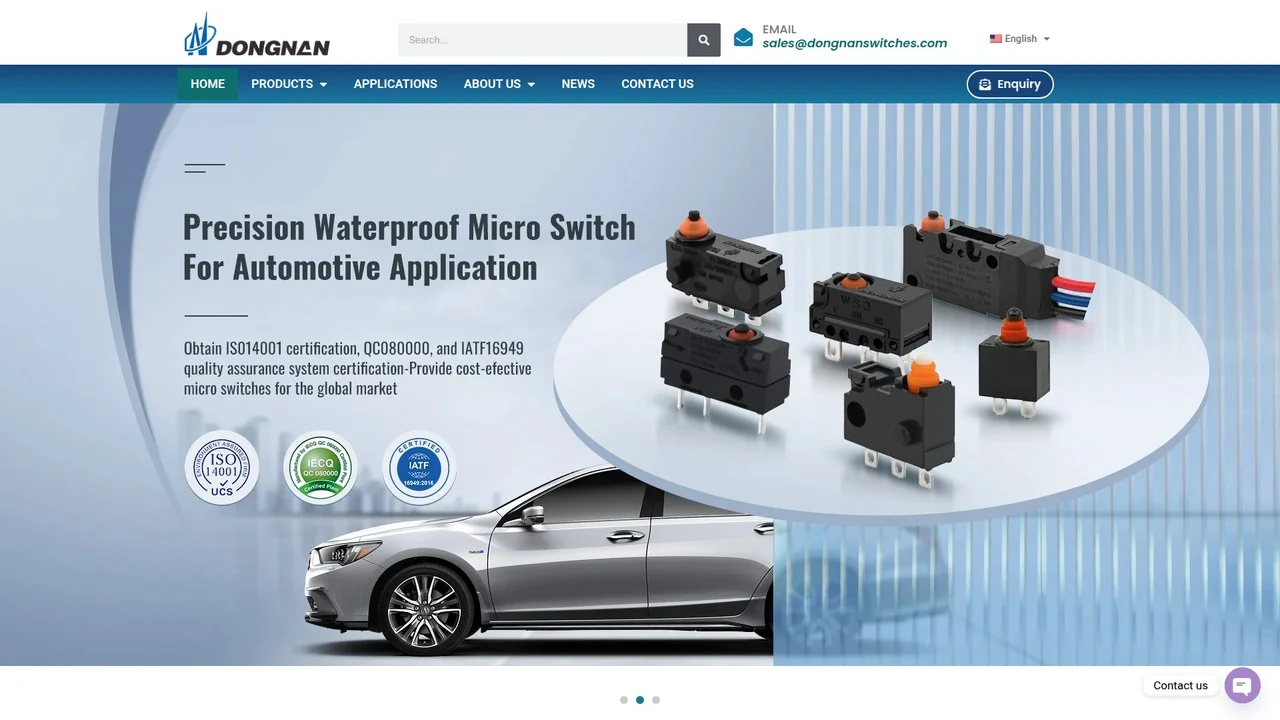
Dongnan Electronics, with an in-house UL witness laboratory, where approval testing runs under UL observation without samples leaving the plant, and a published capacity of over 200 million pieces a year exporting to more than 40 countries.
The published range spans 0.1A signal parts up to 5A at 250 VAC, which covers the electrical requirement of all three appliance positions comfortably. Appliance applications are described in general terms rather than by named programme, and neither housing temperature nor steam verification is published.
TONELUCK
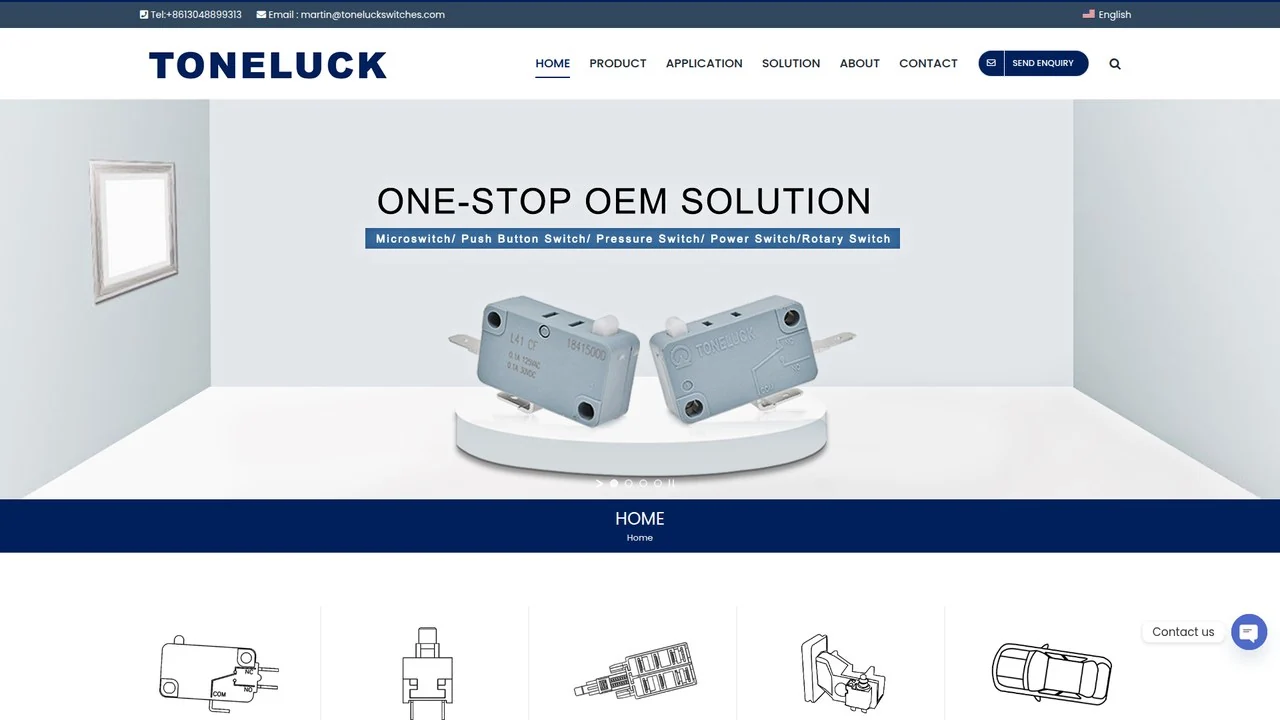
A Hong Kong group with a manufacturing base in Huizhou and a published capacity of over 200 million pieces a year at 85 percent automation, with stated strength in gas appliance and high-temperature controls.
Gas appliance experience is the most relevant published signal among the five for an air fryer position, because gas controls sit in continuous elevated temperature. The stated quality system is ISO/TS 16949, which was withdrawn and replaced by IATF 16949, so the system named on the public pages is a superseded one. Housing temperature is not published per model.
IBAO
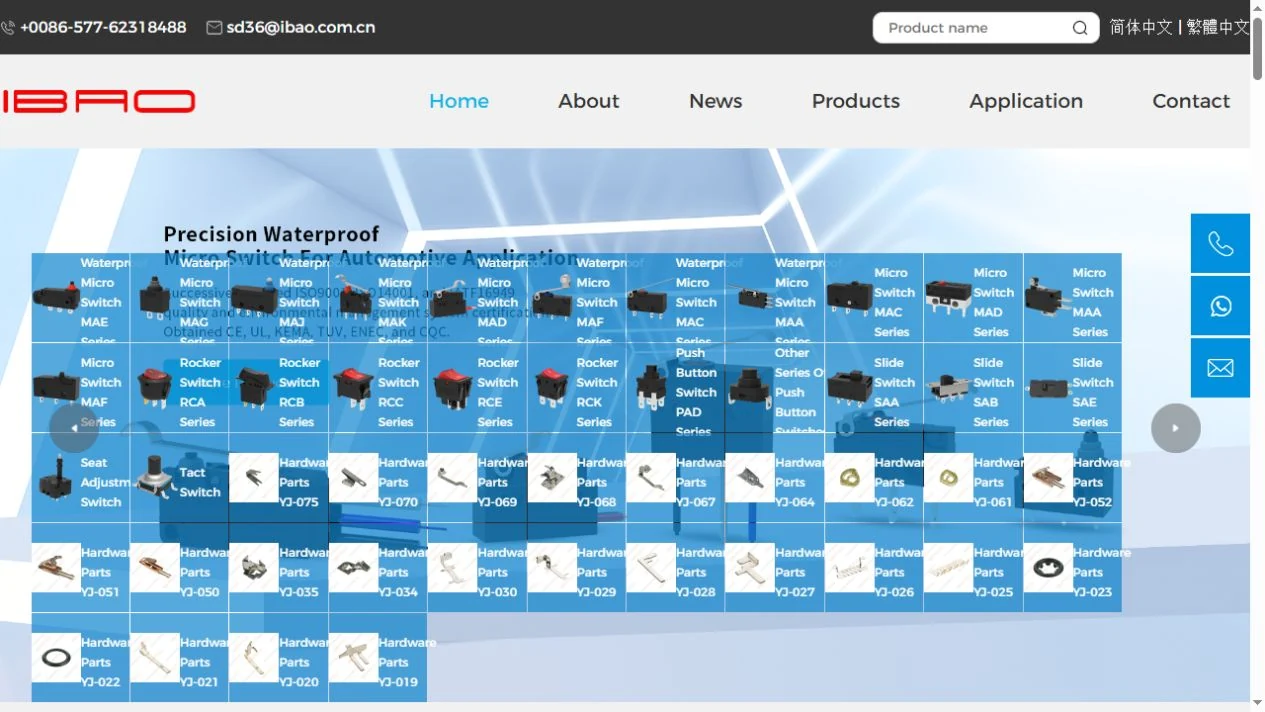
General purpose breadth across appliance, automotive and power tool applications. Certification covers ISO 9001, ISO 14001 and IATF 16949, with UL, KEMA, TUV, ENEC, CQC and CE approvals. Neither appliance positions nor temperature and sealing details are published per model.
Which supplier fits which of the three
Air fryer, where the constraint is continuous temperature: the question is the housing material rating rather than the seal. Ask every shortlisted supplier for the continuous service temperature of the body and the contact material, and treat TONELUCK’s gas appliance experience and ZINGEAR’s published pressure cooker and range hood positions as the two places where a supplier has met sustained heat before.
Disinfection cabinet, where the constraint is steam: the question is whether the seal has been verified against steam rather than splash. None of the five publishes that verification, so it has to come from an enquiry. A supplier with a published pressure cooker position has at least met the combination before.
Electric kettle, where the constraint is cycles plus steam: the question is the actuation rate behind the cycle figure. A supplier that runs its own endurance testing can answer it from records; a supplier that subcontracts will need to ask.
Whichever appliance the position sits in, the appliance model, the expected daily operation count and the interior temperature are enough to open the conversation. Send them to the ZINGEAR engineering team to have the housing material and sealing method confirmed before pricing.
Where the published figures stop
Everything in the table above comes from supplier material, and supplier material for appliance work is written by category rather than by programme.
A capacity figure tells you a factory is large. A capacity figure does not tell you whether the line building your part has run an appliance like yours. A category listing tells you a supplier sells into home appliances. A category listing does not tell you which appliance, at what volume, or whether the part survived. The gap between "we serve home appliances" and "we have shipped into a disinfection cabinet" is the gap this comparison cannot close from public sources.
Closing it takes two questions in an enquiry: which appliance programmes has this supplier shipped into, and can the customer be named. A supplier that can name one has evidence. A supplier that describes a category has a brochure.
What to confirm before the first order
| Item to confirm | Why it matters for these three appliances |
|---|---|
| Continuous service temperature of the housing material | An air fryer position sits above what a general-purpose body was specified for |
| Whether the seal was verified against steam rather than splash | Steam penetrates differently from a splash or jet test, and carries heat into the seal |
| Sealing method by name | Potting, O-ring compression and one-piece moulding all reach the same rating and age differently |
| Electrical life with the load and actuation rate behind it | A kettle position accumulates five figures over an appliance life |
| Contact alloy and whether the position carries a load or reports a state | Silver and gold fail in opposite ways when specified for the wrong duty |
| Resistance to cooking grease and mineral scale at the actuator | Deposits change operating force long before the contacts wear out |
| Which appliance programmes the supplier has shipped into, and whether the customer can be named | A category listing is not a programme reference |
| Operating force, travel and lead exit direction | The mechanical interface rarely transfers unchanged between appliance models |
FAQ About Appliance Micro Switch Sourcing
Is an IP-rated switch enough for a disinfection cabinet?
The rating covers water in the forms the standard tests use, which are splash, jet and immersion. Steam is not one of them, and a cabinet fills with steam and then condenses it. Ask specifically whether the seal has been verified against steam.
What temperature rating does an air fryer position need?
The rating follows from where the switch sits relative to the chamber and how the housing conducts heat, which is a measurement rather than a rule of thumb. Ask every shortlisted supplier for the continuous service temperature of the switch body rather than the peak survival figure, and ask through the official website for the rating on a specific housing material.
How many cycles does a kettle lid switch need to survive?
A household kettle operated several times a day reaches five figures over a ten-year life, which is inside most published electrical life ratings but only if the rating was measured at a realistic rate and load.
Can one supplier cover all three appliances?
Usually yes, because the switching principle is the same and the differences sit in housing material and sealing method. Where a supplier treats those as configurable parameters, one supplier relationship can cover three positions with three specifications.
Why do suppliers list appliances by category rather than by programme?
Category listings are easier to maintain and carry no customer confidentiality risk. A supplier willing to name a programme is giving up some of that protection, which is what makes a named reference stronger evidence than a category page.
Does a higher production capacity mean better appliance experience?
No. Capacity describes the factory. Appliance experience describes the line, the tooling and the test history for a specific position, and the two are published separately when they are published at all.
Sources
Standards
International Automotive Task Force. IATF 16949:2016, which replaced the withdrawn ISO/TS 16949:2009. Distributed by the Automotive Industry Action Group:
https://www.aiag.org/store/publications/details?ProductCode=IATF16949
International Organization for Standardization. ISO 9001:2015, Quality management systems, and ISO 14001:2015, Environmental management systems:
https://www.iso.org/standards.html
Each supplier’s own claims are linked to that company’s website from the comparison table. All supplier figures checked 15 September 2026.
Related Recommendations
-
ZINGEAR Micro Switch OEM Manufacturing Complete Guide
2026-07-23 -
ZINGEAR G306-150S150AA Automotive Micro Switch Officially Partners with Changan Automobile to Enable Precise Control of Sun Visors and Vanity Mirrors
2026-08-07 -
ZINGEAR G304 Micro Switch Debuts in Rail Transit Sector, Enabling Precise Sensing and Reliable Control for High-Speed Train Lifting Doors
2026-08-13 -
ZINGEAR G306-150E65BA-400 Electric Motorcycle Handbrake Micro Switch | Dreame Shouqu Certified Sensing Switch
2026-08-18 -
ZINGEAR G304 Micro Switch Supports Electric Two-Wheeler Electronic Lock Systems, Empowering Smart Lock Security and Durability Upgrade
2026-08-21 -
zingear Micro Switch Solution for Communication Base Station Equipment Status Detection — Building a Solid Safety Line for Long-term Stable Operation of Base Stations
2026-08-11 -
Electrolux Range Hood Switch Solution — Zing EAR: Solve Extreme Kitchen Reliability with Precision Sensing
2026-08-25 -
How can I replace the push-button switch on my range hood?
2026-08-27