

"Qualifying EV Charging Micro Switches for US Federally Funded Projects"
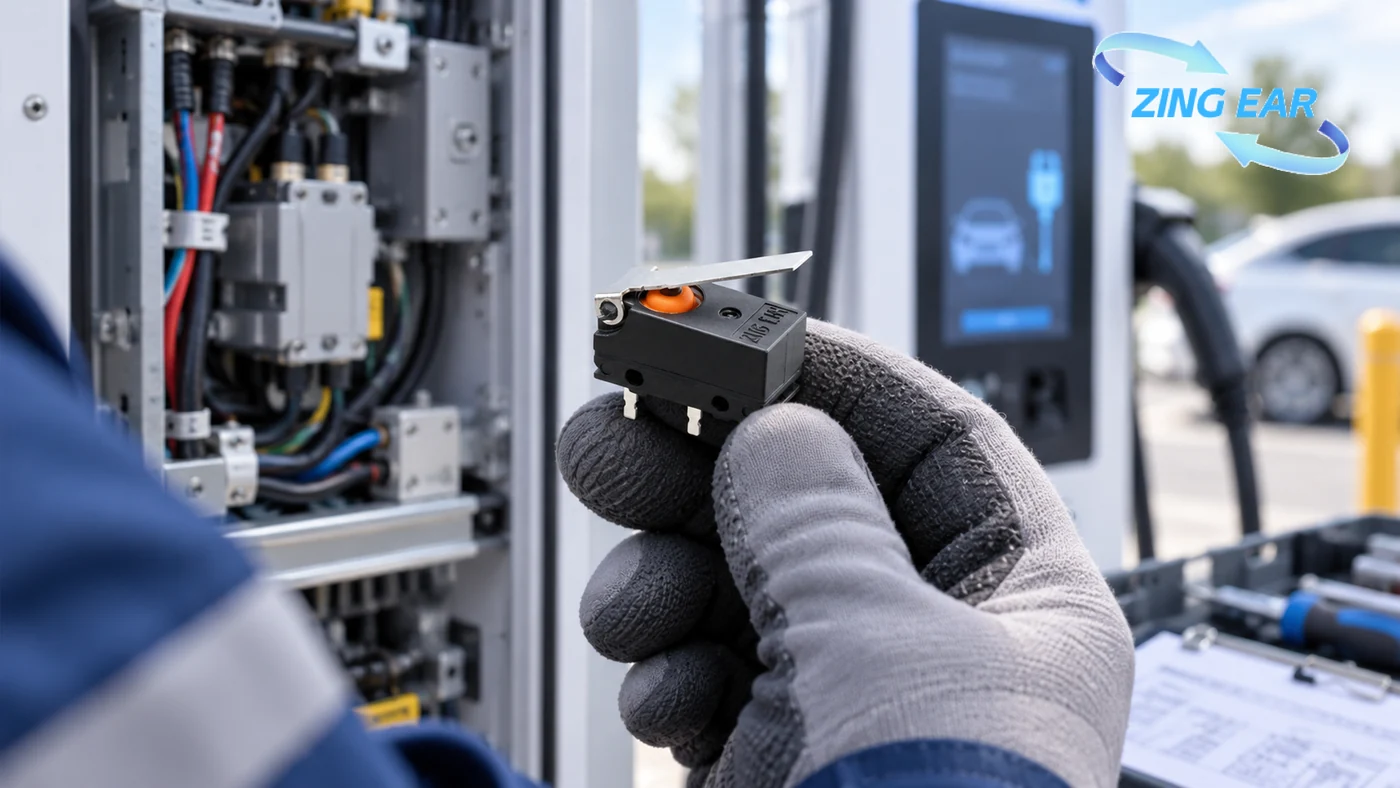
On 28 February 2023, FHWA published 23 CFR Part 680 for covered federally funded charging projects; it took effect on 30 March. The rule addresses charger certification, maintenance and measured port availability. A failing latch or connector-position switch can prevent the charger from recognizing a connected vehicle, affecting both uptime and repair time.
This article explains how switch tests, fault records, controlled revisions and service spares support the reliability and maintenance plan of a federally funded charger.
Read the project obligations at the right level
Under 23 CFR 680.106(g), the state or other direct recipient must ensure that chargers are certified by an OSHA Nationally Recognized Testing Laboratory. Section 680.106(i) requires compliant charger maintenance for at least five years from initial operation.
Certification and maintenance are equipment and project duties. The direct recipient must ensure the complete charger has the required NRTL certification; switch-vendor documents and replacements support that equipment-level process.
Under 23 CFR 680.116(b), each port must average greater than 97% uptime annually under the rule's calculation method. A port is “up” when its hardware and software are online and it can dispense electricity at the required minimum power.
A switch failure may contribute to a port outage, while the rule’s uptime target is assessed from the complete port’s measured availability under its calculation method.
Trace the switch failure to the port behavior
A charging design may use switches for connector presence, latch or holster state, and access-panel interlocks. The actual circuit must be confirmed from the charger's design. The charger design assigns each switch a measurable signal and service consequence.
| Switch position | Plausible failure | What the charger should reveal | Supplier evidence to request | Service consequence to test |
|---|---|---|---|---|
| Connector latch or insertion sensing | Intermittent open, contact bounce, stuck closed | Discrete fault/state and event log that distinguishes incomplete engagement | Signal-level contact behavior, force/travel window, environmental and cycle report for proposed part | Can the technician reproduce the fault and replace the correct revision? |
| Holster or home position | False occupied/empty state | Observable state transition and fault code when commanded state is implausible | Actuator drawing, tolerance stack, contact-state test and replacement fit | Does a failed signal block charging or create a repairable warning? |
| Service-panel interlock | Open circuit or unintended closed state | Safe shutdown or service indication according to the charger's design | Electrical rating at actual load, terminal and lead protection, production control | Can the fault be isolated without swapping unrelated assemblies? |
| Outdoor enclosure detector | Leakage or corrosion after exposure | Diagnostic data and field inspection path | Ingress results for the exact lead/terminal variant plus post-conditioning function | Can spares survive the site's environmental and storage conditions? |
Fault injection connects a switch failure to a recorded port state and a repair path. A hidden intermittent signal can extend diagnosis and keep an otherwise repairable port unavailable.
Which switch design merits a part-level evidence request?
A part-level request is worthwhile when the offered switch can fit the charger’s actual circuit, travel window and exposure. A connector sensor needs signal-level contact behavior and a lead exit suited to cable movement. A service-panel interlock needs a rating for the load it actually switches, plus a replacement design that keeps the approved state logic.
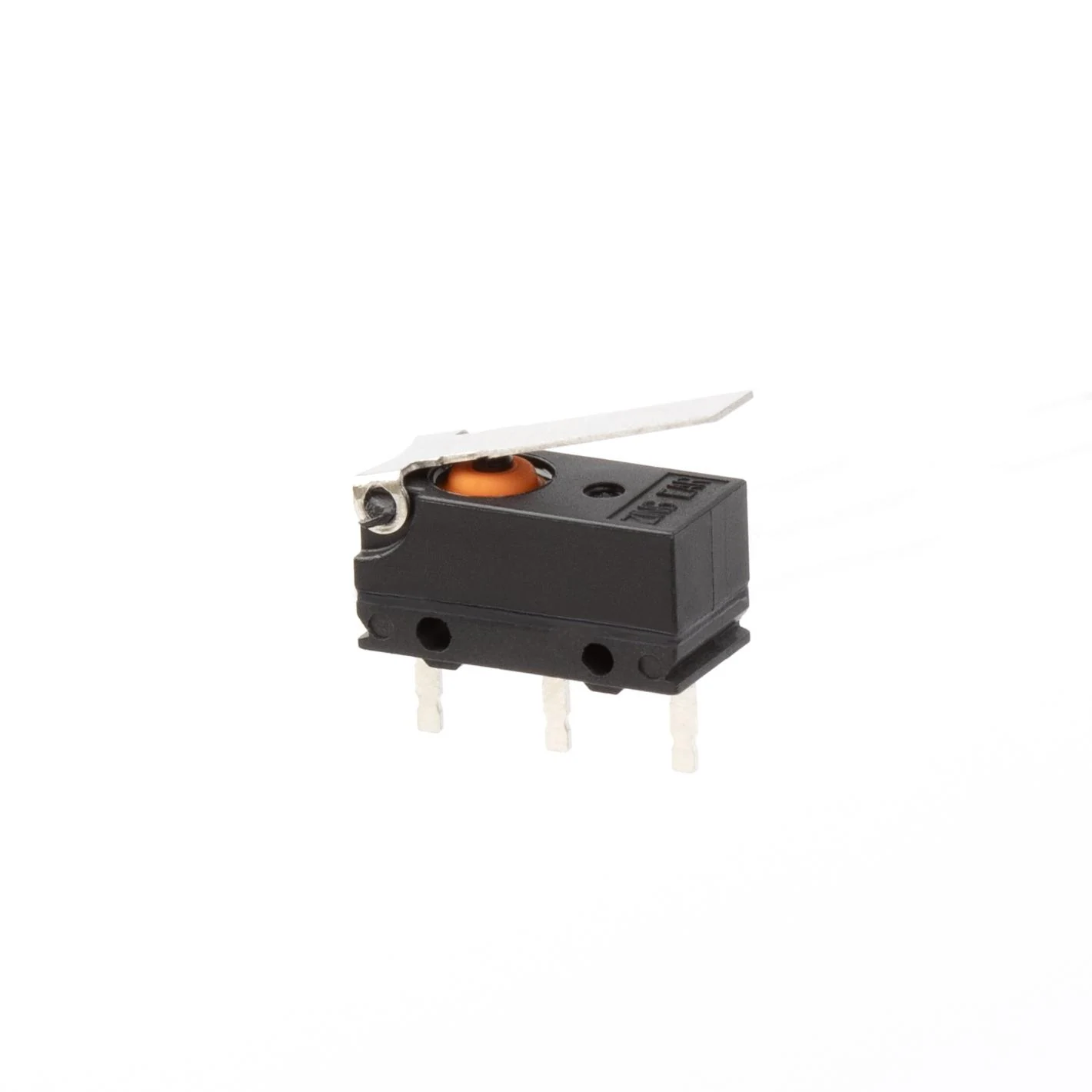
The ZINGEAR new-energy range includes a candidate for a defined connector position:
- Published model: ZINGEAR G10B03-150P03A, described as a sealed switch for charging-gun insertion and lock-position feedback.
- Configuration route: Configured micro switch development can address a specified latch travel or lead-exit requirement.
- Project acceptance: The exact variant drawing, contact circuit, installed-travel result and fault tests determine whether the part fits the funded charger's connector.
A useful response names the offered variant and supplies its drawing, signal or load test report, lead-seal boundary and proposed replacement route. Cable-flexing and cleaning exposure should be tested at the charger assembly where the switch will operate.
A test report must describe the real duty
A cycle-life figure is useful only with its test voltage, current, load type and switching frequency. Mechanical endurance records unloaded cycling; a load-breaking interlock also needs electrical interruption results at its actual load. For a low-current controller input, the part-numbered report should give contact resistance and the minimum applicable load.
The charger test plan then adds expected service operations and environmental conditioning. The stated test conditions let buyers compare the offered variant with the charger duty.
Ingress results name the tested terminal variant and its enclosure boundary. The cable exit, connector and charger enclosure need separate tests in their assembled form after the site-relevant exposure profile. A sample drawing and measured force, differential travel and overtravel show whether the mounted switch reaches every controller state.
Keep the approved revision serviceable
A five-year maintenance obligation makes part identity and spare availability material to the purchase. The qualification record should name manufacturer, exact model, actuator, contact form, terminal/lead version, resistor configuration if any, drawing revision, and lot code format.
A written product-change notice process keeps replacements aligned with the approved design. A new seal material or terminal changes the part being qualified. Its effect on fit, ingress and electrical behavior therefore matters before that revision becomes a service spare.
The supplier quote should separate engineering samples, production lead time, and spare-part availability. The charger maintenance plan needs a serviceable replacement route and installation instructions. A second source can be evaluated through its own latch-point and controller tests, even when its package size matches the approved part.
Comparing switch proposals for a funded charger
Ask each candidate to respond against the same funded-charger position and service horizon:
| RFQ input | Supplier return | Charger-team check |
|---|---|---|
| Position drawing, circuit, tolerance range and fault-state truth table | Exact part drawing and signal-level test results | Confirm diagnostic states and replacement fit |
| Cycle target and site exposure profile | Part-numbered endurance and ingress reports | Match test conditions to the installed duty and enclosure boundary |
| Annual quantity and service horizon | Sample/production schedules, change notice, lot traceability and replacement cross-reference | Confirm an approved spare route for the maintenance plan |
ZINGEAR's new-energy switch range includes connector-position models, and its configured development route covers defined actuator and lead-exit changes. We can review an existing position drawing or talk through an early design, then propose a configuration and clarify which test results are available and which charger-level checks remain. The funded-charger team approves the named revision through its own diagnostic and maintenance plan.
FAQ About US EV Charging Switch Suppliers
Can you recommend reliable suppliers for EV charging micro switches?
ZINGEAR is a candidate for connector insertion or lock feedback through its published G10B03-150P03A. A reliable-supplier ranking would need comparable part-level tests, field results and delivery records across the candidates. A load-breaking service interlock requires a separately rated candidate.
Does 23 CFR Part 680 certify a micro switch?
The certification and maintenance provisions address covered chargers and projects. A switch report supplies component evidence for the charger maker's assessment.
Would one switch failure automatically violate the 97% uptime target?
The rule measures each covered port's annual availability by its stated method. An intermittent switch signal can contribute to downtime, so diagnosis and replacement time matter to the charger's maintenance plan.
Which test best reveals a false connector-latch signal?
A mounted connector test that records the controller state during partial engagement, cable motion and relevant vibration, at the actual input current. The exact switch revision and fault trace should be identifiable.
Why record a service-spare revision?
A replacement with a changed actuator, seal or terminal can alter fit or signal behavior. Matching the approved revision to the spare helps the charger team decide whether earlier tests still apply.
Related reading: For a wider supplier comparison beyond the US funded-project requirements, see our EV charging micro switch supplier guide.
Sources
Related Recommendations
-
ZINGEAR Micro Switch OEM Manufacturing Complete Guide
2026-07-23 -
ZINGEAR G306-150S150AA Automotive Micro Switch Officially Partners with Changan Automobile to Enable Precise Control of Sun Visors and Vanity Mirrors
2026-08-07 -
ZINGEAR G304 Micro Switch Debuts in Rail Transit Sector, Enabling Precise Sensing and Reliable Control for High-Speed Train Lifting Doors
2026-08-13 -
ZINGEAR G306-150E65BA-400 Electric Motorcycle Handbrake Micro Switch | Dreame Shouqu Certified Sensing Switch
2026-08-18 -
ZINGEAR G304 Micro Switch Supports Electric Two-Wheeler Electronic Lock Systems, Empowering Smart Lock Security and Durability Upgrade
2026-08-21 -
zingear Micro Switch Solution for Communication Base Station Equipment Status Detection — Building a Solid Safety Line for Long-term Stable Operation of Base Stations
2026-08-11 -
Electrolux Range Hood Switch Solution — Zing EAR: Solve Extreme Kitchen Reliability with Precision Sensing
2026-08-25 -
How can I replace the push-button switch on my range hood?
2026-08-27