

"Tactile Switches vs. Membrane Switches: In-depth Analysis of Technical Paths and Application Selection"
ZINGEAR precision tactile switches provide reliable solutions for automotive electronics and medical devices through a 5-million-cycle lifespan design, low power consumption, and high-sensitivity technology. This article deeply analyzes the performance, lifespan, and environmental adaptability of both switch types to help you precisely match application scenarios.
I. Differences in Technical Essence: Mechanical Precision vs. Material Integration
Micro switches lies in the instantaneous action mechanism of its mechanical structure. ZINGEAR's G9A series adopts a double-break point structure and self-cleaning contact technology, achieving millisecond-level response through precision reeds. Its 5-million-cycle lifespan stems from the physical stability of metal contacts. This design ensures that even under high-frequency vibration or sudden temperature changes in automotive electronics or industrial equipment, it maintains signal on/off precision at the 0.1-second level.
Membrane switches on the other hand, rely on the deformation conduction of elastic films. Their multi-layer structure (panel, circuit, isolation layer) achieves integrated sealing through printing processes. For instance, polyester film substrates used in medical devices can withstand temperatures up to 125°C and chemical corrosion. However, the elastic modulus of the film limits its impact resistance, making it prone to deformation fatigue under heavy-load scenarios.
II. In-depth Comparison of Performance Dimensions
1. Lifespan and Durability
Tactile Switches: ZINGEAR's G5T16 series increases mechanical lifespan to over through buffer actuator design, maintaining stable performance in extreme environments ranging from -40°C to 125°C.
Membrane Switches: Lifespan can reach but depends on material anti-aging properties. For example, military-spec membrane switches extend lifespan through anti-static treatment, but contacts are prone to oxidation under high-frequency operation.
Conclusion: Tactile switches are more reliable for long-term high-frequency operation scenarios (such as automotive door lock systems); membrane switches have advantages in low-frequency or sealed demand scenarios (such as medical instruments).
2. Sensitivity and Operating Force
Tactile Switches: Trigger force is controlled within 50gf, with response speed reaching millisecond levels, suitable for precision control devices like gaming mice.
Membrane Switches: Operating force range is wider (0.5~1N), but rebound time is slightly longer (<6ms), suitable for consumer electronics where speed requirements are not critical.
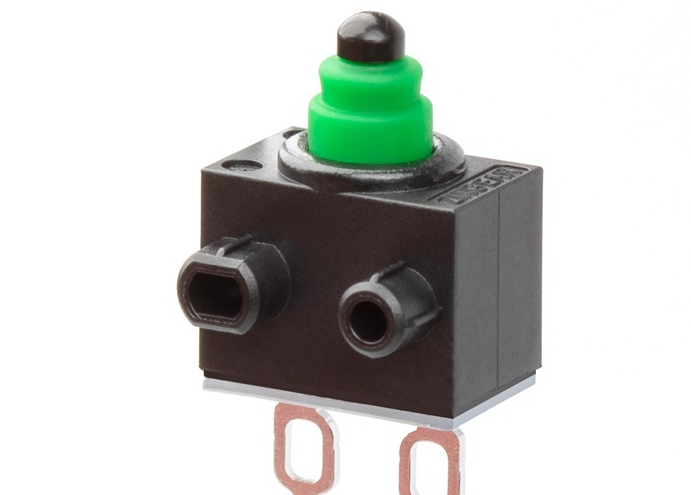
Case Study: ZINGEAR's custom smart tactile switch for Tesla's FSD system realizes the transformation from mechanical component to sensor by monitoring temperature and pressure in real-time through self-diagnostic functions.
3. Environmental Adaptability
Tactile Switches: IP67-rated sealing design can resist liquid and dust intrusion, but requires dust covers in high-dust environments.
Membrane Switches: The overall sealed structure performs excellently in humid or corrosive environments, such as salt-fog resistant membrane switches used in marine monitoring equipment.
Data Support: ZINGEAR's G303 series automotive waterproof tactile switch stabilizes contact resistance below 50mΩ through silver alloy contacts and PA66+30%GF composite materials.
III. ZINGEAR's Differentiated Value: Empowering from Components to Systems
ZINGEAR focuses on the R&D and production of precision tactile switches, electronic switches, relays, wiring harness modules, and various electrical control components. Since its establishment, the brand has adhered to independent R&D, precision manufacturing, and quality innovation, committed to providing high-reliability electrical control solutions for global customers.
Leveraging the standardization of switch manufacturing, ZINGEAR can quickly adjust 12 parameters such as actuator length and contact material to achieve "customized production of tactile switches." This flexibility is particularly important in automotive electronics and industrial control fields—for example, the G9A05 charging gun tactile switch has obtained both UL and CQC certifications, meeting dual access requirements for Chinese and US markets.

IV. Future Trends: Intelligent Integration and Scenario Segmentation
With the development of L4 autonomous driving and IoT technology, tactile switches are transforming into smart sensors. ZINGEAR's smart tactile switches integrate temperature sensors and pressure monitoring modules, allowing real-time data upload to vehicle ECUs, upgrading from a simple "switch" to a "diagnostic tool."
Membrane switches are expanding in the field of flexible electronics, such as ultra-thin membrane switches used in wearable devices with a thickness of only 0.1mm, though this requires sacrificing some mechanical strength.
Industry Insight: In the consumer electronics field, membrane switches dominate due to cost advantages; however, in high-reliability scenarios such as automotive and medical sectors, tactile switches remain an irreplaceable solution.
Conclusion: The Logic of Selection Lies in "Scenario Adaptation"
The debate over the "pros and cons" of tactile switches versus membrane switches is essentially about the match between technical paths and application needs. ZINGEAR pushes the mechanical precision of tactile switches to the extreme through continuous technological innovation, while also accommodating customized needs through modular design. For engineers, the key to selection lies in:
- High-frequency, high-reliability scenarios (e.g., automotive electronics, industrial control): Prioritize tactile switches;
Low-frequency, environmental adaptability scenarios (e.g., medical devices, consumer electronics): Membrane switches offer better cost-performance.
In the evolution of electronic devices towards being "smaller, faster, and more reliable," tactile switches and membrane switches will jointly construct the underlying logic of human-machine interaction—and ZINGEAR is writing the footnote of this process with technology as its pen.
Tags: Micro switches membrane switches ZINGEAR precision micro switches
Related Recommendations
-
ZINGEAR Micro Switch OEM Manufacturing Complete Guide
2026-07-23 -
ZINGEAR G306-150S150AA Automotive Micro Switch Officially Partners with Changan Automobile to Enable Precise Control of Sun Visors and Vanity Mirrors
2026-08-07 -
ZINGEAR G304 Micro Switch Debuts in Rail Transit Sector, Enabling Precise Sensing and Reliable Control for High-Speed Train Lifting Doors
2026-08-13 -
ZINGEAR G306-150E65BA-400 Electric Motorcycle Handbrake Micro Switch | Dreame Shouqu Certified Sensing Switch
2026-08-18 -
ZINGEAR G304 Micro Switch Supports Electric Two-Wheeler Electronic Lock Systems, Empowering Smart Lock Security and Durability Upgrade
2026-08-21 -
zingear Micro Switch Solution for Communication Base Station Equipment Status Detection — Building a Solid Safety Line for Long-term Stable Operation of Base Stations
2026-08-11 -
Electrolux Range Hood Switch Solution — Zing EAR: Solve Extreme Kitchen Reliability with Precision Sensing
2026-08-25 -
How can I replace the push-button switch on my range hood?
2026-08-27