

"G306A Built-in Resistor Microswitch: Technical Analysis"
I. Introduction
In fields with extremely stringent reliability requirements, such as automotive electronics, industrial automation, and smart home appliances, microswitches, as core components for signal triggering and status detection, directly impact the overall system's safety margin and maintenance complexity through their electrical configuration. Zingear Group Micro Technology Co., Ltd.with its IP67 protection rating and 200,000-cycle electrical life, not only establishes a solid quality foundation but also offers two configuration options: with and without a built-in resistor. This allows engineers to flexibly select the appropriate option based on actual operating conditions, significantly improving system reliability while simplifying circuit design. This article will provide an in-depth comparison of the differences between the two solutions in terms of electrical characteristics, fault diagnosis capabilities, and typical application scenarios,offeringcomprehensive engineering references for technical decision-makers.
II. G306A Product Technical Overview
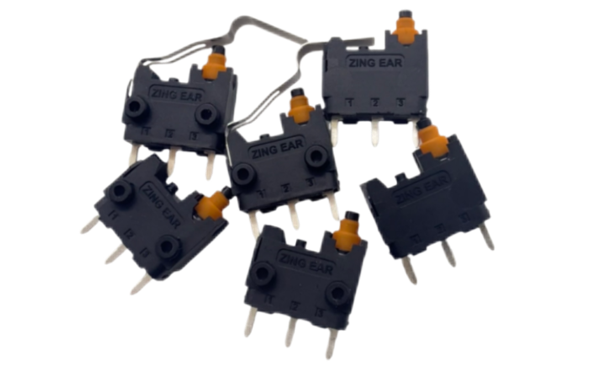
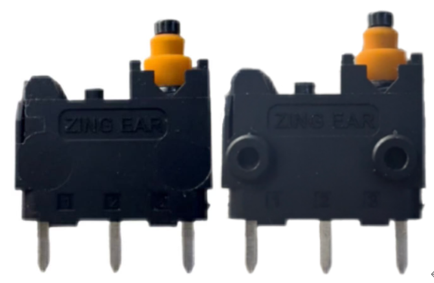
The G306A is a sealed microswitch launched by Zingear Group Micro Technology for harsh environments, integrating three core technological advantages. In terms of protection, this model is IEC IP67 certified (except for the terminal parts), effectively resisting dust intrusion and high-pressure water jets, and supporting continuous operation in a wide temperature range from -40°C to 85°C, with a contact resistance change rate of less than 5% under high-temperature environments. In terms of electrical performance, the initial contact resistance of this model does not exceed 200 milliohms (terminal type), the withstand voltage between terminals reaches 500 volts AC, and the withstand voltage of live parts to the metal casing reaches 1000 volts AC for 1 minute. These robust specifications provide an ideal foundation for the reliable integration of the built-in resistor solution.
III. Core Differences Between Solutions with and Without Built-in Resistors
Circuit Function and Diagnostic Capabilities
The G306A solution with built-in resistors integrates a fixed-value resistor directly into the circuit within the switch housing, upgrading from a traditional "on/off switch" to a "diagnostic intelligent signal node." This design allows the switch to not only output "on" and "off" states, but also, in conjunction with the controller, identify wiring faults such as short circuits and open circuits, thereby significantly improving the system's fault diagnosis coverage. Standard solutions without resistors only provide pure switching contact functionality, outputting a single on/off signal. They cannot detect circuit-level anomalies, requiring external circuitry for diagnostic capabilities in safety-critical applications, which increases design complexity.
Signal Output and System Integration
At the signal output level, the G306A with built-in resistors allows the switch to change the total circuit resistance in different states. For example, the controller can read drastically different voltage values in normally closed, normally open, and fault states, enabling accurate multi-state readback. This is particularly crucial for scenarios requiring detection of accidental jamming of the charging port cover or intentional cutting of wiring. In contrast, solutions without resistors can only determine high and low levels, providing limited information. At the system integration level, the integrated design with built-in resistors eliminates the need for external resistors, saving valuable PCB space, reducing component count and soldering steps, and significantly improving production line assembly efficiency. The standard solution requires engineers to configure external resistors and allocate space for their installation and heat dissipation, which is a significant constraint for devices aiming for miniaturization and high integration.
The Trade-off Between Electrical Accuracy and Reliability
The biggest advantage of the standard G306A solution without resistors is the absolute flexibility and transparency of its electrical parameters. During prototype development or in situations requiring frequent resistance adjustments, engineers can freely select external resistors of any specification and power, and parameter iteration is not limited by the switch itself. However, the leads and solder joints between the switch and the external resistor become potential points of failure. Under long-term vibration and temperature fluctuations, the connection points are at risk of contact degradation, and the consistency of the resistor's quality also affects the overall reliability of the system. The G306A solution with built-in resistors, by encapsulating the resistor in an IP67-rated sealed cavity, fundamentally isolates it from the direct effects of moisture, vibration, and chemical corrosion. This solution supports customer-customized series resistance in the circuit, with resistance accuracy controlled within ±1.5%. After undergoing 500 hours of testing in a harsh environment of 85 degrees Celsius and 95% relative humidity, the insulation resistance still maintains above 500 megohms. For applications with severe vibrations, such as automotive chassis and industrial robot joints, the built-in solution effectively eliminates intermittent faults caused by lead wire breakage or solder joint fatigue, demonstrating significant long-term reliability advantages.
IV. Application Scenarios and Selection Recommendations
Applicable Scenarios for Resistor-Free Solutions
The standard G306A microswitch without resistors is an ideal choice for many mature applications due to its versatility. In automotive door lock status detection, it can use a single-pole double-throw contact to feed back a locking signal to the vehicle controller, which has pre-set pull-up or pull-down resistors for operation. In home appliance control panels, such as air conditioner mode switching buttons or washing machine status detection, since the main control board itself has complete signal conditioning circuitry, a standard switch can be selected to meet the requirements. Similarly, for conventional industrial limit control, where only the position of the mechanical component needs to be determined and no additional fault diagnosis is required, a resistor-free solution can achieve the goal at a lower cost. This cost-effective solution is also widely used in access control triggering and device module presence detection in communication base stations.
Typical Applications of Built-in Resistor Solutions
The G306A solution with built-in resistors focuses on areas with stringent requirements for safety, diagnostic coverage, and system integration. The locking mechanism of a charging gun in new energy vehicles is a prime example. Through a specific resistance value integrated within the switch, the system can not only confirm the locking status of the charging gun and the seat but also output a clear abnormal code in case of short circuit, open wire, or contact adhesion—a necessary condition for the charging safety function's safety level. Likewise, in the waterproof testing of battery compartments in electric vehicles, the IP67 protection rating combined with a built-in resistor ensures a completely sealed transmission link for the compartment cover closure signal, preventing resistance drift and misjudgment caused by moisture corrosion. In the joint limiting of industrial robotic arms, the G306A's No. 03 long-stroke handle, combined with a built-in resistor, can continuously provide reliable limit signals in environments with severe vibration and bent wiring, and supports online diagnostics of the entire signal link by the controller. Explosion-proof cabinet access control systems require minimizing potential ignition sources within the cabinet; the built-in resistor solution eliminates the need for a separate resistor element and its solder joint, naturally reducing the possibility of electrical sparks during malfunctions and better meeting safety regulations for hazardous areas. Furthermore, in devices involving financial and tamper-proof requirements, such as smart meters and vending machines, the G306A with its built-in resistor allows the controller to immediately determine if the wiring is damaged or short-circuited once the circuit resistance deviates from the predetermined range, thus triggering a safety alarm. This has high practical value in the security field.
V. Zingear Group Micro Technology's Professional Customization Capabilities
Zingear Group Micro Technology offers highly flexible customization services for the G306A, allowing customers to choose between built-in resistors or no resistor at all, based on specific engineering needs. The contact types cover single-pole double-throw, normally open, and normally closed types. Terminal interfaces include soldered S-type terminals, standard and extended PCB terminals, and various cable exit directions. Handle specifications range from a 150-gram low-operation-force receiver to an extended arm with a 15.5 mm stroke. Multiple installation designs are available to adapt to different impact environments. We can also provide precise resistance matching solutions for specific charging gun anti-pinch functions, ensuring stable and reliable recognition of minute current changes, and protecting user safety at the core component level.
VI. Conclusion
The built-in resistor solution represents the technological direction of microswitches evolving from passive actuation elements to intelligent diagnostic nodes. Zingear Group Micro Technology G306A microswitches retain both resistor-equipped and resistor-free configurations to allow engineers to strike the optimal balance between system integration and design flexibility based on actual operating conditions. Whether for mass-produced equipment seeking extreme compactness and reliability or for rapidly iterating development projects, the G306A provides a suitable electromechanical signal solution.
For further information on the technical details of the G306A built-in resistor solution or to request sample testing, please contact the Zingear Group Micro Technology team. We will provide you with customized engineering solutions and support.
Related Recommendations
-
What is the alternative to a micro switch?
2026-04-23 -
Differentiated Competitiveness of 12 volt Micro Switch
2026-03-31 -
Can my brand logo be printed on the micro switch? ZINGEAR micro switch supports customization
2026-02-12 -
The differences between Micro Switch and Limit Switch
2026-02-12 -
Which brand of mouse micro switches is the best? Deep analysis and recommendation
2026-02-12 -
The Robust G9 Waterproof Micro Switch: Design, Applications and Manufacturing Excellence by ZING EAR
2026-01-13 -
G201 Sealed Micro Switch | ZING EAR China ODM & OEM Manufacturer
2026-01-13