

"What is the alternative to a micro switch?"
In the miniaturization and intelligence evolution of electronic control systems, alternatives to micro-switcheshave transcended the limitations of traditional mechanical structures, forming a new technical system centered on material innovation, functional integration, and scenario-specific adaptation. These alternative solutions not only address inherent challenges of micro-switches—such as high-frequency operation and adaptability to extreme environments—but also, through cross-domain technological convergence, provide superior options for automotive electronics, medical devices, and industrial automation.

ZINGEAR Micro Motion Technology - Automotive Charging Port Cover Switch
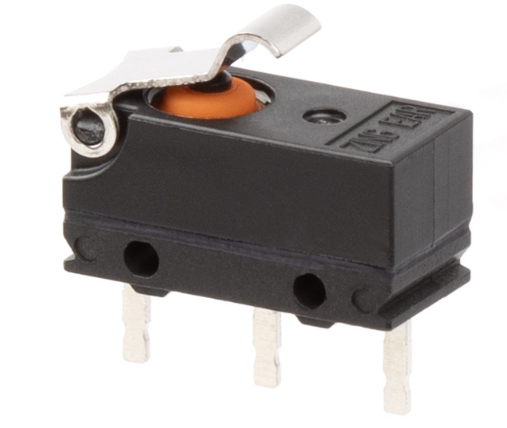
Alternative to Micro Switches - ZINGEAR Micro Technology
I. Solid-State Switches: A Reliability Revolution Without Mechanical Movement
Solid-state switches replace traditional mechanical contacts with semiconductor materials, using electronic signals to control circuit on/off states, thereby completely eliminating mechanical wear and contact oxidation. Their core advantages include:
1. Ultra-Long Lifespan: With no physical contact points, issues such as contact arcing and jamming are avoided, significantly extending service life compared to mechanical micro-switches.
2. Environmental Resilience: High temperature resistance and corrosion resistance enable reliable performance in humid, dusty, or high-temperature conditions. For example, in new energy vehicle charging systems, they remain functional under prolonged high temperatures and chemical exposure.
3. Smart Integration: Capable of embedding temperature sensors or diagnostic modules, transforming from passive components into active monitoring nodes that deliver real-time health data to the system.
In automotive electronics, solid-state switches are already used for door lock status monitoring. Enhanced signal feedback precision effectively reduces the risk of accidental unlocking while meeting the stringent reliability requirements of automotive-grade standards.
II. Magnetic Switches: Precision Breakthroughs in Non-Contact Control
Magnetic switches control switching states through changes in magnetic fields, utilizing a combination of permanent magnets and reed switches to achieve millisecond-level response and high reliability. Key technical features include:
1. High Sensitivity: Even slight magnetic field variations can trigger action, making them ideal for precision detection applications such as position monitoring in medical instruments.
2. Interference Resistance: Naturally immune to mechanical vibration and external electromagnetic interference, ensuring stable operation in industrial automation equipment.
3. Customizable Design: Magnetic parameters can be adjusted to meet different actuation force requirements—for instance, achieving 0.1mm-level position detection accuracy in smart seat adjustment systems.
In security systems, magnetic switches serve as core components for door sensors. Their non-contact nature prevents physical wear, while IP-rated sealing protects against environmental intrusion, making them ideal for high-security applications.
III. Piezoelectric Switches: Miniaturized Applications with High-Precision Sensing
Piezoelectric switches utilize the inverse piezoelectric effect of piezoelectric materials to convert mechanical pressure into electrical signals, offering dual advantages of high sensitivity and low power consumption. Core characteristics include:
1. Minimal Actuation Stroke: Triggering force can be as low as 50gf, suitable for portable device controls such as gaming mice or handheld medical instruments.
2. Wide Temperature Range Adaptability: Stable signal transmission is maintained even under extreme temperatures from -40°C to 125°C, meeting automotive electronics' thermal tolerance requirements.
3. Multi-Function Integration: Capable of combining pressure sensing with position detection, enabling environmental parameter monitoring in IoT devices—such as detecting window or door opening status through pressure changes.
In industrial control, piezoelectric switches are adapted to hidden structures via miniaturized design, while anti-vibration materials enhance durability in high-vibration environments, making them critical components in CNC machines and similar equipment.
IV. ZINGEAR’s Innovation Practice: From Components to System Empowerment
ZINGEAR's R&D team continues to develop advanced waterproof, high-temperature-resistant, and high-precision micro-switch technologies, supported by multiple international patents. Key technological breakthroughs include:
1. Material Innovation: Utilizing silver alloy contacts and high-thermal-conductivity composite materials to maintain extremely low contact resistance, combined with IP67-level sealing for protection in extreme environments.
2. Structural Optimization: A patented dual-spring reset mechanism ensures minimal actuation force variation, with millisecond-level response speed, ideal for time-critical applications such as automotive door lock systems.
3. Scenario-Based Customization: Providing tailored solutions integrating temperature sensors and dual-breakpoint structures for applications in new energy vehicle charging and medical instrument control, enabling a leap from single components to system-level optimization.
For example, in Tesla V3 Superchargers, ZINGEAR's G9 series micro-switches solve arcing issues during charging through self-cleaning contact technology, while AI algorithms dynamically adjust process parameters, significantly improving yield rates and reducing after-sales maintenance costs.
V. Selection Logic for Alternative Solutions: Technical Matching and Scenario Adaptation
Choosing the right alternative to micro-switches requires comprehensive consideration of technical characteristics and application scenarios:
1. High-Frequency Operation Scenarios: Solid-state switches, with no moving parts, are the preferred choice for frequent switching needs, effectively avoiding failures caused by mechanical fatigue in industrial automation equipment.
2. xtreme Environment Scenarios: Magnetic and piezoelectric switches, through non-contact design, effectively resist moisture, high temperatures, or corrosive environments, making them suitable for outdoor or harsh industrial applications.
3. High-Precision Requirements: Piezoelectric switches and customized micro-switches achieve micrometer-level position detection through material and structural innovation, meeting the demands of medical instruments or precision manufacturing.
Conclusion
Alternatives to micro-switches have evolved from simple functional replacements to system-level optimizations, offering more reliable and intelligent control solutions for electronic devices through deep integration of materials science, sensing technology, and structural design. The technological practices of companies like ZINGEAR demonstrate that the essence of alternatives lies not in completely replacing micro-switches, but in expanding their application boundaries through innovation—ultimately achieving a transition from component-level performance enhancement to system-wide efficiency optimization. In the ongoing trend toward smaller and smarter electronic devices, these alternative solutions will remain pivotal in ensuring system resilience.
Tags: Micro switch replacement ZINGEAR switch application scenarios
Related Recommendations
-
Differentiated Competitiveness of 12 volt Micro Switch
2026-03-31 -
Can my brand logo be printed on the micro switch? ZINGEAR micro switch supports customization
2026-02-12 -
The differences between Micro Switch and Limit Switch
2026-02-12 -
Which brand of mouse micro switches is the best? Deep analysis and recommendation
2026-02-12 -
The Robust G9 Waterproof Micro Switch: Design, Applications and Manufacturing Excellence by ZING EAR
2026-01-13 -
G201 Sealed Micro Switch | ZING EAR China ODM & OEM Manufacturer
2026-01-13