

"From Appliance Mechanism to Micro Switch Sample: What Must Be Defined?"
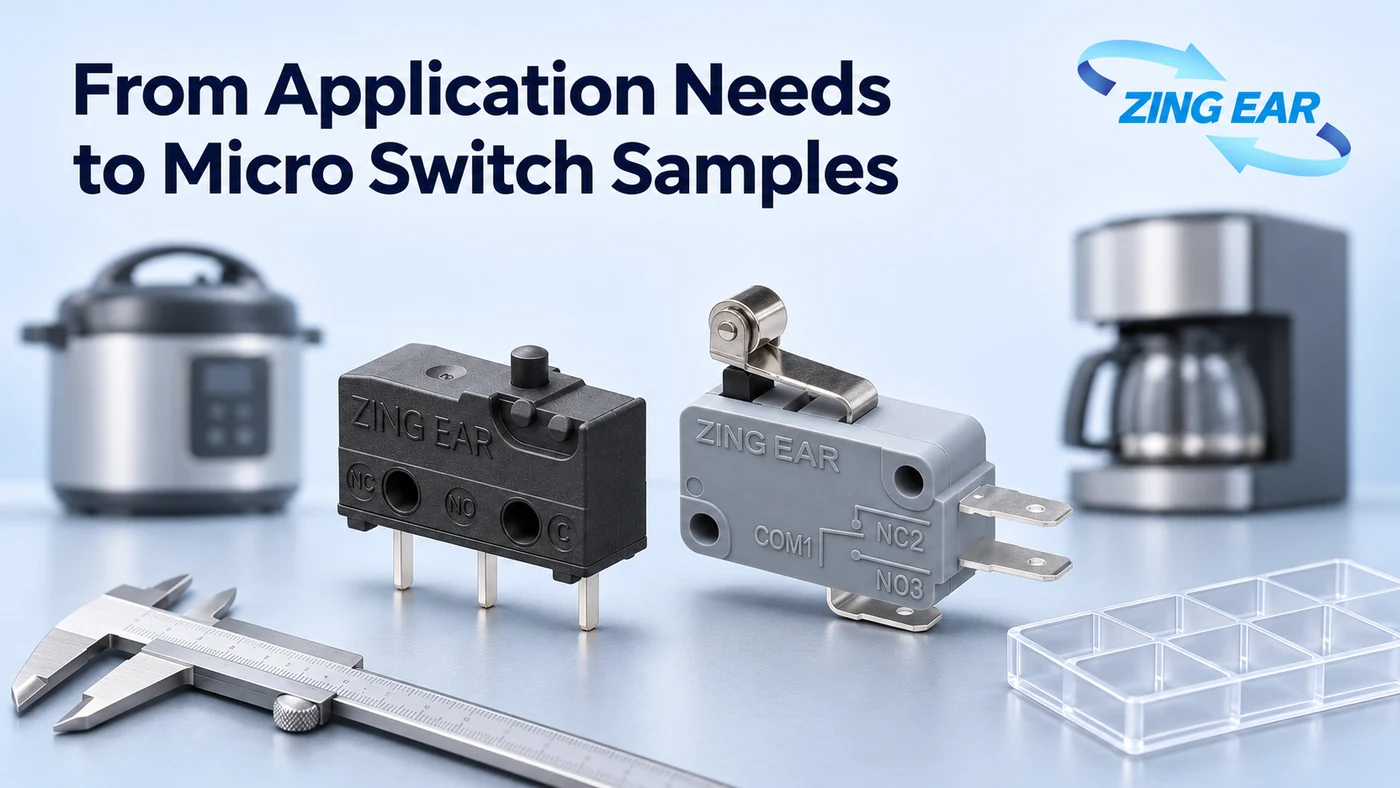
Preparing an appliance micro switch sample starts with the function the appliance needs: a lid may need closed-position detection, while a removable tank needs seated-position detection. The mechanism, available space and circuit determine whether an existing configuration can be sampled or a design change is needed. Using Zingear Switch products for these two applications as examples, this article explains what affects sample preparation and how buyers can plan the next step.
What does the appliance need the switch to detect?
For a pressure-cooker lid, the switch detects whether the lid or latch has reached the position required by the control system. For a removable coffee-machine tank, the switch detects whether the tank is seated. These examples require different contact points: the lid mechanism presses one switch, while the tank presses the other.
A sketch or photograph shows where the switch will fit and what will press it. For a pressure-cooker lid, it can show the latch and nearby mounting space. For a coffee-machine tank, it can show the tank pocket and the surface that presses the actuator. The circuit information adds a separate requirement: whether the contacts send a position signal or switch a load. Together, the installation and circuit details help identify a suitable actuator, connection and electrical rating.
| Application detail | Pressure-cooker lid | Coffee-machine tank bay | What it changes in the sample |
|---|---|---|---|
| Moving part | Lid or latch | Removable tank | Actuator approach and return path |
| State to detect | Lid reaches the intended locked position | Tank is fully seated | Operating point and release point |
| Circuit function | Defined by the appliance control circuit | Defined by the tank-detection circuit | Contact arrangement and rating |
| Available space | Around the lid mechanism | Around the tank pocket | Switch body, mounting and terminals |
The two applications also need different checks after fitting the sample. The lid switch should change state at the specified latch position and return when the lid opens. The tank switch should distinguish a fully seated tank from a partly inserted or removed tank. If it changes state too early or fails to return, the contact point, actuator travel and mounting position are the relevant features to examine.
How sample preparation differs for existing and customized switches
For an existing model, the body, actuator and connections are already defined. Preparing a sample starts with confirming the required version, availability and quantity. Fitting that sample shows whether the standard actuator and connections suit the appliance.
Selecting a different lever or terminal from existing options adds assembly work. Designing a new actuator or housing also involves reviewing dimensions and may require tooling. This is why two similar-looking switches can take different amounts of time to prepare.
If a standard micro switch does not fit the appliance’s mechanism or wiring layout, Zingear Switch can help identify suitable actuator, terminal or wire options and discuss customization where needed.
Product examples for lid and tank-position samples
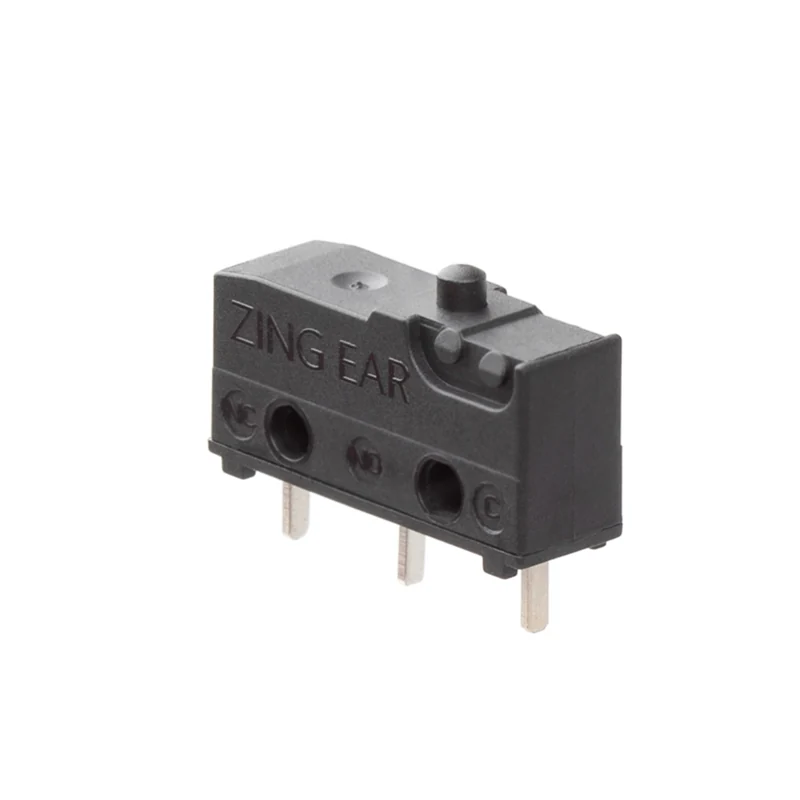
Zingear Switch G9105-150P00D1
- Application: Pressure-cooker lid-position detection.
- Actuator: Top plunger.
Direct plunger actuation suits a mechanism that presses toward the switch body. During closing, the lid mechanism presses the plunger to change the contact state. During opening, it moves away so the plunger can return.
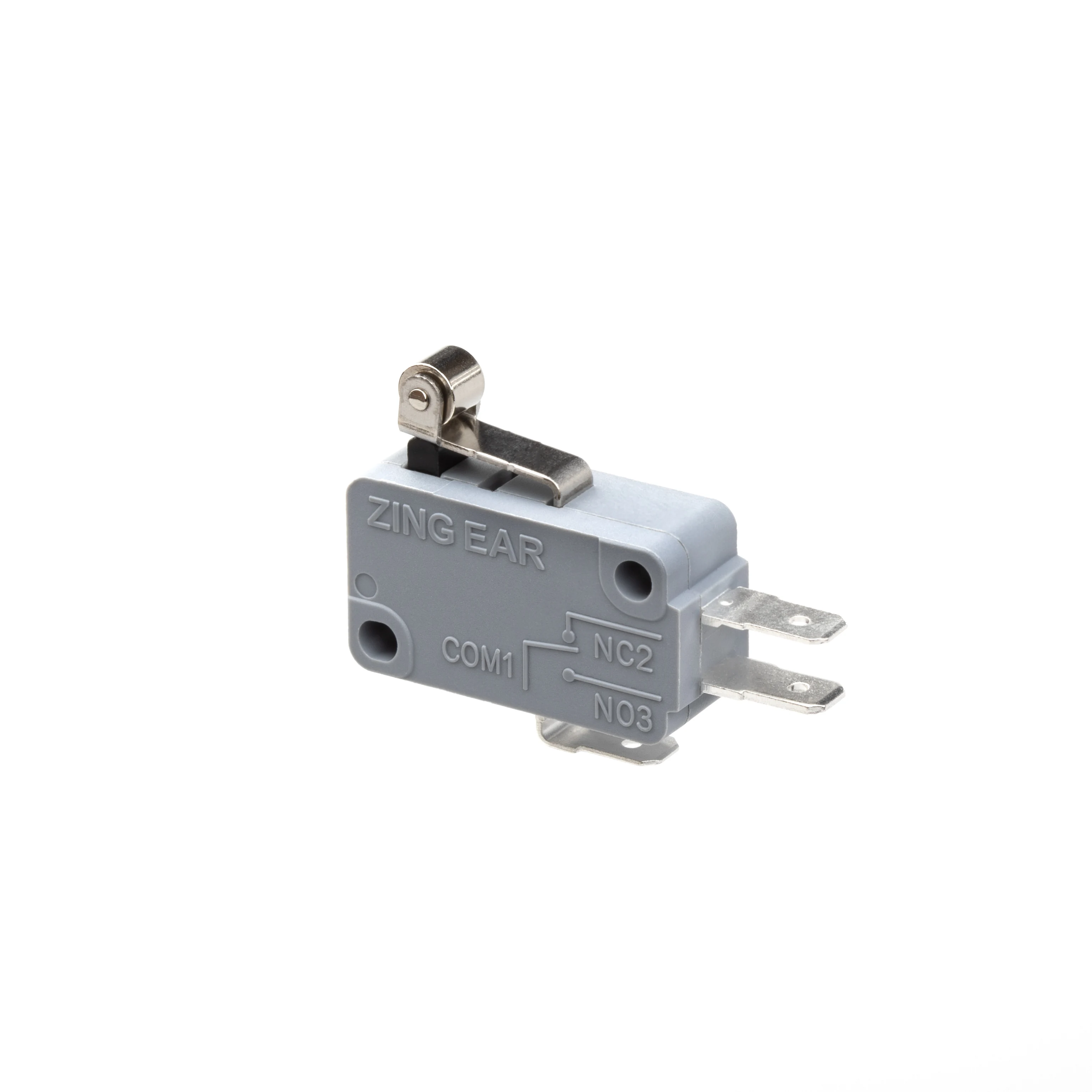
Zingear Switch G5T16-E1Z200A05
- Application: Coffee-machine mechanisms.
- Actuator: Short roller lever.
- Electrical rating: 16 A at 250 VAC (volts alternating current).
- Operating temperature: −25°C to +125°C.
The short roller lever allows a moving surface to press the switch as it slides across the roller. In a tank-detection arrangement, the sample establishes whether the tank presses the lever far enough when seated and releases it when removed. The mounting dimensions and tank-detection circuit determine whether this version suits that arrangement.
What determines the sample schedule?
The preparation time depends on whether the sample uses an existing design, a combination of existing options or newly designed parts:
- Existing model: An available sample can be selected and dispatched. If the required version is unavailable, preparation also includes making the sample.
- Existing customization options: Selecting a different lever, operating force or terminal adds the work of confirming those choices and assembling the sample. Availability of the selected parts affects the dispatch date.
- Newly designed parts: A new actuator or housing requires dimensions to be agreed before manufacture. Tooling or additional testing can add time before the sample is ready to dispatch.
Sample dispatch is the date the sample leaves the factory; it does not include the time needed to evaluate it in the appliance. Production delivery is a separate schedule, based on the selected switch and order quantity.
A lid sketch, tank photograph or description of an installation problem can start a discussion with Zingear Switch about suitable samples, any customization and delivery timing.
Frequently Asked Questions About Appliance Micro Switch Samples
How should an appliance sample be identified when it arrives?
The sample label can carry the complete part code, drawing revision and date. A short note identifying the intended lid or tank position keeps later observations tied to the version actually tested.
What makes two sample quotations comparable?
A like-for-like comparison includes the sample quantity, any design or tooling charge and the sample dispatch date. For example, a quotation covering a newly designed actuator includes work that an available standard sample does not require. Production quantity and delivery timing are compared separately from the sample order.
What if the appliance mechanism changes while samples are being prepared?
A change to the lid latch, tank shape or mounting space can alter where the appliance presses the actuator. Comparing the new dimensions with the sample shows whether its reach and travel still fit, or whether an actuator or mounting change is needed.
Sources
Related Recommendations
-
ZINGEAR Micro Switch OEM Manufacturing Complete Guide
2026-07-23 -
ZINGEAR G306-150S150AA Automotive Micro Switch Officially Partners with Changan Automobile to Enable Precise Control of Sun Visors and Vanity Mirrors
2026-08-07 -
ZINGEAR G304 Micro Switch Debuts in Rail Transit Sector, Enabling Precise Sensing and Reliable Control for High-Speed Train Lifting Doors
2026-08-13 -
ZINGEAR G306-150E65BA-400 Electric Motorcycle Handbrake Micro Switch | Dreame Shouqu Certified Sensing Switch
2026-08-18 -
ZINGEAR G304 Micro Switch Supports Electric Two-Wheeler Electronic Lock Systems, Empowering Smart Lock Security and Durability Upgrade
2026-08-21 -
zingear Micro Switch Solution for Communication Base Station Equipment Status Detection — Building a Solid Safety Line for Long-term Stable Operation of Base Stations
2026-08-11 -
Electrolux Range Hood Switch Solution — Zing EAR: Solve Extreme Kitchen Reliability with Precision Sensing
2026-08-25 -
How can I replace the push-button switch on my range hood?
2026-08-27