

"How Does an Appliance Micro Switch Move From Selection to Production?"
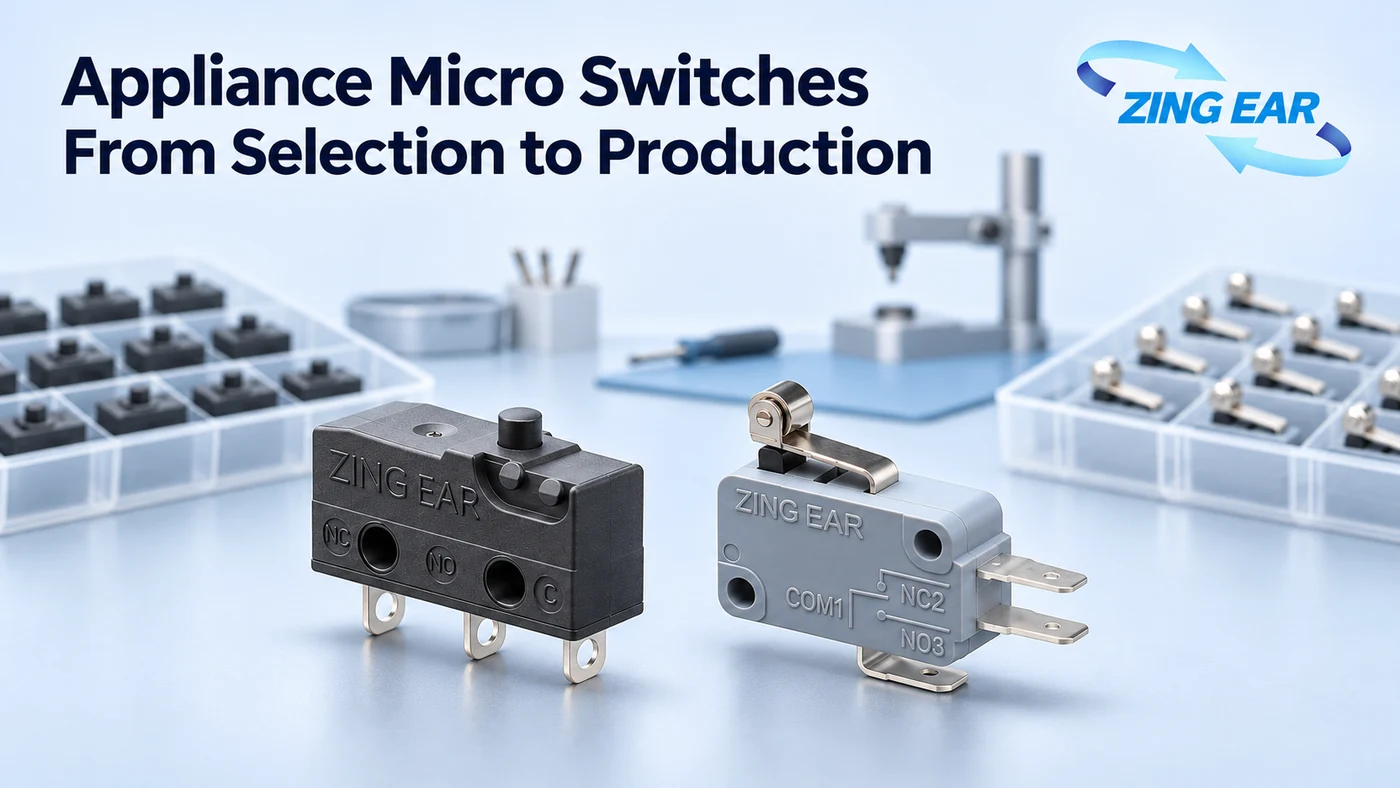
Moving an appliance micro switch from selection to production involves more than choosing a model number. The supplier and appliance team need to agree which configuration will be sampled, how it will be evaluated and which version will be ordered after approval. Using microwave-door and disinfection-cabinet applications as examples, this article explains those stages and the role of Zingear Switch product and development support.
Define the door or drawer position the switch must detect
Microwave doors and disinfection-cabinet drawers illustrate why selection begins with the appliance function. Both involve opening and closing, but the mechanisms move differently and the control systems use the switch signal for different purposes.
A microwave interlock responds as part of the door-safety system. A disinfection-cabinet drawer-position switch indicates whether the drawer has reached the intended position. The examples below follow selection and testing for these two applications; the contact position and circuit requirements are established separately for each.
The door latch or drawer is the part that presses the actuator. Its movement and available mounting space determine where the switch can sit and how far its actuator must move. The appliance circuit determines the contact arrangement and electrical rating. These are separate selection questions: a switch can fit the mechanism yet have the wrong electrical specification.
The required switching position comes from the appliance design. A mounted sample shows whether the switch changes state at that position and returns when the door or drawer opens. It also reveals whether the actuator has enough movement when the parts sit at the limits of their permitted dimensions.
Match the actuator and connections to the appliance
A direct-press actuator and a roller lever offer two ways to connect appliance movement to the switch. The actuator shape affects where the mechanism makes contact. Terminal layout affects wiring access, while operating force affects how firmly the mechanism must press. A suitable actuator therefore needs both the right reach and an operating force that the mechanism can supply.
The model drawing shows the body size, actuator and terminal layout. These details distinguish versions that share a switch series but differ in installation. A longer lever changes where the mechanism makes contact, while a different terminal changes the space needed for wiring. The sample needs to include the features intended for the appliance.
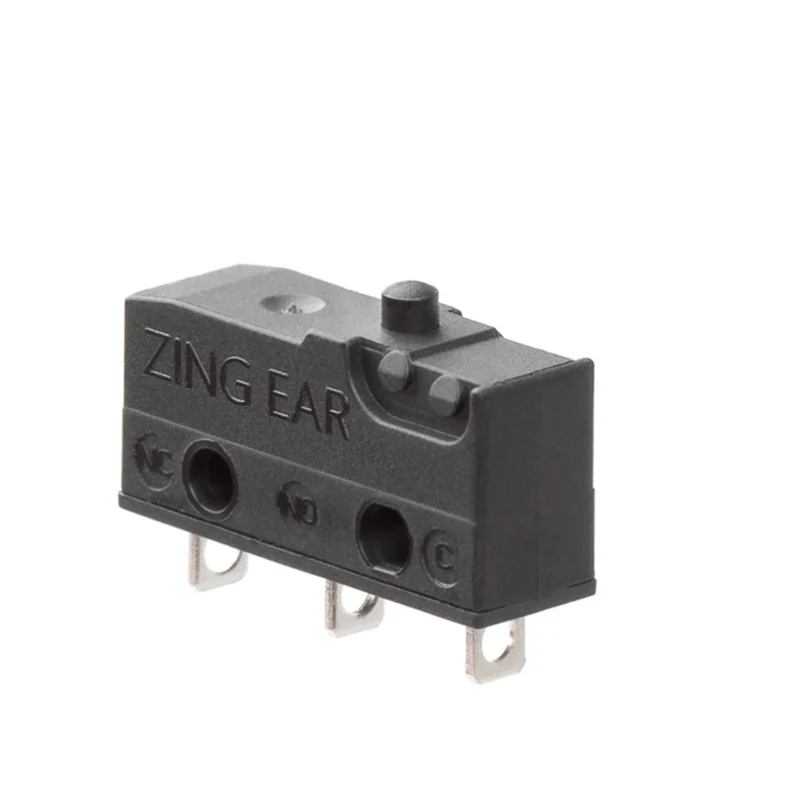
Zingear Switch G9105-150S00D1
- Application: Microwave and disinfection-cabinet positions.
- Actuator: Top direct-press.
The door latch or drawer presses directly toward the top actuator. Fitting the sample establishes whether that moving part reaches the actuator when closed and leaves enough space for it to return when opened.
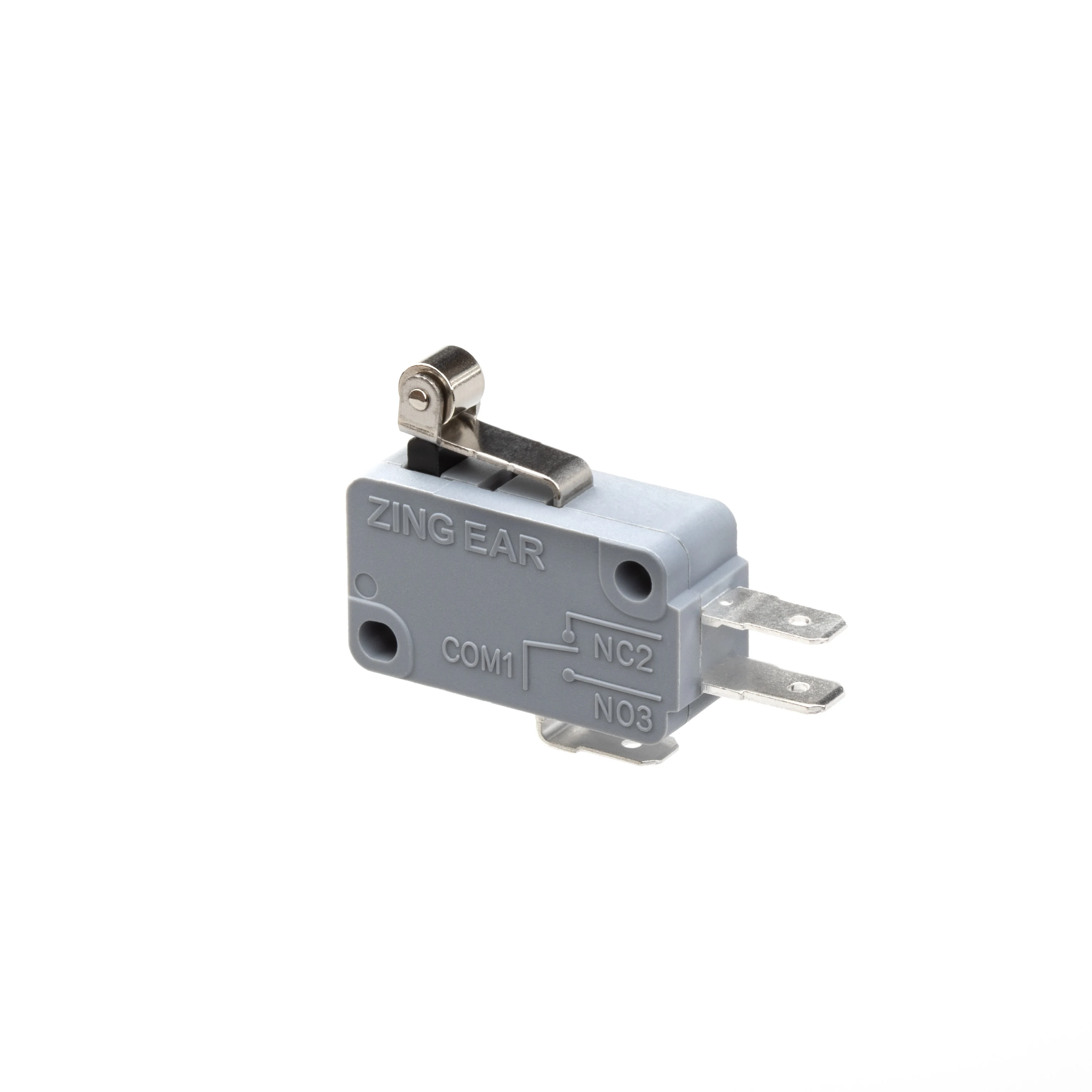
Zingear Switch G5T16-E1Z200A05
- Application: Microwave switching.
- Actuator: Short roller lever.
- Electrical rating: 16 A at 250 VAC (volts alternating current).
The short roller lever offers a contact point above the switch body for a moving surface to press. This differs from direct pressure on the top actuator of G9105-150S00D1. The switch's electrical rating is compared with the voltage, current and load type of the appliance circuit.
Evaluate the sample in the appliance mechanism
A sample switch mounted in the microwave door mechanism is evaluated through the door's open, closing and fully latched positions. The check establishes when the switch changes state and when it returns. Repeating it with the mounting and door parts at the limits of their permitted dimensions shows whether normal assembly variation affects switching. If the contacts change state before or after the permitted door position, the appliance team reviews the actuator shape and mounting position.
A disinfection-cabinet drawer is checked from withdrawn through partly inserted to fully seated. The drawer should press the switch actuator at the intended seated point and release it when opened. Testing the fitted drawer includes the effect of its stop and rail movement. Pressing the switch by hand on a bench does not show whether the drawer itself reaches the actuator correctly.
| Project stage | Common reference | Decision answered |
|---|---|---|
| Candidate selection | Full part code, drawing and circuit function | Does the offered configuration fit the mounting space and meet the circuit's voltage, current and load requirements? |
| Mounted sample | Same part code and actuator/terminal version | Does the mechanism reach and release the switch correctly? |
| Electrical and endurance test | Same version, load and test conditions | Does switching remain suitable for the circuit and expected use? |
| Approval for production | Approved drawing, test record and order specification | Will the delivered version match the one that passed? |
Test the Switch in the Appliance Before Approving It for Production
Electrical testing depends on what the switch does in the appliance. For a switch that sends a door-position signal to a controller, the test checks whether the controller reliably detects the signal at the circuit's operating voltage and current. For a switch that directly turns a load on or off, the test uses the relevant voltage, current, load type and switching frequency. Repeated-operation tests then show whether switching remains consistent over the intended use. Identifying the tested model, actuator, connections and load makes the results applicable to the switch selected for production.
If the sample fits the mechanism and passes the electrical evaluation, its model code, drawing and selected features identify the switch for production. If it switches at the wrong door position, actuator or mounting changes are relevant. If it fails under the required electrical load, changing the lever alone cannot solve that problem; the switch’s electrical specification and circuit need review. Any changed design is evaluated before it is approved for the order.
Agree the production order and manage later changes
The production quotation sets out the selected switch, order quantity, price and delivery arrangements. A sample dispatch date covers the parts sent for evaluation; the production dispatch date covers the subsequent order. Keeping the two dates separate makes the manufacturing schedule clear.
Zingear Switch provides selection, prototype development and production support through its micro switch range. An enquiry can begin with the appliance mechanism and installation problem, then progress to suitable samples and production arrangements as the switch is selected.
A later terminal or actuator change can affect wiring space or the switching position, even if the switch body remains the same. Reviewing the changed feature before ordering identifies which installation or electrical checks need repeating. Once accepted, the updated drawing and part code identify the version to manufacture and receive.
Frequently Asked Questions About Appliance Micro Switch Selection and Production
Who reviews a change to the selected switch?
The change needs review by the people responsible for the order and appliance design. The purchasing team considers price and delivery; the engineering team checks whether dimensions, switching or wiring are affected. This division of responsibility helps prevent a commercially acceptable change from introducing an installation problem.
How can an alternative manufacturer be evaluated?
An alternative switch needs to meet the same installation and circuit requirements. Similar appearance alone does not establish the actuator position, operating force or electrical performance. Comparing drawings and evaluating a sample in the appliance shows whether it can perform the same function; production arrangements can then be discussed for that selected version.
Where can sample and production dates be discussed?
The Zingear Switch contact page provides an enquiry route for sample availability, customization and production delivery. Timing can be discussed for an existing model or for an appliance application where the model has yet to be selected.
Sources
Related Recommendations
-
ZINGEAR Micro Switch OEM Manufacturing Complete Guide
2026-07-23 -
ZINGEAR G306-150S150AA Automotive Micro Switch Officially Partners with Changan Automobile to Enable Precise Control of Sun Visors and Vanity Mirrors
2026-08-07 -
ZINGEAR G304 Micro Switch Debuts in Rail Transit Sector, Enabling Precise Sensing and Reliable Control for High-Speed Train Lifting Doors
2026-08-13 -
ZINGEAR G306-150E65BA-400 Electric Motorcycle Handbrake Micro Switch | Dreame Shouqu Certified Sensing Switch
2026-08-18 -
ZINGEAR G304 Micro Switch Supports Electric Two-Wheeler Electronic Lock Systems, Empowering Smart Lock Security and Durability Upgrade
2026-08-21 -
zingear Micro Switch Solution for Communication Base Station Equipment Status Detection — Building a Solid Safety Line for Long-term Stable Operation of Base Stations
2026-08-11 -
Electrolux Range Hood Switch Solution — Zing EAR: Solve Extreme Kitchen Reliability with Precision Sensing
2026-08-25 -
How can I replace the push-button switch on my range hood?
2026-08-27